
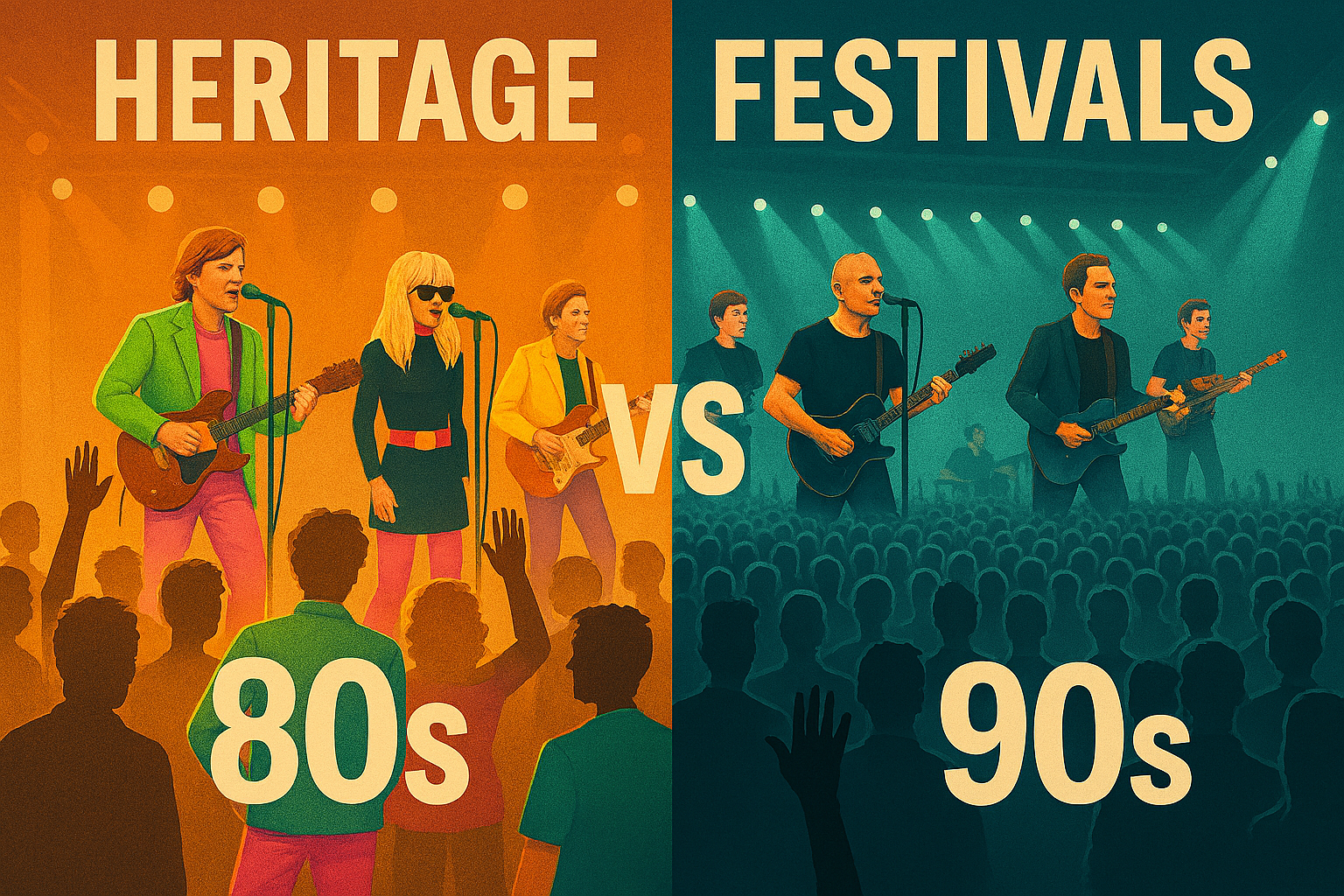
Every summer, the UK fields a curious crop of “heritage festivals”, those one or two‑day nostalgia blowouts built around acts who once ruled the charts, usually sometime between the mid‑80s and the early 00s. They’re colourful, chaotic, occasionally charming… and sometimes a little tragic. Depending on which decade you pledge allegiance to, they’re either a warm hug from your youth or a slightly desperate attempt to squeeze one more drop of relevance from a long‑retired era.
But here’s the thing: not all nostalgia is created equal. Some decades age like fine wine. Others age like milk left in a tent at Glastonbury. And right now, the 80s and 90s festival circuits are living proof.
There’s a particular energy to the 80s revival scene — and not always in a good way. Many of these events feel like they’re clinging on by their acrylic nails, hoping the promise of “all your favourite hits” will distract from the fact that some of these artists haven’t released anything culturally relevant since the Berlin Wall was still standing.
The Pros
Instant nostalgia payoff. You know exactly what you’re getting: neon, synths, and the three songs you remember from Smash Hits magazine.
Crowd‑pleasing familiarity. For fans who want a safe, predictable night out, it’s perfect.
A chance for artists to reconnect. Even if their heyday is long gone, there’s something touching about seeing a crowd still singing along.
The Cons
The “car‑crash curiosity” factor. Some line-ups feel like they exist purely so people can say, “Blimey, they’re still going?”
Cosmetic time travel. Let’s be honest: nobody looks like they did in 1983, but some acts seem determined to try anyway.
The dreaded “new material” moment. No one has paid £45 and a booking fee to sit in their deckchairs to hear Dollar debut a new track. Play “Mirror Mirror,” smile, wave, and exit stage left.
A sense of desperation. Not from everyone, but enough to give the whole scene a slightly faded, end‑of‑the‑pier vibe.
There’s a reason these festivals often feel like they’re just surviving. They’re built on nostalgia, but nostalgia alone can’t carry a whole generation forever.
Now compare that with the 90s scene, particularly events like Shiiine On, which has become a pilgrimage for anyone who lived through Britpop, baggy, rave culture, or the indie explosion.
These aren’t heritage acts in the “dust off the shoulder pads” sense. Many of these bands are still releasing music, still touring, still evolving. And crucially, the fans haven’t drifted away, they’ve grown up with the artists.
The Pros
The music still feels alive. The 90s sound hasn’t fossilised; it’s still influencing new bands, new scenes, new playlists and new generations.
The crowds are invested. People aren’t just reliving their youth — they’re celebrating a culture that never really died.
The artists are still sharp. Many 90s acts have kept their edge, their humour, and their relevance.
A genuine sense of community. Events like Shiiine On feel like reunions, not resurrections.
The Cons
Nostalgia can still trap artists. Even 90s bands risk becoming jukeboxes if they’re not careful.
The bubble won’t last forever. In another decade, will the 90s scene start to creak in the way the 80s one does now?
But right now? The 90s are thriving. They’re not just surviving on memory, they’re still generating energy.
The 80s revival is built on nostalgia for a moment. The 90s revival is built on nostalgia for a movement.
That’s the difference.
The 80s gave us icons. The 90s gave us tribes.
Indie kids, ravers, shoegazers, Britpoppers, trip‑hop heads — these weren’t just genres, they were identities. And identities age far better than shoulder pads.
It’s inevitable that the nostalgia wheel will keep turning. In ten years, we’ll probably see:
00s grunge weekends
Electroclash reunions
Nu‑metal nostalgia campsites
Early‑YouTube‑era pop tours
And when that happens, the 90s scene may start to feel the same pressure the 80s does now. Nostalgia is a renewable resource — but only for so long.
Are 80s heritage festivals a harmless bit of fun, or a slightly sad reminder that time comes for us all? Are 90s events genuinely still vibrant, or are we just not ready to admit our own youth is now “heritage” too?
And when the 00s kids start demanding their moment in the sun, will we embrace it… or roll our eyes the way some people do at Dollar’s hypothetical comeback single?
I’d love to hear where people land on this, because nostalgia isn’t just about the past. It’s about how we choose to carry it forward.