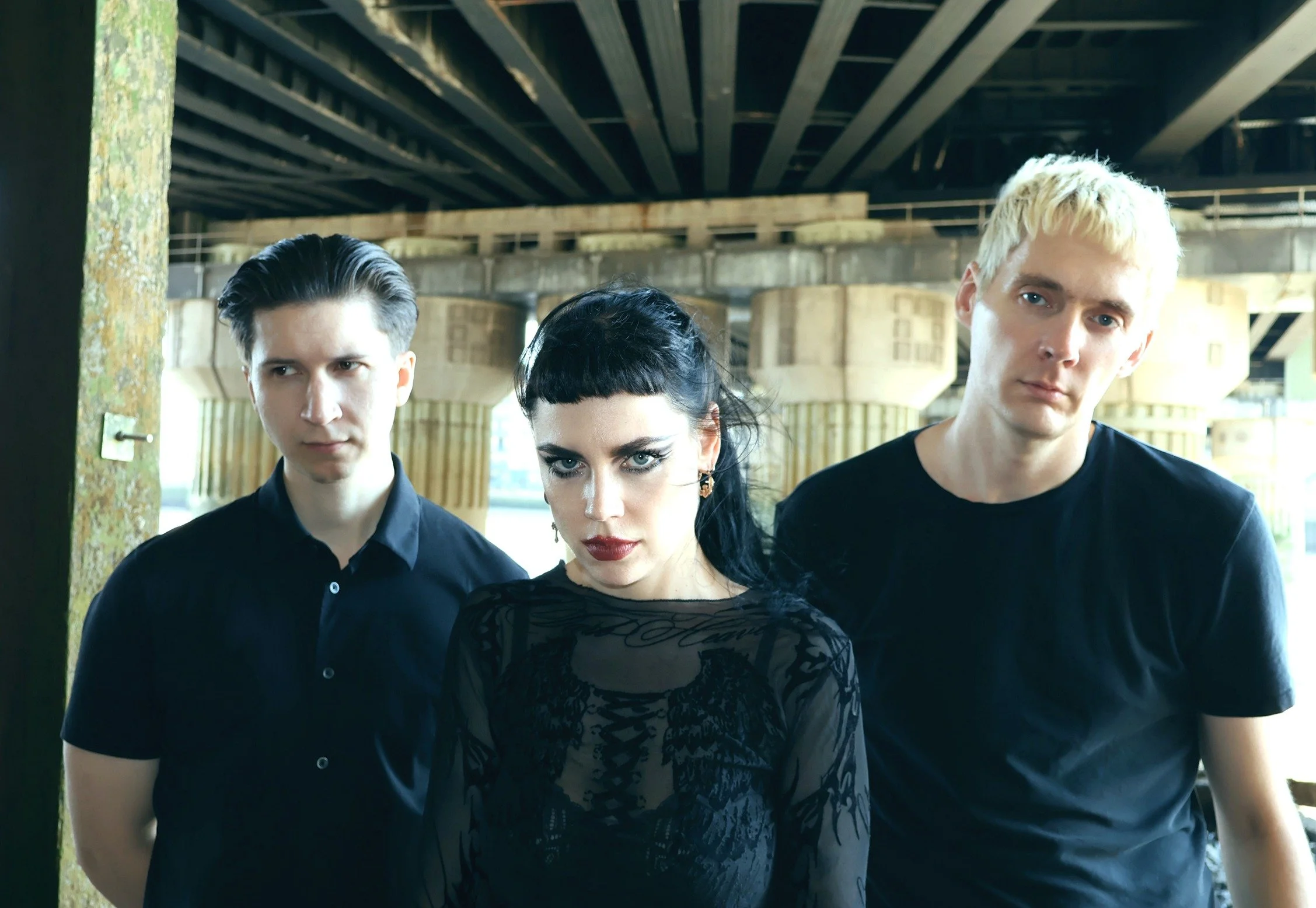
Some bands set out with a carefully mapped plan; others discover their path as they go. For Black Doldrums, the journey has been one of instinct, experimentation and constant evolution. What began as a shared love of music between Kev and Sophie has grown into one of the UK's most compelling dark alternative acts, drawing from post-punk, gothic rock, shoegaze and electronic influences while always sounding unmistakably like themselves. With the release of Repetition Compulsion, the final instalment of their ambitious State of Mind Trilogy, the duo have brought a years-long exploration of obsession, longing, memory and identity full circle. We caught up with Kev and Sophie to talk about the band's origins, the hidden connections that shaped the trilogy, the creative process behind the new album and what lies beyond this defining chapter.
You’ve spoken before about the band’s beginnings in London’s underground psych scene — when did Black Doldrums truly become Black Doldrums, and what were the early sparks that made you realise this project had its own identity?
K: The first thing Sophie said to me years before we even considered being in a band was that I look like Ian Curtis and then we started talking about music and sharing our different influences but meeting in the middle somewhere. When we started we had loads of different influences and were finding our sound and experimenting a lot over the first couple of years. We were also very much regulars on the gig circuit and discovering what works and what didn’t, so our whole thing is completely organic and real development which we are proud of. At around this time in London, psych was quite popular and a lot of the gigs at the time were geared around this sound so it was easy to get put in with psych and shoegaze genres. I seem to remember at the time our current record label Fuzz Club were putting out bands that were considered psych but we thought they were closer to post-punk.
S: As we started out as a duo we could only rely on each other on stage and we needed to experiment with sound to fill in for a 3rd member. We've always had our own sound, because for a long time we didn't really know where we fitted, we never set out to be neatly sat in a genre, it was external people who said we sounded post-punk or we'd get 'you sound a bit like this but also like yourself', after we started to see more goth adjacent people at our gigs we cleaned up the sound and fine tuned it.
Your sound pulls from dark psych, post‑punk, shoegaze and even cinematic synth textures. Which artists or movements have shaped you the most, and how have those influences evolved across your releases?
K: My main inspiration as a songwriter is to be understood and communicate something that can’t easily be communicated in person. I tend to write about Sophie for Sophie, or generally what Sophie is reading, watching or listening to can make its way into my writing. We’re inspired by lots of darkwave electronic music as well as many old and newer artists within that scene, however if I’m honest, I tend to draw inspiration for different purposes. For example, The Beatles for song writing, Bauhaus for the attack, New Order for atmosphere, or The Cure for melody. I don't tend to take one artist or song as inspiration and in actual fact I don’t learn entire songs of other artists. The day I learnt three chords to play Heartbreak Hotel I got bored and tried making my own song out of the same chords.
S: Something we’ve found is Kev will write a song on an acoustic guitar, it’ll already sound like a complete song by itself and have an identity, then obviously I will come up with drums and we’ll talk about the arrangement, but the characteristics of genre or inspiration is weirdly not apparent until after everything has been mixed and I mean that in the sense that for us and I suspect many artists, a portion of that process is unconscious.
From Dead Awake to In Limerence and now Repetition Compulsion, how has your approach to writing and recording changed? Are there habits or rituals you’ve carried through the trilogy — or ones you’ve deliberately broken?
K: Not really anything too special as far as I know but then again I don’t really look into how anyone else does it. I don’t think we realised it was a trilogy until half way through writing and recording In Limerence when Sophie was making the artwork she said they all feel like they have the same theme of obsession, longing and Limerence. After that we leant more into those themes and realised that I would naturally write a song and then write another one almost in response to myself. So this means on the albums there is almost this mirroring of tracks that complement each other. I think this came about because we always ask ourselves “what did we learn last time and how can improve this time”. This way we are learning and improving and giving people a better album each time.
S: Kev will write the song at home and then show it to me in the rehearsal room - or with this album I actually bought an electronic kit and worked out 90% of the drum parts on that, which I found they came much quicker to me, I find when you're paying for a space for 4 hours you're under pressure to develop the song and I find it hard to come up with something that feels good enough in that environment. I never want to settle with drum parts as they play such a big part in the identity of the songs, so I always want to come up with something different or that lends itself to the song.
The State of Mind Trilogy explores psychological cycles, identity and emotional inheritance. What drew you to this thematic arc, and how does Repetition Compulsion complete the story you’ve been telling?
K: I’m not entirely sure what drew us to these themes, but I can only assume it was a subconscious decision to use the past in order to make sense of the present. We didn’t realise all the albums were connected in some way until half-way through the second album. I think it’s because we all tend to repeat behaviour and writing these songs could essentially be us attempting to address the same issues and almost rewriting some songs in some cases in order to feel understood and ensure we’re being very clear. This is basically repetition compulsion which completes the albums story perfectly because we have been doing it all along even without realising it.
S: For me, it came from being interested in why we become who we are, and how much of that is shaped by things that happened long before we were consciously aware of them. Across the three records, there’s been this recurring idea of trying to understand yourself through your past, the relationships, experiences and patterns that keep resurfacing, even when you think you’ve moved beyond them.
Repetition Compulsion felt like the natural conclusion because it gives a name to something we’d already been writing about for years: the tendency to repeat familiar emotional patterns, sometimes in an attempt to understand them or somehow change the outcome. I think the trilogy gradually moves from experiencing those things, to recognising them, and then finally understanding that recognition doesn’t necessarily mean you stop repeating them.
Your new record feels like your most expansive and introspective work yet. What were the key ideas, sounds or personal experiences that shaped this
K: I think what’s cool with this album's theme came from one thing Sophie said to me about the psychological term splitting which formed the very first line of the album “is your mind split in two”. The theme of Repetition Compulsion to me is a perfect fit for my type of writing and how I like to reference the past. So much so, I dug up two songs from a fairly long time ago “Beat the Rain” which was a song I wrote a few days after meeting Sophie for the first time a while back now and it is so strange how it fits the theme. And the last track on the album “Eulogy”, I discovered when going through a box of cassettes that I had made in my bedroom when I was very young. It was an instrumental that we re-worked. Because the album is about the past affecting our future, the fact that we purposely dived into the past and dug up these ideas that were unused, I’m very proud our artistic approach is definitely a life’s work.
S: A lot of it came from thinking about how contradictory people can be, and how different versions of ourselves can exist at the same time. The idea of splitting became quite important early on, seeing people or situations as entirely good or bad, but also the broader idea of feeling divided within yourself. That opened up a lot of the themes around identity, memory, relationships and the way the past affects how we experience the present.
Musically, I think we gave ourselves more freedom on this record. We weren’t interested in making every song occupy exactly the same space, so there are moments that are heavier and more immediate, but also songs that are more melodic, vulnerable or atmospheric. Because the subject matter is so internal, it made sense for the music to move around emotionally as well. A lot of it comes from personal experience, but those experiences become something other people can project their own meaning onto rather than explaining exactly what happened to us.
Where did you record Repetition Compulsion, and how did the environment or production team influence the final sound? Were there any unexpected breakthroughs or challenges during the sessions?
K: We recorded this album in Farm Road Studio in Brighton and Holy Mountain in London. The locations didn’t really influence the overall sound too much as we have the vision and a really strong idea of what direction the sound should take. So, we would plan and prepare the songs and arrangement before we approach anyone to help record. We’re very much in control of our own songs and the production.
We did encounter some issues with time in the studio to allow us to experiment. Guitars were recorded in three different locations, Farm Road, Brighton, studio 7 in Tottenham and even some guitar parts and synth at home. This allowed us the freedom to really fine tune all the tones and get down what is in our heads. It could be a bit excessive to do take after take, but if you don’t push yourself to the brink, it’s not making an album is it? We were just fortunate enough to work with a good team that was patient and open minded to allow us this freedom and ultimately trust our direction and production.
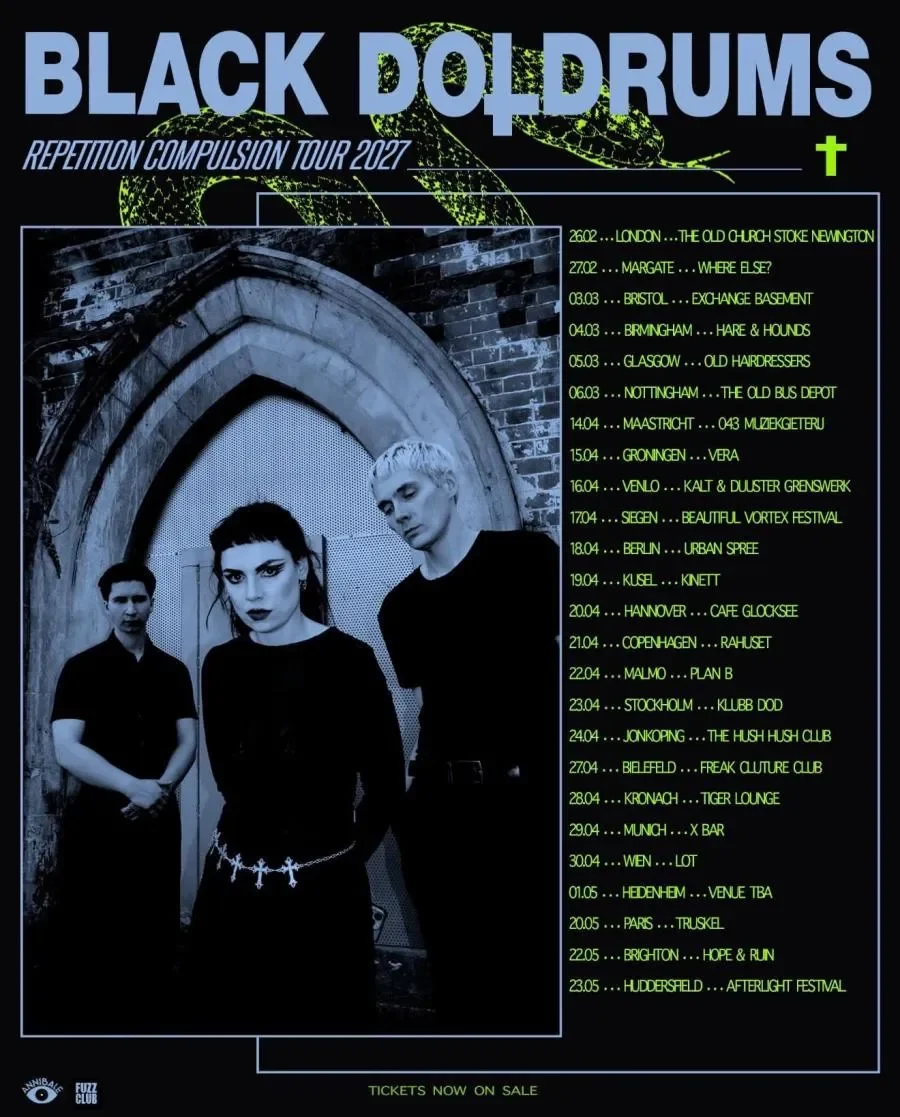
Your live shows are known for being immersive and atmospheric. With the new tour kicking off in February 27, how are you translating the new material to the stage, and what can fans expect from this run of dates
K: Once the album is out in November, we’ll go straight into rehearsals for the tour. By this time all the singles would have been released, and we’ll have a good idea of what has landed and that will inform our set. Live and studio are two different things, but when we prepare for live shows, we want to honour the album but give people something new and extra. We’ve picked up some new tech and gear to record these songs so that will be one thing that’s different. We always like to keep things progressing and experiment with new sounds.
S: We have about an hour and 20 minutes of material that we actually want to play live. We'd love to play new and older stuff and might be putting that to a fan vote if what they’d like to hear because we will need to narrow the time down slightly.
If you were curating your own dream festival, which three acts — dead or alive — would headline, and what makes each of them essential to your personal musical universe?
S: That’s quite a difficult question, I find narrowing music choices down really hard, but we’ve agreed on The Beatles, Depeche Mode and Bauhaus. Personally I would have The Beatles open up as a legacy act, but Kev will want them headlining, Dave Gahan and Peter Murphy can fight out the top spot. The Beatles because when we’re in the writing process, Kev tends to refer to them as an early inspiration and find their catalogue of work a good blueprint for writing. Each album pushes forward from the last, that’s what we try to do. Depeche Mode because of their ability to be both electronic and rock, the way they perform live is exciting and brings in elements of their recorded material and live. Bauhaus, pretty self-explanatory, actually we did see them in 2021, and they were one of the best bands both of us have ever seen live.
We love asking this one: if Black Doldrums were hosting a ‘Come Dine With Me evening’, what’s the starter, main and dessert you’d serve — and who in the band is actually doing the cooking?
K: Sophie would be in charge of this, she can cook anything. If it was me you’d have to be happy with it being cooked all in going one pot and tasting the same throughout. I can do a mean chilli or cottage/shepherds pie.
S: I’ve decided to approach this with my food crazes in mind - I tend to go through phases of meals I like to eat to the brink of complete boredom and move onto a new one.
To start we’ll have a miniature version of taco salad. This usually would involved a bowl of romaine lettuce, plum tomatoes, red onion, black beans, jalapeños, brown rice, avocado, coriander, Tabasco, lime and olive oil, then with either shredded chicken on top or steak sliced (rare) and soft corn tacos, and you essentially work your way through the salad by making tacos with the ingredients.
Main is Pad Kra Pao. fast-fried minced meat (I do turkey, but I think it’s chicken or pork usually) stir-fry tossed with garlic, chillies, soy sauce, fish oil and Thai Basil, served with rice with a fried egg on top.
Dessert, we don’t really have dessert at home, but when we went to Memphis, I did have a cocktail called a Fat Elvis which was chocolate and peanut whisky, something else I can’t remember, basically it tasted like Reese’s Pieces/ M&Ms so I’d give one of them to everyone!
With a new album and a fresh run of live dates, where do you see Black Doldrums in 12 months’ time? What’s the next chapter after completing such a defining trilogy?
K: Sitting in our mansion polishing our Grammy or other than that as I’ve completed this creative cycle with the trilogy of albums iI think we’ll be almost starting a fresh and finding new inspirations. Really looking forward to seeing what comes next, because I’ve always been writing constantly, so all three albums were basically one piece of work. I think we’ll be looking to experiment with more tech, maybe some remix projects or potentially even consider a new member of the band.
S: I think after finishing a trilogy, that’s been so conceptually connected, I’d like the next chapter to feel a little less prescribed. We’ve spent a long time looking backwards and examining patterns, memory and identity, so I’m interested in what happens when we give ourselves permission to move away from that and follow whatever feels exciting next.
I’d definitely like us to keep expanding what Black Doldrums can be, both sonically and live. I don’t think that necessarily means abandoning what people recognise in us, but I’d like to experiment more, take a few risks and avoid feeling like we have to repeat what we’ve already done. In 12 months, I’d hope we’re still touring, reaching more people, and starting to get a sense of what the next version of the band looks like.
What becomes clear throughout our conversation is that Black Doldrums have never been interested in standing still. Whether discussing songwriting, production, psychology or the ever-evolving nature of their live shows, Kev and Sophie return time and again to the idea of growth through reflection. Repetition Compulsion may bring the State of Mind Trilogy to its conclusion, but it also feels like the closing of a creative cycle rather than a final destination. As the band prepare to take these songs on the road and turn their attention towards new ideas, fresh technologies and unexplored territory, Black Doldrums seem poised to embrace uncertainty in the same way they've embraced evolution all along. Whatever comes next, it is unlikely to sound quite like what came before, and that's exactly the point.
Keep up to date with their musical happenings via INSTAGRAM