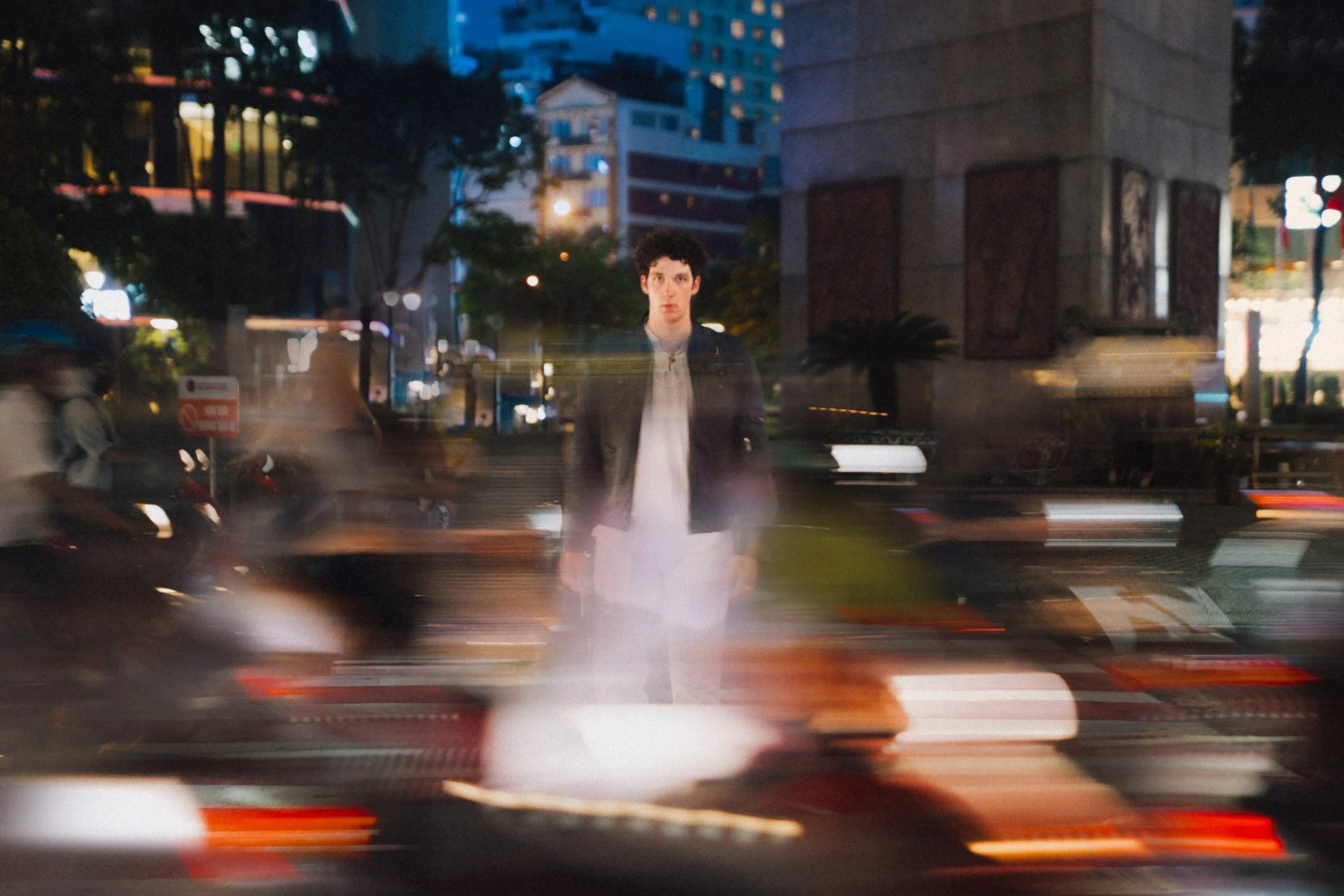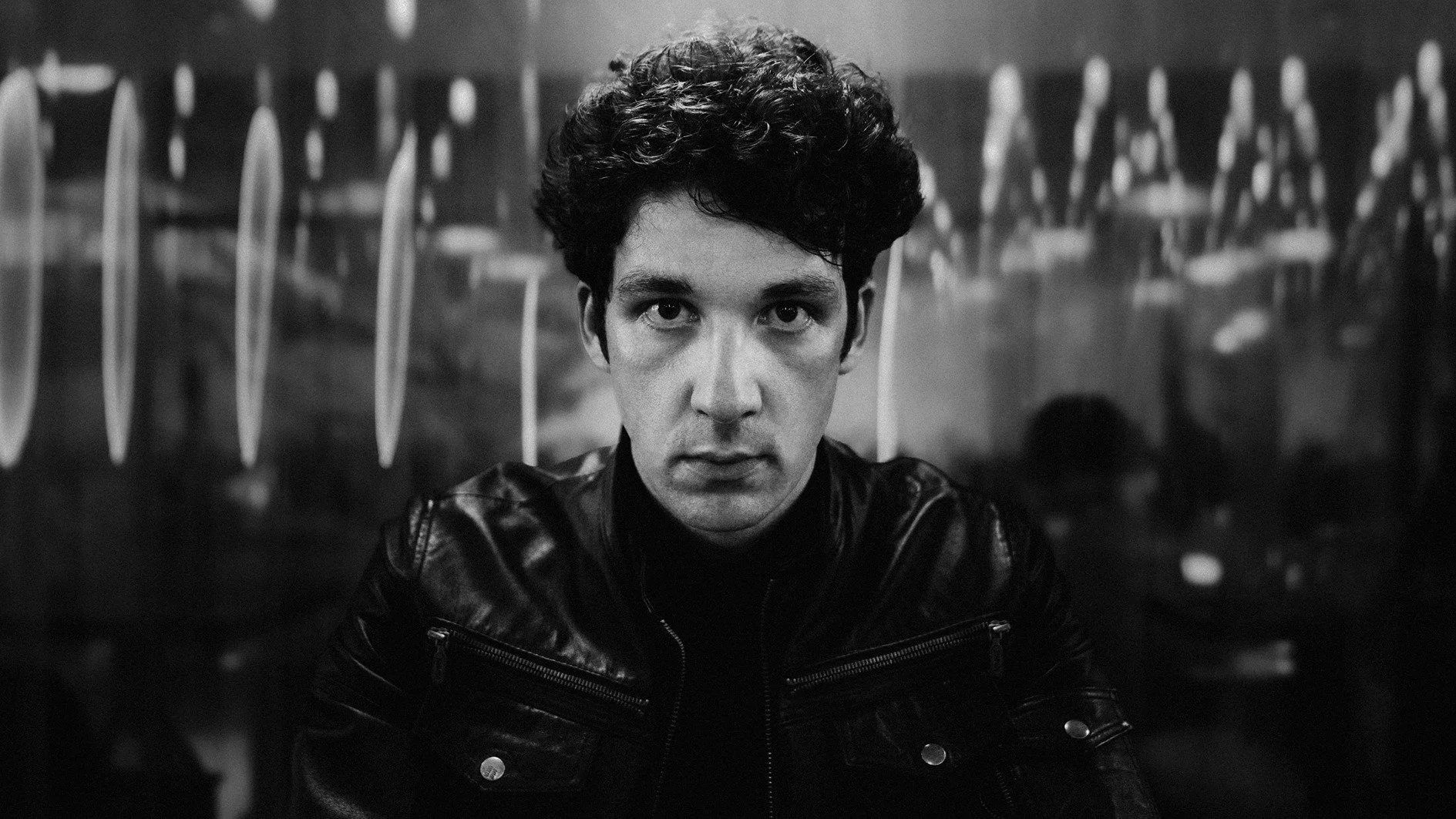
Tarragon’s new album Home at Cofa’s lands on 1st May 2026, and it feels like the moment everything clicks into place. Built from fragments captured in bedrooms, shaped in late‑night studio sessions, and coloured by the streets of Coventry, the record marks a leap forward — expansive, emotional, and unmistakably his. As he explains in the interview, the songs weren’t planned so much as unearthed, each one sparked by lived experience and stitched together into a world that feels both intimate and cinematic.
What makes this era so compelling is the contrast: a postman by day, yet crafting music alongside players from Bon Iver, The 1975, Big Red Machine and more. These collaborators don’t overshadow him — they amplify the vision. And at the centre of it all is Coventry itself, a city he describes with loyalty and nuance, its people and contradictions leaving fingerprints on every track.
The conversation that follows captures an artist stepping fully into his identity — curious, instinctive, and unafraid to let his songs evolve slowly until they reveal their truth.
Tucked In Despair is the first song you worked on for your forthcoming sophomore album Home at Cofa’s (released on May 1st), and it went through many versions. What was the breakthrough moment when you finally felt the track had become what it needed to be?
Well, that song began in my bedroom and finished in my studio. My process is usually to capture small fragments of music whenever a spark of inspiration appears. The moment an idea arrives, I need to record it straight away, whether on my phone or in my DAW, so the feeling isn’t lost.
'Tucked In Despair' was a difficult piece to understand. For a long time, I wasn’t sure what it wanted to be. There were many moments where the inspiration faded, and normally, when that happens, I leave the idea behind and don’t return to it. But months later, for whatever reason, I opened the session again and realised there was something special in what I had initially recorded. From that moment on, I began layering and morphing new sounds, running stuff back through tape and recording more instrumentation, slowly shaping the piece into what it eventually became. Some songs take a very long time to reveal themselves to me, and this was definitely one of them.
You’ve brought together an incredibly eclectic group of collaborators on the new record, from CJ Camerieri (Bon Iver) and John Waugh (The 1975) to JT Bates (Big Red Machine), James McAlister (The National, Sufjan Stevens, Gracie Abrams), and additional production via Latin-GRAMMY nominated Juan Ariza. How did these connections come about, and what did each of them bring to the emotional world of the album?
My connection with them came about very organically. What began as building a mutual rapport online grew into a deep admiration for their work. I’m a huge fan of each of them in their own way; every one of them brings something distinct and irreplaceable to the music. Often, when I’m crafting a song, I already have a sense early on of who I’d love to invite into the record. I think that instinct comes from knowing their work so well and from a genuine fascination with their style of playing. In many ways, I like to think of Tarragon not as just myself, but as a kind of community.
The brass on Tucked In Despair is stunning and quite unexpected. What drew you to incorporate flugelhorn, French horn, and saxophone into your sound, and how did working with musicians from Bon Iver and The 1975 shape the arrangement?
Thank you! I’ve always had a deep admiration for orchestral music. Pet Sounds is one of my favourite records of all time, and I think that’s where my love for brass and wind instruments first really came to light.
I remember when I was fourteen or fifteen, I went to see Bon Iver at the Hammersmith Apollo with my dad while they were touring the self-titled album. I was completely mesmerised by how beautiful the brass, strings, and wind sounded alongside Justin’s voice, the electronics, the drums, and the guitars. Ever since a young age, I’ve been fascinated by colours and textures, and seeing those musicians on stage that evening triggered something in me. It really sparked a desire to create music with that kind of instrumentation in mind, and, if I were ever lucky enough, with some of those very players.
Over the years, I’ve been incredibly fortunate to collaborate with three members of that band: CJ Camerieri, who plays the brass on Tucked In Despair and with whom I’ve had the pleasure of working overseas since 2017, as well as Matt McCaughan and Mikey Noyce.
I came across John Waugh from The 1975 a lot later on. I think it was via a video I saw online of a live performance. I love The 1975's music, and John is one of my favourite saxophonists of all time. I had him record several, textural tenor sax pads for Tucked In Despair.
You’ve spoken about writing Tucked In Despair during your first serious romantic relationship. How did navigating those new emotions influence the wider themes of Home At Cofa’s
Home at Cofa’s almost came about by accident, to be honest. I didn’t consciously write a group of songs for the album; the album is a collection of songs that were all triggered by my experiences. It’s only when I came to collate the songs that the underlying trend became apparent.
The album title references Cofa’s Tree and the idea of belonging in Coventry. How has your relationship with the city changed over the years, and how does that sense of place filter into the record?
Coventry is a fantastically diverse City in all aspects. From its multi-cultural population, modernist, some say brutalist architecture that resulted from its blitz during the Second World War and the beautiful historic elements that survived the bombing. Many outsiders see Coventry as an ugly, industrial City, but living within is totally different and inspiring. Growing up within the City, I have really learnt to appreciate the place, and it’s fascinating to walk the streets as I do with my job, where I see the engagement of the population within, and their loyalty to the City. I share that loyalty!
Home at Cofa’s is all about my experiences whilst living in Coventry. There is no doubt that the City’s culture and influence on me has inspired me to write this collection of songs.
You funded the making of this album through a series of very public-facing jobs, Covid tester, Deliveroo cyclist, and now a postman. How did those day-to-day interactions with people in Coventry shape your songwriting or your understanding of community?
Plodding the streets in a public-facing role takes you to all corners of the City. From the very affluent areas to those where poverty is evident, from the rural outskirts to the inner city. It leaves an impression, both good and bad, to be honest, but the overriding element is always the people that you talk to and interact with. No day is the same, and that’s what makes it so fascinating. It might be something someone has said to me, something I have seen, something I’ve heard that I seem to log away. It’s those segments that inspire me in my songwriting.
Let’s go back a bit, did you grow up in a musical household? What were the sounds, artists, or early experiences that first made you want to create music?
I wouldn’t say I grew up in a particularly musical household, quite the opposite, really. It was a football house through and through. I played at a very high level as a child, and most of my early memories revolve around that world. But there was always this quiet thread of music running alongside it. My dad would take me to my football matches, and on the way we’d play his favourite records. 'Pet Sounds' and 'The Dark Side of the Moon’, almost like a kind of ritual, something to steady the mind before the noise of the game.
Even then, music was finding its way into me. From a young age, I knew that communication didn’t come easily. I struggled to express myself, to find my place, to connect. I’d get to school early, often the first one there, and head straight to the music block. I’d pick up a guitar and just play. That became my space, really, the place where things started to make sense. It’s also where I began writing, because I was never that interested in playing other people’s songs. I wanted it to feel like mine, like I was putting something real of myself into it. One of my fondest memories is from around that time, when I used to line up a row of unused plant pots in the back garden and hit them with branches, turning them into a makeshift drum kit. I think that’s when my parents first noticed there was something in it for me, this excitement I couldn’t quite put into words yet, but was already finding its way out through sound.
Your music blends indie electronica with something very intimate and human. Who are the artists, past or present, that you feel have influenced your sonic world the most?
Thank you! I love the great songwriters of the last century, but I've always had a fascination with voices that have a lot of identity to them. Singers and songwriters like John Prine, Bob Dylan, Brian Wilson, and more recently Cameron Winter, Saya Gray and Dijon come to mind.
You’ve already collaborated with My Brightest Diamond, members of The War on Drugs, and players who’ve worked with everyone from Sufjan Stevens to Taylor Swift. Is there a moment during the making of this album where you thought, “I can’t believe this is happening''
I’m not sure I ever had a moment where I thought, “I can’t believe this is happening.” But I did find myself wondering whether experiences like this happen to most independent artists like myself. It’s strange to think that people I’d almost call heroes, people I’ve looked up to since I was very young, ended up participating in a project that began as nothing more than a dream of mine. The whole idea behind Tarragon was really about pushing and pulling this concept between being about me and being about other people, too. I wanted to explore what the feeling of family and community might look like inside my own mind.
What new music or artists are inspiring you right now? Are there any bands or records you’ve been obsessed with while finishing Home At Cofa’s?
I absolutely adore the Cameron Winter solo record, Heavy Metal, and I'm listening a lot to Saya Gray, Sparklehorse and Dijon currently. There weren't any records I particularly listened to during the final stages of the album, but I suppose I was referencing things more on a technical standpoint than anything else during the mixing process.
Finally, Home at Cofa’s lands on May 1st. How will you be celebrating the release, and can we expect any live dates following its release?
I’ll be playing an album launch in celebration, though it will likely come after the release itself. I want the people who come to it to already know what they’re stepping into, to feel familiar with the world they’re about to enter.
At the moment, I’m also in the process of discovering how this album can live and breathe on stage. It’s such an expansive piece of music that’s really layered with textures and detail, and I want to do it justice, but it’s finding the right way for those elements to unfold in a live setting. The challenge is in translating something so intricate into a performance that still feels immediate and human. It will inevitably have to be more stripped back in places, but that’s part of the beauty of it too, finding new shapes within the songs, letting them evolve, and discovering what really needs to be there in the live format.
But there will be shows, without a doubt. Wherever I’m welcomed, I’ll be there either on my own or with my band.
We’d like to wish Callum all the very best for the release of Home at Cofa’s and we’ll be keeping an eye on his socials for when he decides to take his new baby on the road to spread the word as wide as he can.
To pre-save Home at Cofa’s and to keep up to date with Tarragon on the socials, click HERE
Interview by Steve Muscutt