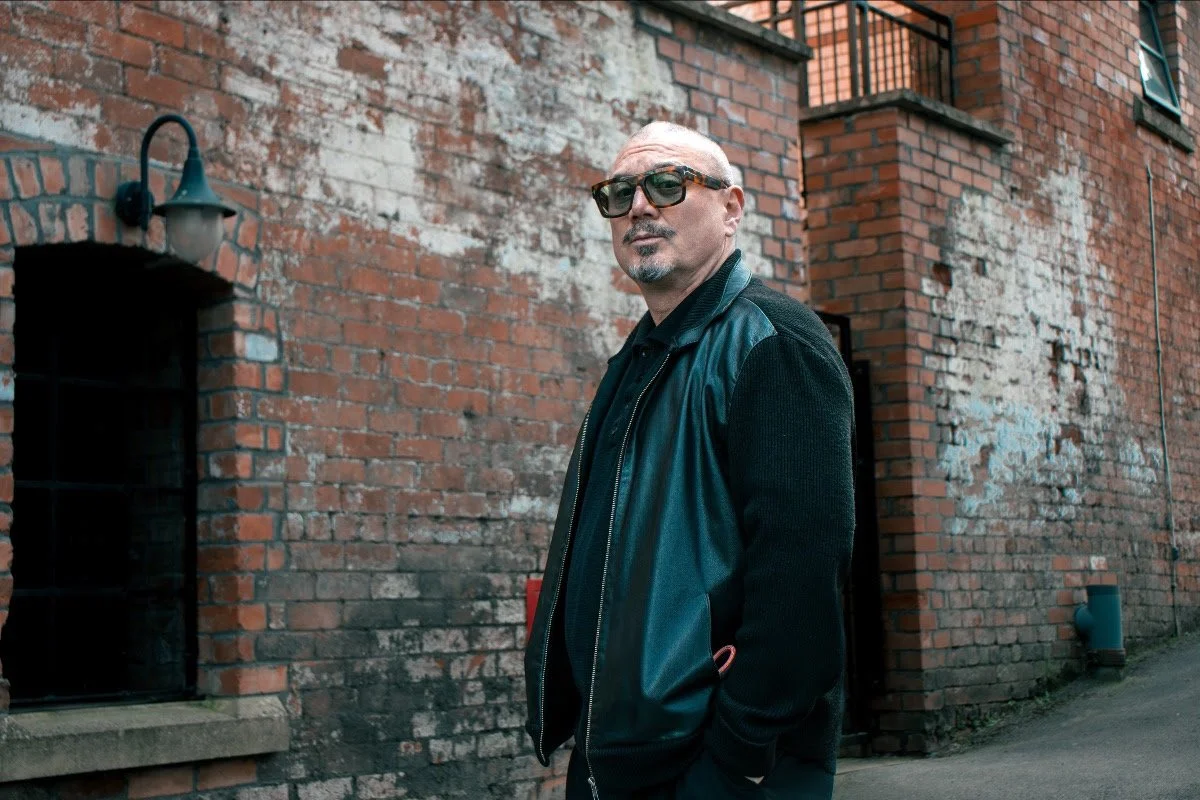
Thirty years after Come Find Yourself gatecrashed the Britpop era with its unmistakable New York swagger, original Fun Lovin’ Criminals frontman Huey Morgan is taking the seminal debut back on the road with a brand-new band for a 13-date UK tour this October. Looking back on the album that changed his life and soundtracked a generation, Morgan talks about the New York scene that shaped it, the unlikely story behind “Scooby Snacks” and why, three decades on, those songs ultimately belong to the people who made them part of their lives.
Thirty years on, when you hear Come Find Yourself, what goes through your head?
It’s really trippy because you go back 30 years on anything and you’re a different person. When I made that record, those were all the stories that I had accumulated up to that point. I was 27.
I’d been in the Marines, I’d been a bit of a troublemaker in New York City, and I was dealing with a lot of things in my life. It seemed to me that I was offloading a lot of that stuff into the lyrics.
The funny thing is, I wasn’t even supposed to be the singer. I just wanted to be the guitar player. Fast and I were working together with Steve, making songs, and we hadn’t really figured out what the vocals were going to be like.
We knew we wanted it to be rap music, but when we started talking to rappers we knew, they were talking about themselves and girls and stuff, and it seemed a little banal for the music. We’d put so much time and effort into making that music, and our influences were really varied.
I’d always written poetry and things, and a lot of these songs were actually short stories or novellas I’d written over the years. I went back to my notebooks and started looking at those stories. That’s where songs like “King of New York” came from.
So did you already know what Fun Lovin’ Criminals were going to sound like?
We knew we wanted to mix a bunch of different styles together. Fast was into electronic music, Steve had a lot of different influences and I was a guitar player who had listened to all kinds of stuff growing up.
We really thought the music deserved more, lyrically. I wanted to make sure the lyrics were equal to the music. It was a challenge to make sure that what I was saying was worthy of the music we were creating.
The album sounds incredibly confident, but you were still a new band. Where did that confidence come from?
It was probably 70% true confidence and 30% just winging it and hoping for the best!
We recorded a lot and wrote a lot of the music before we had our record deal. When we got signed to EMI, it freaked me out because I thought, “Wait, I’ve been listening to music my whole life and no one’s going to buy this!”
I just thought it was good music. I enjoyed making it. It was different and new, but I didn’t think anything would come of it. Because of that, I didn’t have any hang-ups about writing whatever I wanted to write about.
We also didn’t have a manager, so I had a pretty serious relationship with the label through our lawyer and our A&R guy. The head of the label was a producer called David Seegerson, and he really understood what we were doing. His attitude was basically, “Whatever you’re doing, don’t mess with it.”
That gave us confidence because we weren’t going back and forth with the label asking what they thought. We didn’t really give a damn what they thought! We were left to our own devices.
You were also told you didn’t necessarily need a producer. Was that liberating?
We had asked Bob Power, who produced Tribe Called Quest and a lot of other amazing music, to produce the record. He listened to our demo and basically said, “You don’t need a producer, you need an engineer.”
That engineer was Tim Latham, and he was fantastic. He was a New York guy, technically one of the most amazing engineers we’d ever worked with, and we really hit it off with him.
We recorded most of the record in five days. The first day was drums, the second day we dropped all the samples onto the drums, the third day was keyboards, the fourth was guitars and the fifth was vocals.
It was a really hard week, but we knew at the end of it that we’d got what we needed down.
And then the label told you that you had another three weeks in the studio…
Exactly! They said, “Guys, you have the studio for another three weeks.” We were like, “Oh, okay.”
So we ordered food from Little Charlie’s, which was a great Italian restaurant in the neighbourhood, and had a really good time. But what we did during those three weeks was listen as producers rather than performers.
We thought this would be the only record we ever recorded, so we wanted to put all those little things into it that we’d always wanted to hear on albums we loved. We had a little percussion day where we called ourselves the Cuervo Brothers, got a little drunk and did percussion.
It gave us some perspective on the songs.
“Scooby Snacks” became the defining track. Did you know you had something special?
It’s funny because we actually had a version for the album that was faster and had a whole bunch of rock ’n’ roll guitars in the chorus.
We had the demo, though, and when we played it for David Seegerson, he said, “What happened to the syncopated, slowed-down, cool groove thing?” We told him that live we played it faster, and he was like, “Whoa, there’s something special about that.”
He insisted that we revisit the demo version. That was really the only time anybody got in our business about stuff.
He explained that the reason the song was grooving with so many people was because the elements were pure and simple. There wasn’t a whole bunch of production on top of it.
When you’re producing your first major-label release and you have three weeks in the studio, you can become obsessed with adding things and taking things away. His advice made us realise that sometimes less is more.
And then there are the Pulp Fiction samples. Whose idea was that?
A lot of that song was put together by Fast. He put the Tones on Tail element in there, and I thought that was brilliant.
The Tarantino stuff came from the fact that we were huge fans of Tarantino. We used to write a lot of our music in the living room of the loft we lived in, with the TV on but the volume down.
We were always making music for films — soundtracks for films that didn’t exist.
With “Scooby Snacks”, we thought, “Who’s going to understand what the hell we’re talking about? Will they get the joke?” Fast said it was kind of a Tarantino noir thing and suggested getting the laser disc and cutting a couple of samples out to see what worked.
It was a great move. The label initially didn’t like the samples because they were going to be expensive. But I was sold. I thought those samples brought everybody into the joke. They gave people the context to understand that it was a funny song about a “what if”, rather than “let’s go and do this”.
If you had to pick one song that best represents who Fun Lovin’ Criminals were in 1996, which would it be?
I’d say “King of New York”.
It’s essentially a folk story about John Gotti, but it’s also quintessentially what we did. It had the hip-hop element, it was a story about New York City and it had all these cultural touchstones.
I don’t think anybody else would have talked about John Gotti at that time without fearing they would get killed! I was married into a mob family at that point, so I had to have a sit-down with these guys to get it right.
That song was the gateway for me to realise, “Okay, Fun Lovin’ Criminals would do this.”
We worked at a nightclub called Limelight for many years before we got signed. We’d play shows there, test out new material and figure out what worked. We knew by trial and error what people in New York were down with.
We weren’t really aiming outside New York City. Not even New Jersey. We were in our own little biosphere.
So when did you realise the music was going to have a life beyond New York?
I remember the first time we left the United States. We went to Toronto to do a showcase for EMI, and we got into an argument with another band. We were going to fight them — it was going to be a beatdown!
The head of the label told us we weren’t doing the showcase because we were thugs and sent somebody to talk to me. He sat me down and basically said, “You’re not this guy anymore. You have an opportunity here that no one gets.”
He told me I had been through a lot, grown up on rough streets in New York, been a United States Marine and now had the chance to do something that transcended all of that. He said, “Don’t be stupid and screw it up.”
That was when I realised, “Wow, they wouldn’t be sending this important guy to talk to me if this was all for nothing.” It made me rethink my whole operating system.
The UK then became such a huge market for you. Why do you think British audiences connected so strongly with the band?
Initially it took off in the Benelux. We had a connection with a clothing company and our demo tapes were going out to skateboard shops around the world. People were discovering the music through that skateboard culture.
Because EMI was a British label, they realised they had something good when people in Holland and Belgium were digging it, and they put us on the front burner at EMI UK.
We came over to the UK and people started rocking with it almost immediately. We were juxtaposed against all the Britpop people were hearing. It was fresh. There was humour in it, and elements of popular music that weren’t necessarily rock.
There was hip-hop, groove, acid jazz and all these different things. The UK was one of the few countries that was really eclectic in its radio. If it was good, people liked it.
We also weren’t afraid to talk to people, be funny or not take ourselves too seriously. Shows like TFI Friday helped break us.
Thirty years on, do you hear the album differently?
I hear it all differently.
There’s that saying: no man steps in the same river twice. I go back to that record because I play the songs with my new band, and it’s great hearing them reinterpreted.
An album is a snapshot of a period in time for an artist. I was 27 and I was a very different guy. I was under a lot of pressure because we didn’t have a manager and I was juggling all these different parts of the music business.
I don’t really remember it being a particularly fun time. Looking back, I’m finding the different fun parts in it.
When you write a lyric, those feelings are still there in the words. So when I revisit the songs, I can almost revisit that guy. I feel bad for him too, because there was a lot going on inside my head while I was trying to put a record out and lead a band.
It was a difficult time, but the fact that I made it through is kind of the triumph.
What do you hope people take away from the 30th anniversary shows?
I once spoke to Stevie Nicks at a party and she told me she loved our record. We talked about music and she said something that really hit me. She said that once you put a record out, it’s yours to have, but you don’t own the music anymore. Everybody attaches their lives to it.
That made me realise it’s not my music. I wrote it and performed it, but once it got into people’s lives, it became part of their lives.
When people come to see me play, I see them revisit parts of their lives that were good, or maybe difficult, but they got through them. You can see the whole spectrum of human experience in people’s faces while you play songs that made a difference in their lives.
As an artist, you can’t have a higher compliment than someone saying, “That song helped me,” or “That song makes me happy,” or “That song gives me perspective.”
So doing a 30th anniversary isn’t a selfish act. It’s something you’re doing for the people who bought the record and made it part of their lives.
I think nostalgia is a great thing. It reminds you that you had moments in your life that were amazing, fun and good. If you can revisit those, that’s a blessing.
You’ve now got so many different worlds — radio, TV, writing, family and music. Where does being a musician fit into all of that?
It’s the by-product of living a life.
If I was a painter, being a father, a husband, a radio DJ and all these other things would inform my painting. As a writer, I’m always trying to make sense of stuff because the world’s a crazy place and everybody has their own path.
I try to light my path with the insights I gain from reflecting on my life.
I’ve got this tour coming up and I’m crazy looking forward to it. I’m also kind of nervous about it, but in a good way. It’s excitement. I don’t want to let down the people who are making my music part of their lives.
There’s a responsibility there that I appreciate probably more than I ever have.
UK TOUR DATES:
13-Oct-26 Leeds Brudenell Social Club
14-Oct-26 Edinburgh La Belle Angele
15-Oct-26 Glasgow St Lukes
16-Oct-26 Leeds Brudenell Social Club
17-Oct-26 Nottingham The Level
18-Oct-26 Manchester Band On The Wall
20-Oct-26 Brighton Concorde 2
22-Oct-26 London Electric Ballroom
23-Oct-26 Southampton The 1865
24-Oct-26 Norwich Waterfront
26-Oct-26 Southend Chinnerys
27-Oct-26 Cambridge Junction
28-Oct-26 Exeter Phoenix
29-Oct-26 Bristol Electric
Tickets available via Hueymorgan.com