
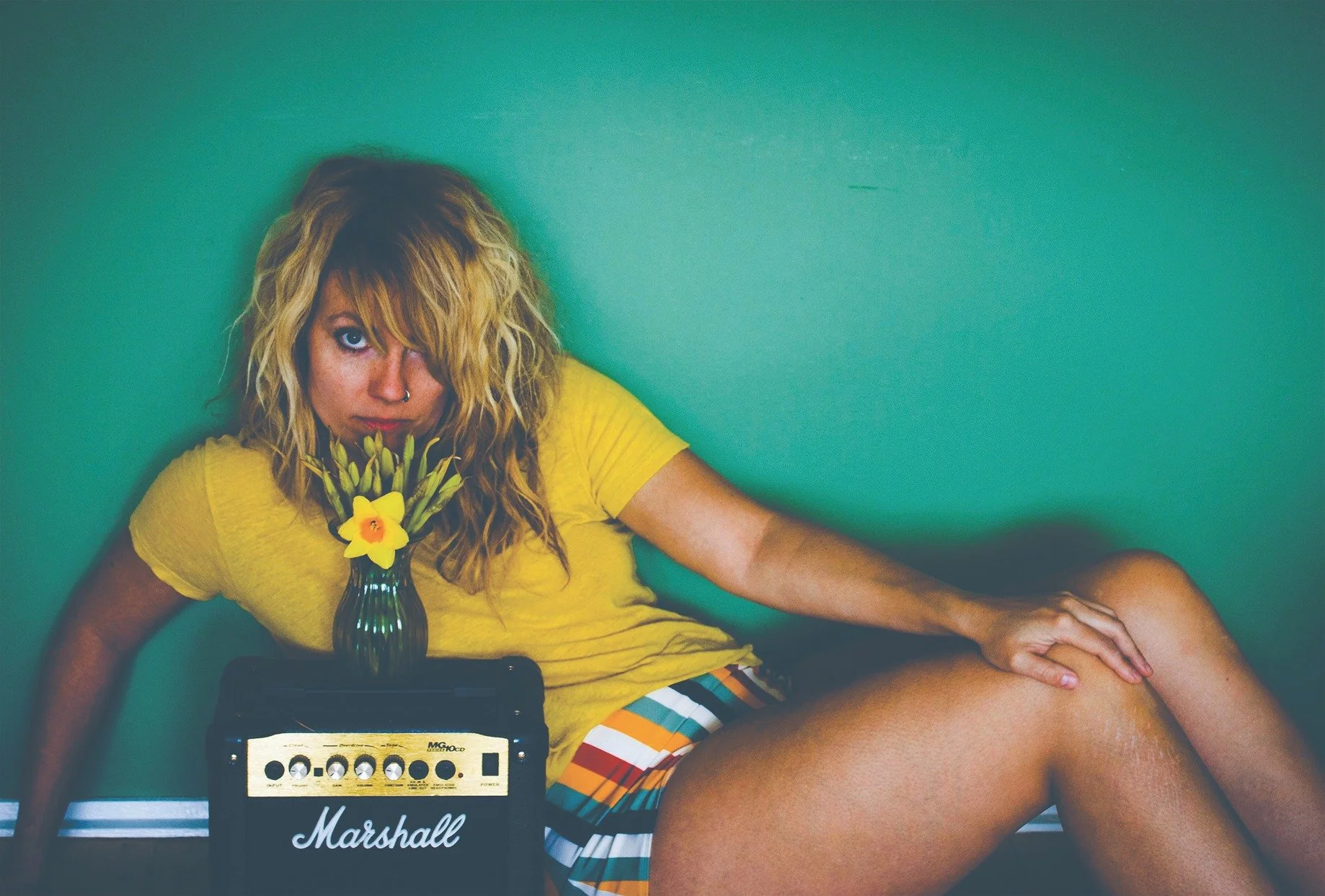
Few artists wear their convictions as openly or as fearlessly as A Mess. Emerging from Denmark's underground scene with a potent blend of riot grrrrl attitude, power-pop hooks and punk rock defiance, A Mess was born not simply from a desire to make music, but from a need to be heard. What began in the aftermath of a successful previous band evolved into a fiercely personal project fuelled by lived experience, frustration with inequality, and a determination to challenge the status quo. As new music continues to build momentum across Europe, we caught up with the artist behind A Mess to discuss feminism, songwriting, life on the road, dream festival line-ups and why rock'n'roll remains the perfect vehicle for speaking truth to power.
You’ve carved out a fierce, feminist punk identity — but where did it all begin? Can you take us back to how and when A Mess first formed, and what the spark was that made you realise this was the project you needed to build?
A Mess started in the late years of the 2010s, when my old noisepop band Two Trick Pony slowly fell apart. We’d been together for more than 7 years, playing shows around Europe and having some moderate success in Denmark, including playing some of the bigger festivals. The band was also made up of some of my best friends, so it was a big part of my life.
But eventually, people wanted other things. Careers, babies, cars, girlfriends and boyfriends all that stuff. And I didn’t. I just wanted to make music.
Still, I wasn’t sure I wanted to start another band. I’d spent years playing guitar in a very male-dominated rock scene, and I’d had my fair share of bullshit for being a woman who dared to take up space in it. I’d been laughed at, been hit at and groped, talked down to (mostly by male sound engineers) countless times, and I’d even woken up to find a male venue crew member trying to crawl into my sleeping bag backstage. I’d also heard the rumours that the only reason I got to play shows was because I’d slept with this guy or that guy. Apparently, being good at your job was never quite enough of an explanation.
Then the first wave of #MeToo hit internationally. In Denmark, the movement really gained momentum in 2019. And suddenly, women were sharing experiences that sounded painfully familiar. All these things I’d thought I’d just had to put up with turned out to be part of a much bigger pattern. Women in music were being overlooked, disrespected and having their boundaries crossed simply because they were women.
I’d already spent around almost ten years working in the music industry, running my own label and working at grass root venues, fighting to get more women on stages and into the industry. I’d also written political opinion pieces and tried to make a difference through activism. But at some point, I realised I wanted to do something different.
I decided that instead of just writing about the problem, I’d make music about it. A Mess would be my weapon. My pen. My way of fighting the patriarchy.
That’s why the feminist identity was there from day one. It wasn’t something I added later as a marketing strategy or because it happened to be fashionable. Without that political drive, I probably wouldn’t have started A Mess at all. That fire was what made me continue as a musician.
My debut single, Blame is a Dye, came out in 2021, around the time Denmark introduced its new consent-based rape legislation. The song dealt with an experience I’d had myself: being sexually assaulted when I was so drunk at a festival that I was completely unable to consent. And the shame that followed, and the silence, I didn’t tell anybody when it happened. It was also an experience I knew far too many other women could relate to.
So A Mess was never just about starting over after my old band broke up. It was about taking all that anger, frustration and all the things I’d experienced and turning them into something I could actually use. Something loud. Something that could reach people.
That was the spark. I didn’t just want to be a musician anymore. I wanted to have something to say — and I wanted to say it through rock’n roll.
Your sound sits somewhere between riot grrrrl grit, power‑pop melody and raw punk urgency. Which artists or movements have shaped your musical DNA the most, and how have those influences evolved over time?
I’ve listened to an absolutely ridiculous amount of music over the years, I am real music nerd, so it’s hard to narrow it down to just a few influences.
Being a child of the ’90s, I had an older sister who introduced me to Nirvana, and grunge really shaped my musical DNA. I loved the idea that music could be ugly, noisy and raw, but still have something important to say. Kurt Cobain was also outspoken about feminism at a time when that wasn’t exactly the norm in rock music. Then, in my teens and early twenties, I was listening to bands like Placebo who really reflected my teenage angst,
When I started playing music myself in the 2000s, I actually listened almost exclusively to men. At one point, I fell down this massive ’80s rabbit hole. I bought everything I could find with The Cure and became completely obsessed. I think I spent about three years listening to almost nothing else. That eventually led me into new wave and noise rock, and I discovered bands I’d been too young to experience when they first came out, like The Jesus and Mary Chain, Sonic Youth and My Bloody Valentine.
Then came Pixies and The Breeders, and Kim Deal became a huge inspiration to me. There’s something about her voice, combined with Frank Black’s completely insane guitar playing and their ability to write these deceptively simple songs, that I’ve always loved. That influence has become stronger and stronger in my own music and I’ve moved towards something grittier and more scrappy, while still holding on to those big pop melodies. And then I discovered, actually quite late, the magnificence of Hole. Of course I know about her - Courtney Love - but not so much her music. I really wanted to to be angry with me especially in my live shows that are not as pop sounding as my recordings.
But there’s also a very different side to my musical DNA. I grew up with Blink-182 and Avril Lavigne, and I love that tongue-in-cheek attitude that I also see and love in Weezer’s music. You can deal with serious subjects like feminism without making everything sound heavy all the time. I like the idea of putting something political into a song that’s catchy, fun and maybe even a little stupid in the best possible way. You can dance to it and realise afterwards that there’s something quite uncomfortable underneath.
So I guess A Mess is the what if, if The Breeders actually bred Avril Lavigne and getting raised by Pussy Riot.
And I love that this combination doesn’t feel so strange anymore. There are so many great bands today exploring similar territory. I love Wet Leg and Black Honey, and one of my absolute favourite bands right now is Mannequin Pussy. They combine melody, noise, vulnerability and sheer intensity in a way I really admire. I’d love to get anywhere close to what they’re doing.
I think my sound has gradually moved closer to what I loved in the first place: raw guitars, slightly messy edges and strong melodies. I don’t want everything to sound perfect. I want it to have some dirt under its fingernails. And I want the songs to have something to say, without forgetting that rock’n roll is supposed to be fun, too.
From your early EPs to WOMAN – NO MAN, how has your approach to writing changed? Are you still driven by the same emotional and political impulses, or has the creative process shifted as the band has grown?
Honestly, not that much has changed in terms of what drives me. There’s still so much to be angry about. #MeToo brought a lot of things into the open, but there’s still so much to fight for. In some places, it feels like we’re actually moving backwards. Women’s rights, the right to decide over our own bodies, are being rolled back, even in parts of the Western world.
And then there’s the ‘manosphere’ and this increasingly outspoken misogyny. I’ve never experienced it on this scale before. Of course, discrimination against women has always been there, often happening behind closed doors or disguised as something else. But now, people just say it out loud. They’re not even trying to hide it anymore. When powerful men who have been accused of sexual assault can still hold some of the highest positions in the world, it sends a pretty clear message about whose rights and dignity are considered negotiable.
So no, I haven’t suddenly run out of things to write about. I’m still a feminist, and that’s still the driving force behind my songwriting.
What has changed is that A Mess is growing. I’m playing bigger and bigger shows, and I’m working with more people. But at its core, A Mess is still my solo project. It’s my fight, and I’m inviting people in to help me fight it.
For the upcoming record, I’ve teamed up with an amazing female producer, Pia, aka Vakle, who I’m making the album with. I try to go with as many FLINTAs as possible in my work environment but I am also a heavy advocate for working with more diversified and that women and men (and everyone in between) benefit from working together and learning from our different experiences and POVs.
The creative process might evolve, the shows might get bigger, and the music might change, but the reason I’m doing this is still the same. I still have something to say, and I’m not done saying it.
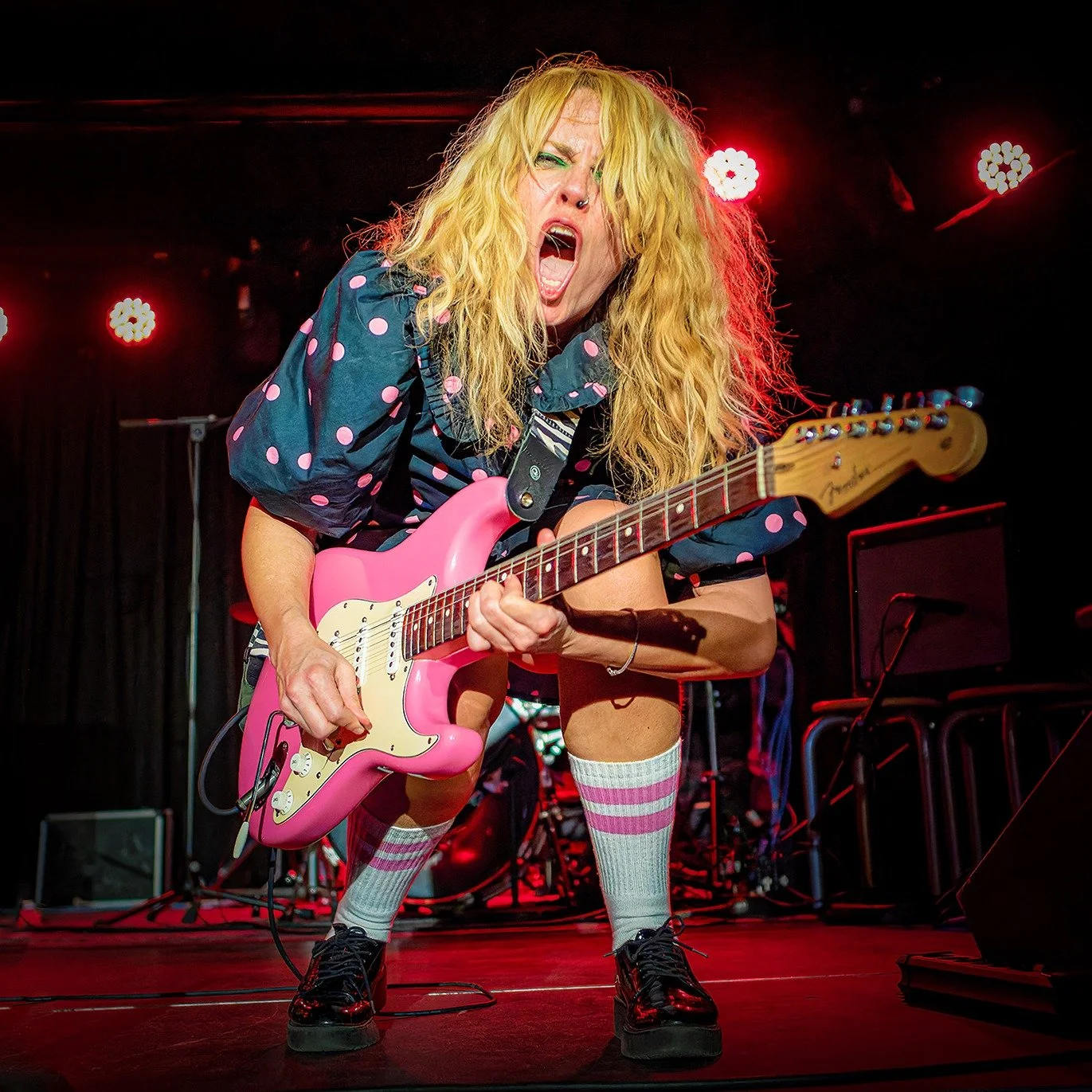
You’ve played over 100 shows across Europe and built a reputation for high‑energy, confrontational performances. What does performing live unlock for you?
The stage is where I feel alive. It’s where I’m free. It’s where I play music. It’s where I reach people who don’t necessarily agree with me. It’s where I get to grab a megaphone and say what I think.
The stage is my safe space. It’s where I feel I can take up space, be loud, and be completely unapologetic about who I am and what I stand for.
The stage is everything. Live is everything.
Live is life! Na Na Na Na-Na.
Your music tackles gender politics, social hypocrisy and feminist activism head‑on. How do you balance the personal and the political when you’re writing — or are they inseparable for you?
For me, the personal and the political are inseparable, but I approach them from different angles.
Sometimes I write from a very personal place and put my own experiences out there. Blame Is a Dye, for example, is about my own experience of sex without consent. Other times, I take a step back and look at the bigger picture: the structures we live in, the power dynamics that shape our lives, and what it would take to change them.
I’m quite a convinced structuralist in that sense. I don’t believe we can change things just by empowering individuals if we don’t also challenge the systems that keep inequality in place. We need to look at the bigger structures built around capitalism and the existing power hierarchies, because they’re not exactly designed to create an equal world.
So I don’t think you have to choose between the personal and the political. They inform each other. But I also think there’s a limit to how personal I want to get. Putting your own experiences out there comes at a cost, and I don’t want to sacrifice too much of myself in the process. I want to use my experiences to say something bigger, rather than feeling like I have to expose every part of myself to make a point. But it is a balancing act!
You’re curating your own dream festival. You get three headline acts, any artist from any era — dead or alive. Who’s topping your bill, and what makes each of them essential to your fantasy lineup?
Okay, I know this is a bit of a cliché, but I have to put Nirvana on the bill. It would be a dream to see them live, playing those incredible songs. I grew up listening to them, and I would have loved to experience that energy in person.
Then I’d probably have to go down the same road and book Hole. Ideally, I’d want to see them around the Celebrity Skin era, but also playing songs from their earlier records, especially Live Through This. Courtney Love is such a force of nature, and I’d love to see that band live.
And then, straight from the depths of my brain, they just popped up, so I’m going with The Gun Club. Nobody sings the blues like Jeffrey Lee Pierce.
So that’s my dream lineup: Nirvana, Hole and The Gun Club. A little bit of feminism, maybe, but mostly just fucking rock’n roll and legends I wish I could have seen live.
It’s Come Dine With Me: A Mess Edition. What’s your starter, main, and dessert — and who in the band is most likely to burn something, forget something, or cause absolute chaos in the kitchen?
First of all, I should probably explain that A Mess is a solo project, I have different drummers joining me on the road. But if I could design my own dream rider, this is what I’d go for.
For a starter, I’d want a little seafood tower with oysters. It’s sustainable, and as Danes, we all live pretty close to the sea. I absolutely LOVE seafood and fish.
For the main course, I’d be a little politically inappropriate and embrace my masculine side by ordering a huge steak with béarnaise sauce. Because I’m the queen of béarnaise. No competition.
And dessert? That would have to wait until after the show. You don’t want to be too full when you’re about to go on stage. Haha! So I’d probably go for a double espresso, a lovely dessert wine and maybe a little cheese. Just a little bit of cheese.
And then? Plenty of lovely wine, obviously. But first show, then wine!
You’ve toured extensively and built momentum across Europe. What’s something about life inside A Mess — a ritual, a superstition, a chaotic habit — that fans wouldn’t expect?
I’m a bit of a workaholic, so all the waiting around on tour means I end up working a lot just to keep myself from getting bored. There’s always an insane amount of admin and paperwork involved in being an independent artist, so you’ll often find me sitting in front of my laptop rather than doing anything particularly rock’n’roll.
I actually love travelling by train on tour. We do that quite a bit, and it gives me time to get things done instead of just sitting around.
As for pre-show rituals, I’m afraid it’s not that glamorous. I put on some makeup, get dressed, and try to get into the right headspace. With my old drummer, we used to hum the theme song from Beverly Hills, 90210 and give each other a series of high fives just like Steve and Dylan did! Very rock’n’roll, obviously.
These days, it’s more about a high five, a hug, and taking a moment to look each other in the eyes before we go on stage. Just grounding ourselves and making sure we’re present. Maybe throwing in a push-up or two for getting pumped!
Then it’s time to make some noise.
With new singles landing and your profile rising across Europe, where do you see A Mess in 12 months’ time? What’s the next chapter you’re excited to write?
There’s an album coming in 2027, and I really hope it takes A Mess further across Europe. We’ve signed with Rookie Records in Germany, and I’m excited to see what doors that might open, especially when it comes to playing bigger shows and festivals in Germany.
Playing Reeperbahn Festival this September was a real highlight, and I’m already looking forward to Orange Blossom Festival in Germany next Whitsun. I’d love to play some of the great rock festivals in the UK, too.
And if anyone out there is listening — or reading this — I’d absolutely love to take A Mess to Japan one day. Touring somewhere that far away, bringing my music to a completely different part of the world, would be a dream. Australia and New Zealand are high on my list, too. There are so many great bands coming out of that part of the world, like Amyl and the Sniffers and Body Type, and I’d love to experience those scenes for myself.
Three years ago, I sat down with a coach and made a five-year plan for A Mess. One of the milestones on that list was playing Reeperbahn Festival. And now I’ve done that. So who knows? Maybe some of the other things on that list will happen, too. I’m excited to find out.
From transforming personal experiences into rallying cries for change to building a growing European audience one explosive live show at a time, A Mess remains an artist driven by purpose as much as passion. With a debut album on the horizon, a growing reputation across the continent and ambitions that stretch as far as Japan and beyond, the journey is only just beginning. Uncompromising, thoughtful and armed with plenty to say, A Mess is proving that great rock music can be both cathartic and confrontational, delivering sharp messages without ever losing sight of the fun, freedom and community that make it so powerful in the first place.
Keep up to date with A MESS via INSTAGRAM
Credit - Stefan Kruse