Over the past few years Lewis Capaldi has delivered a run of spellbinding, heart‑thumping songs that have turned everyday moments into emotional epics, they are the kind of tracks that feel like they were written for YOU, even when millions are singing them at the same time. There’s a vulnerability to his voice, a lived‑in honesty to his writing, and a self‑deprecating charm that somehow makes the heartbreak hit even harder. It’s this rare combination that’s pushed him from rising star to cultural phenomenon, a storyteller whose appeal stretches far beyond genre or generation.
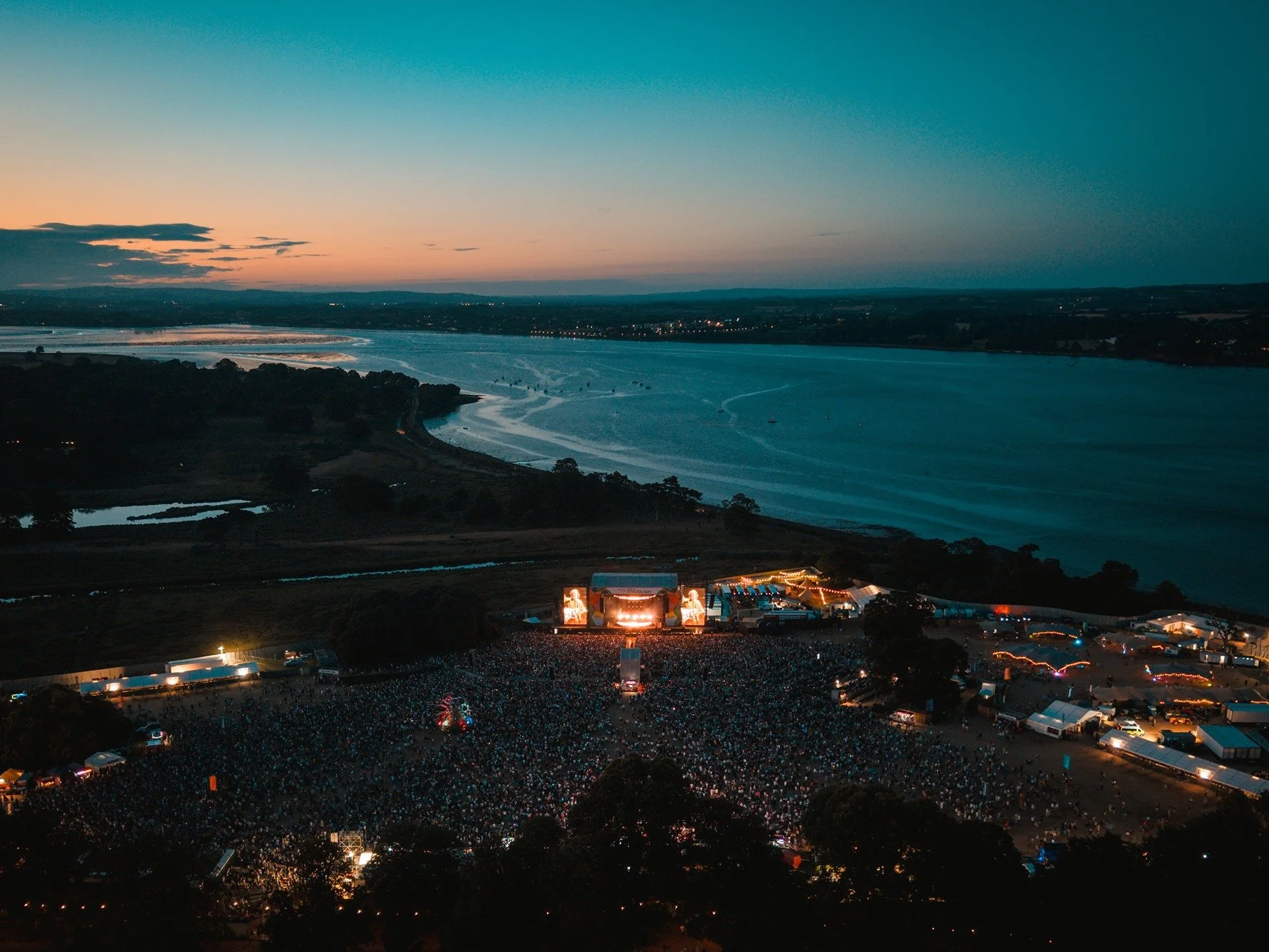
And that magnetic pull is exactly why Powderham Castle is going to feel electrified on Saturday 27th June, when Capaldi steps onto that stage with the River Exe behind him and a field full of fans, ready to belt every word back at him. His shows are similar to communal therapy sessions wrapped in humour, vulnerability, and those colossal choruses he’s become known for. As he brings his catalogue of modern classics to one of the South West’s most picturesque venues, it promises to be a night where the jokes land, the emotions run high, and the songs remind you why Capaldi remains one of the most compelling voices in pop today.
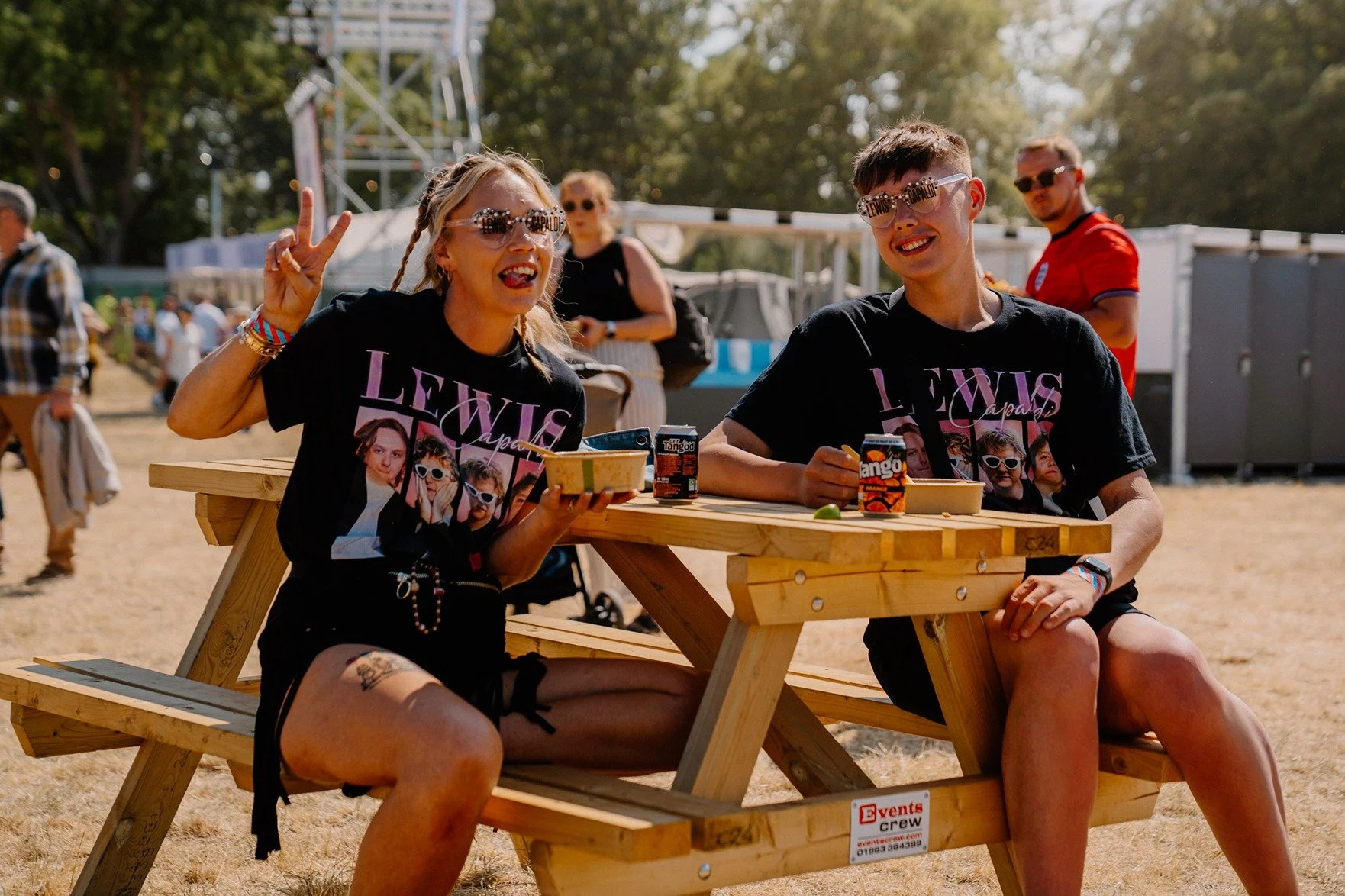
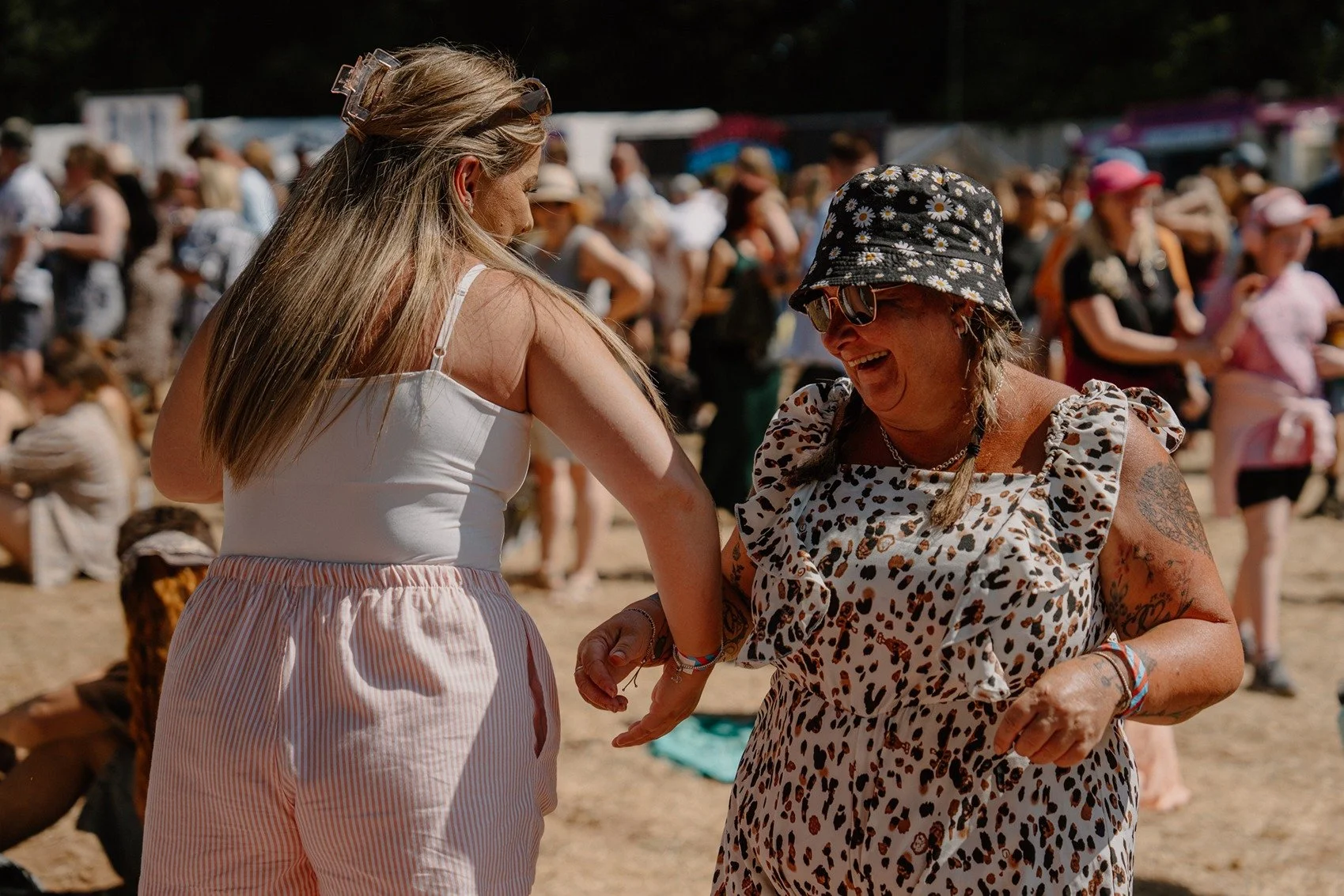
Come the day, we arrived late afternoon, the traffic had picked up from the previous evening, then again, it was Saturday and many people wouldn’t have been working. We picked up our tickets and headed in for a drink and a sit down in a nice shaded area, the sun was beating down but, with a fair breeze in the air, it didn’t feel as muggy as it did for the Alanis Morissette show the night before.
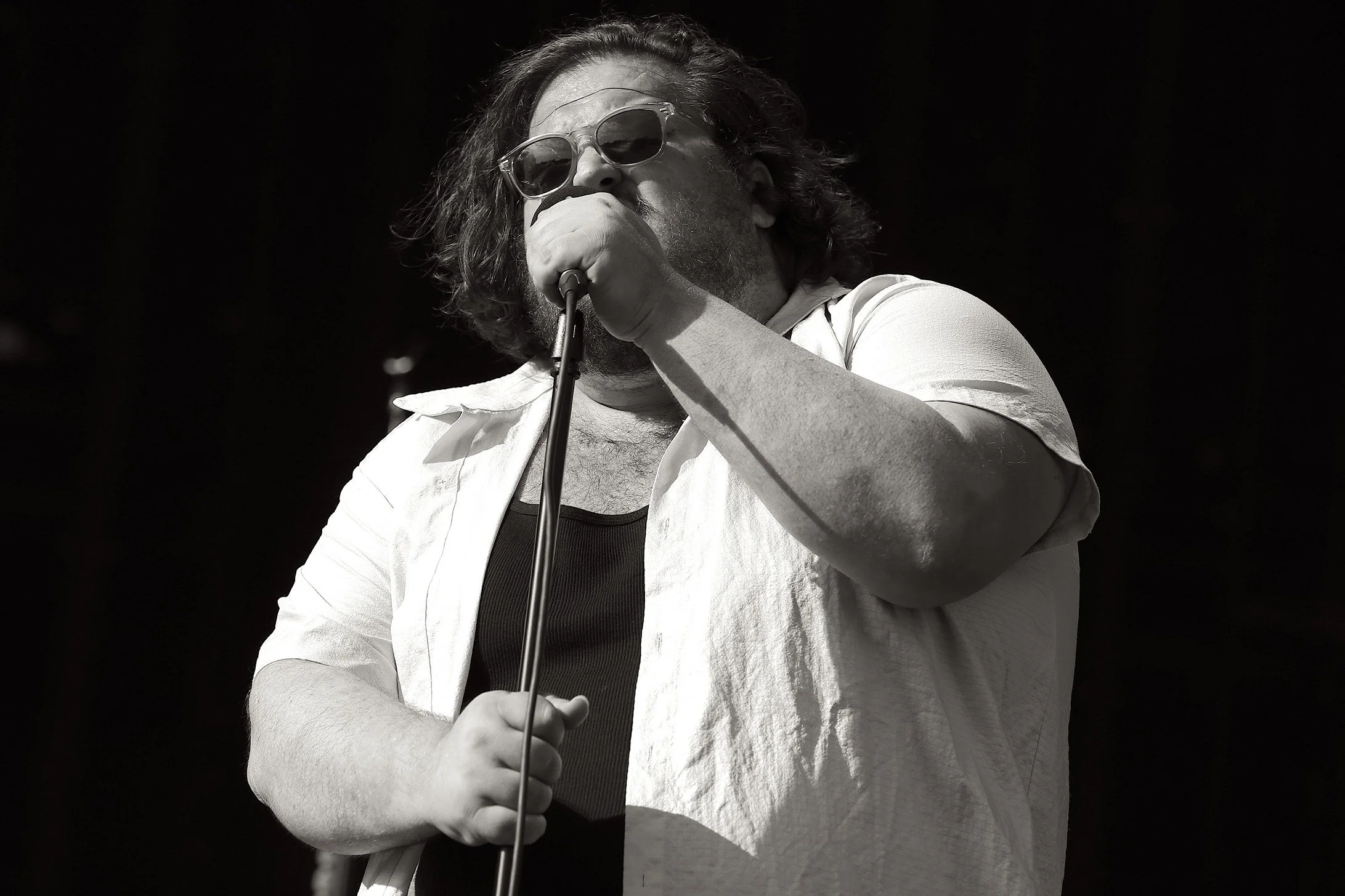
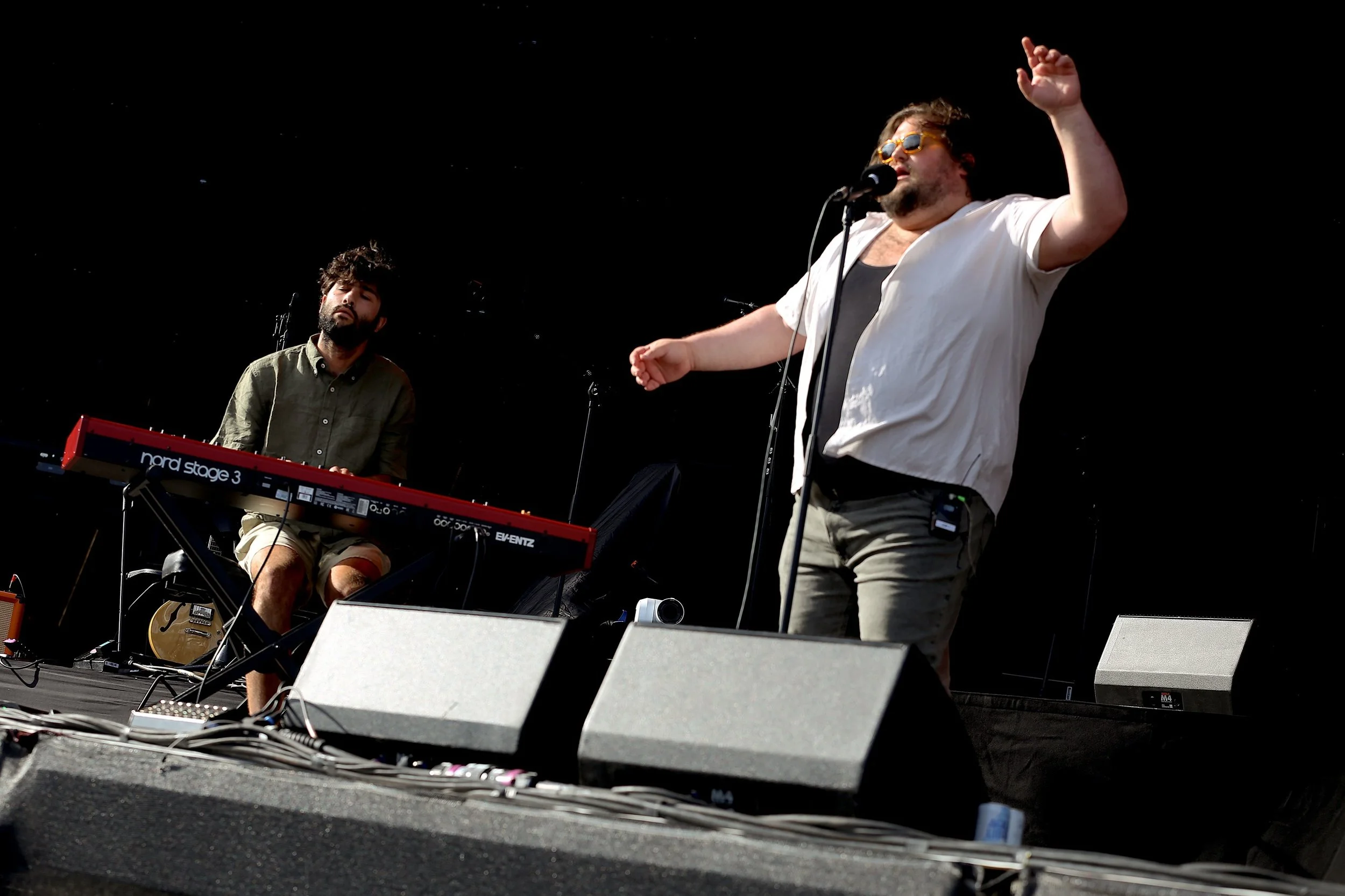
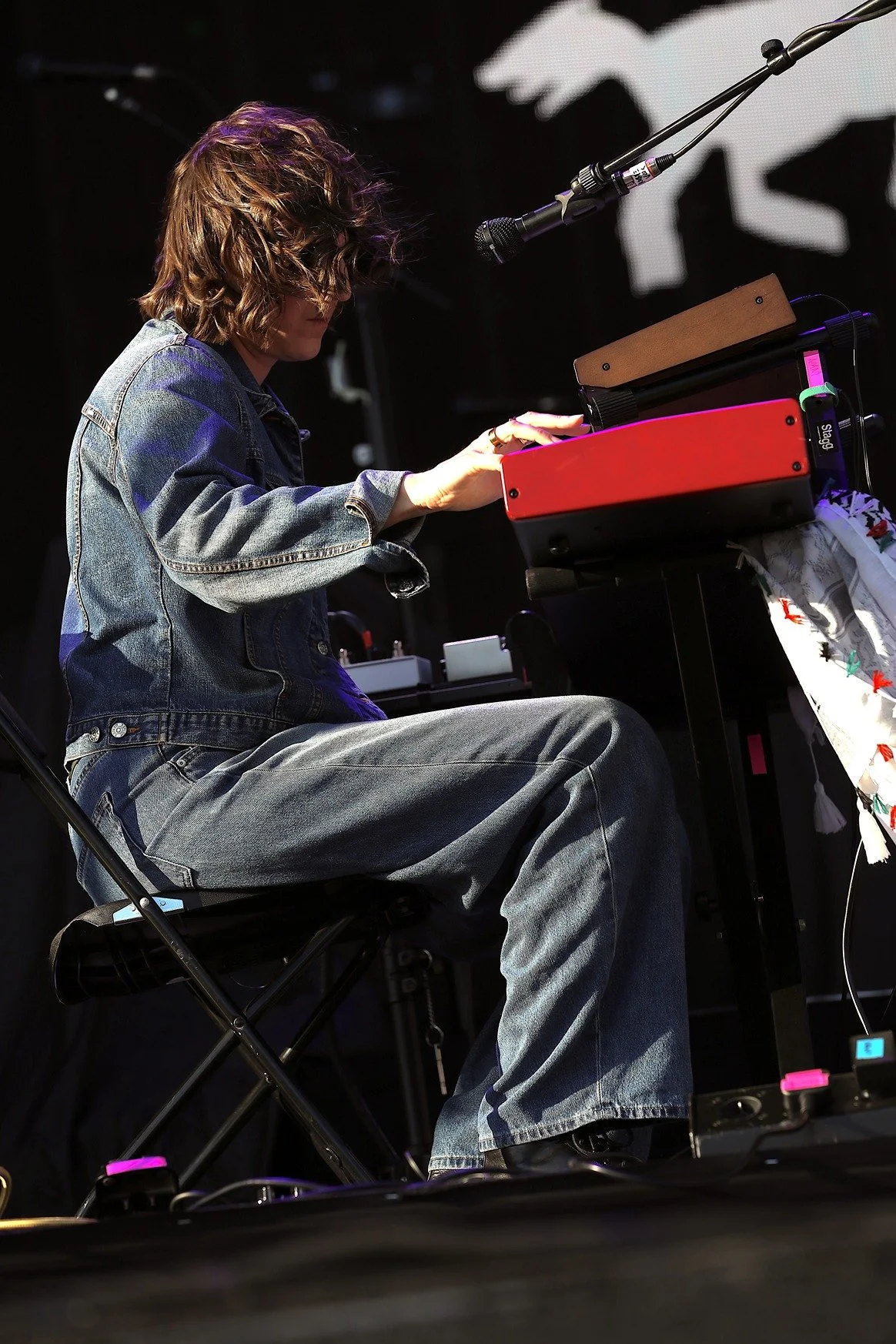
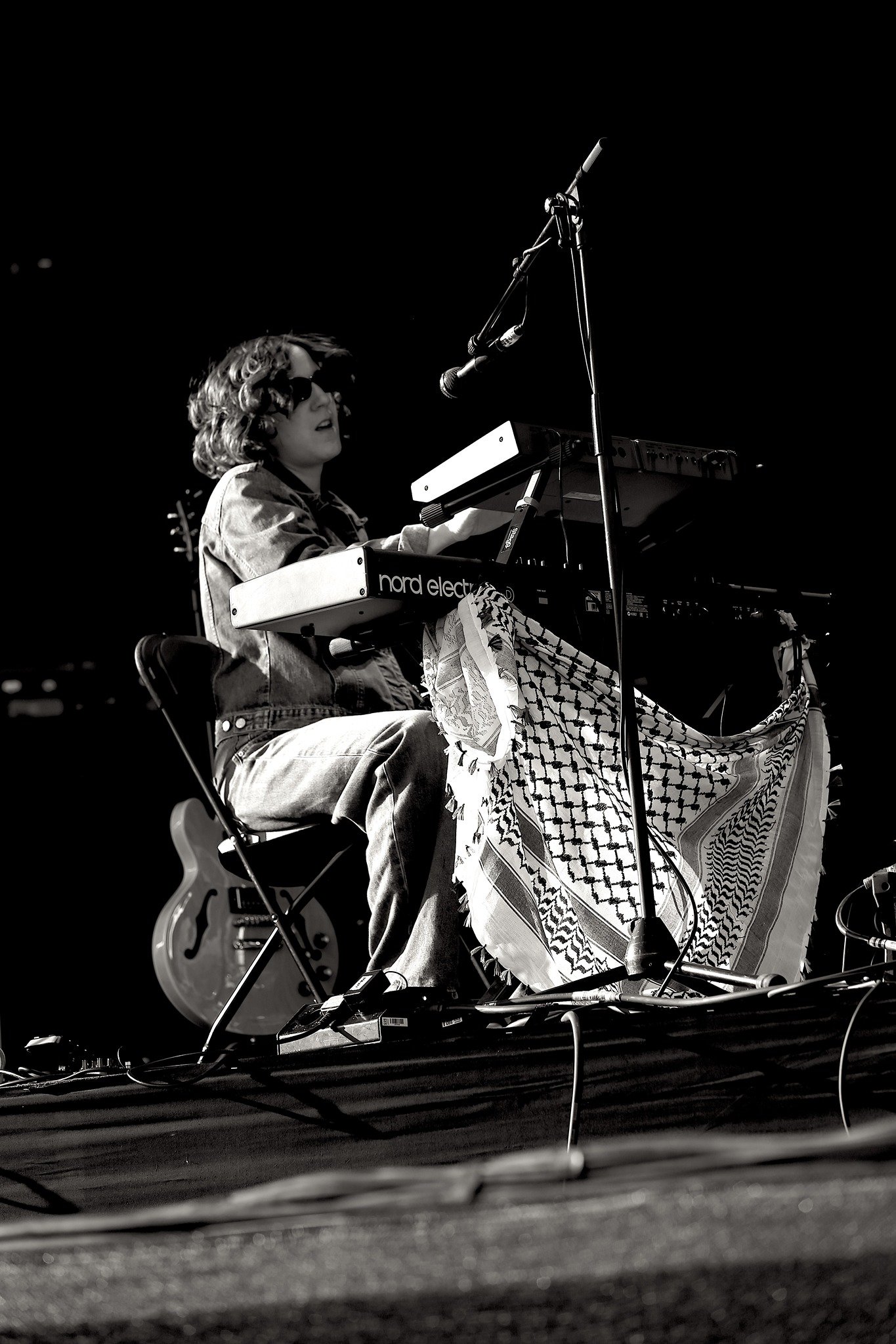
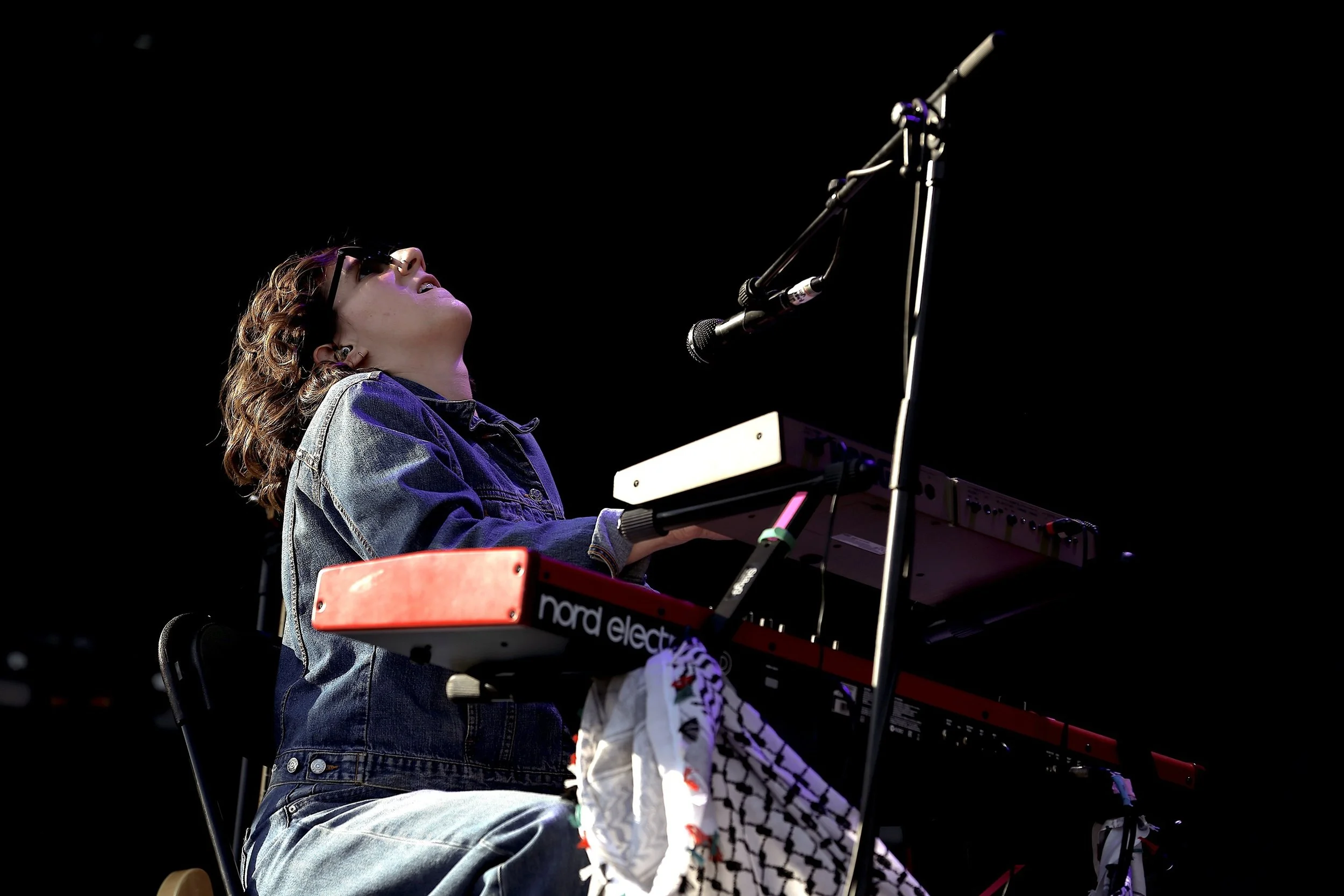
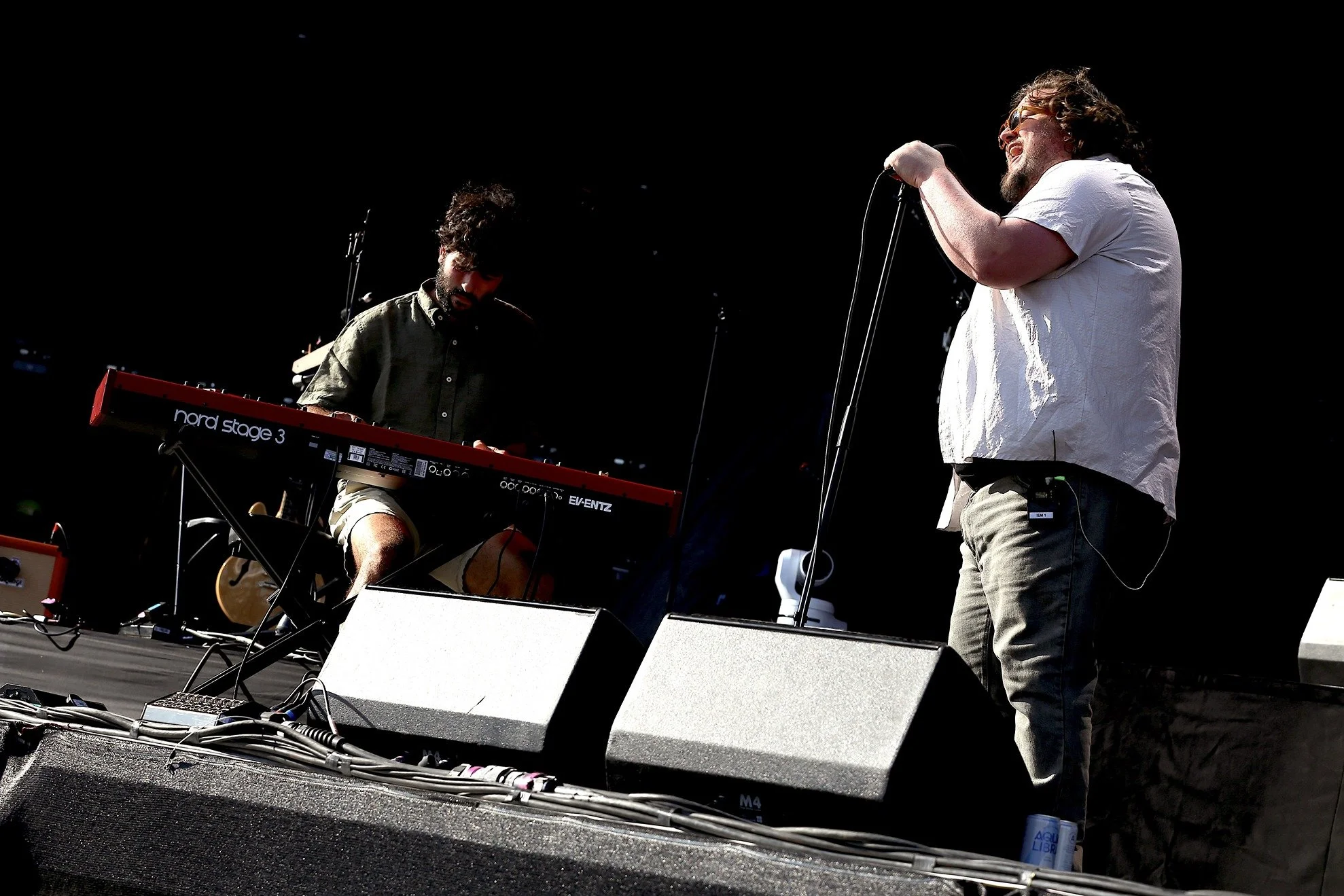
Come meet up time, I took to the photo pit to capture some images of the opening act.
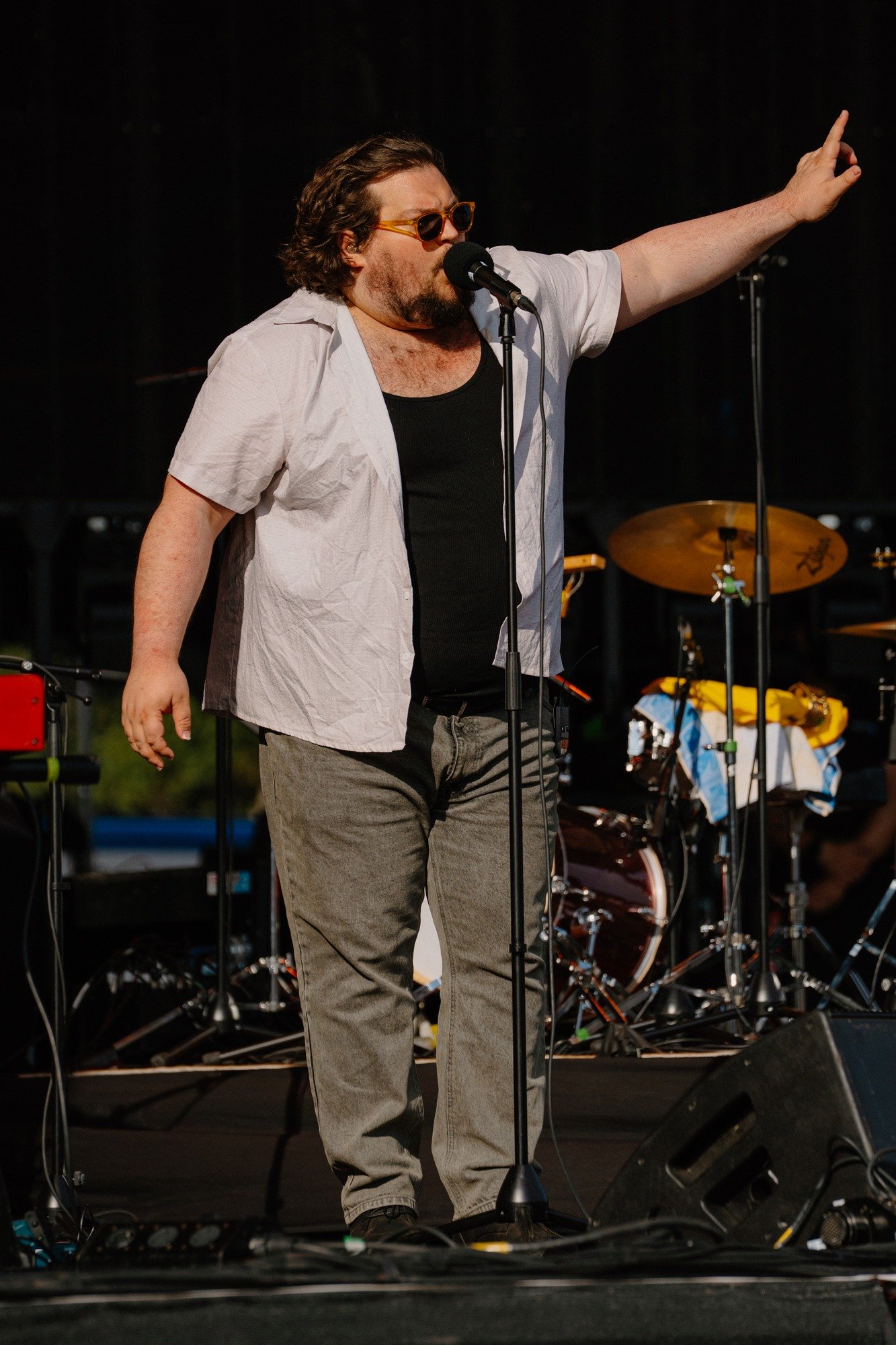
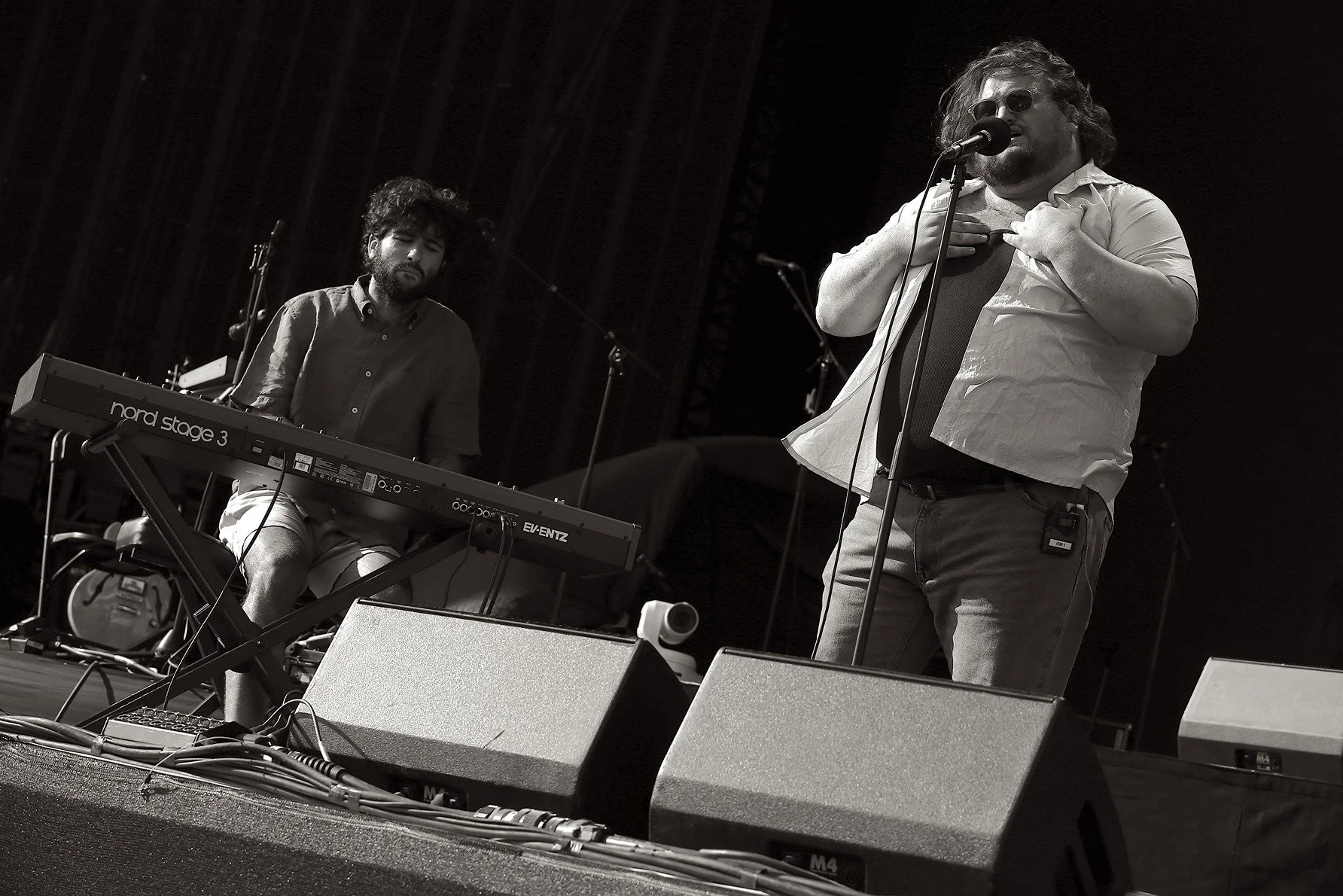
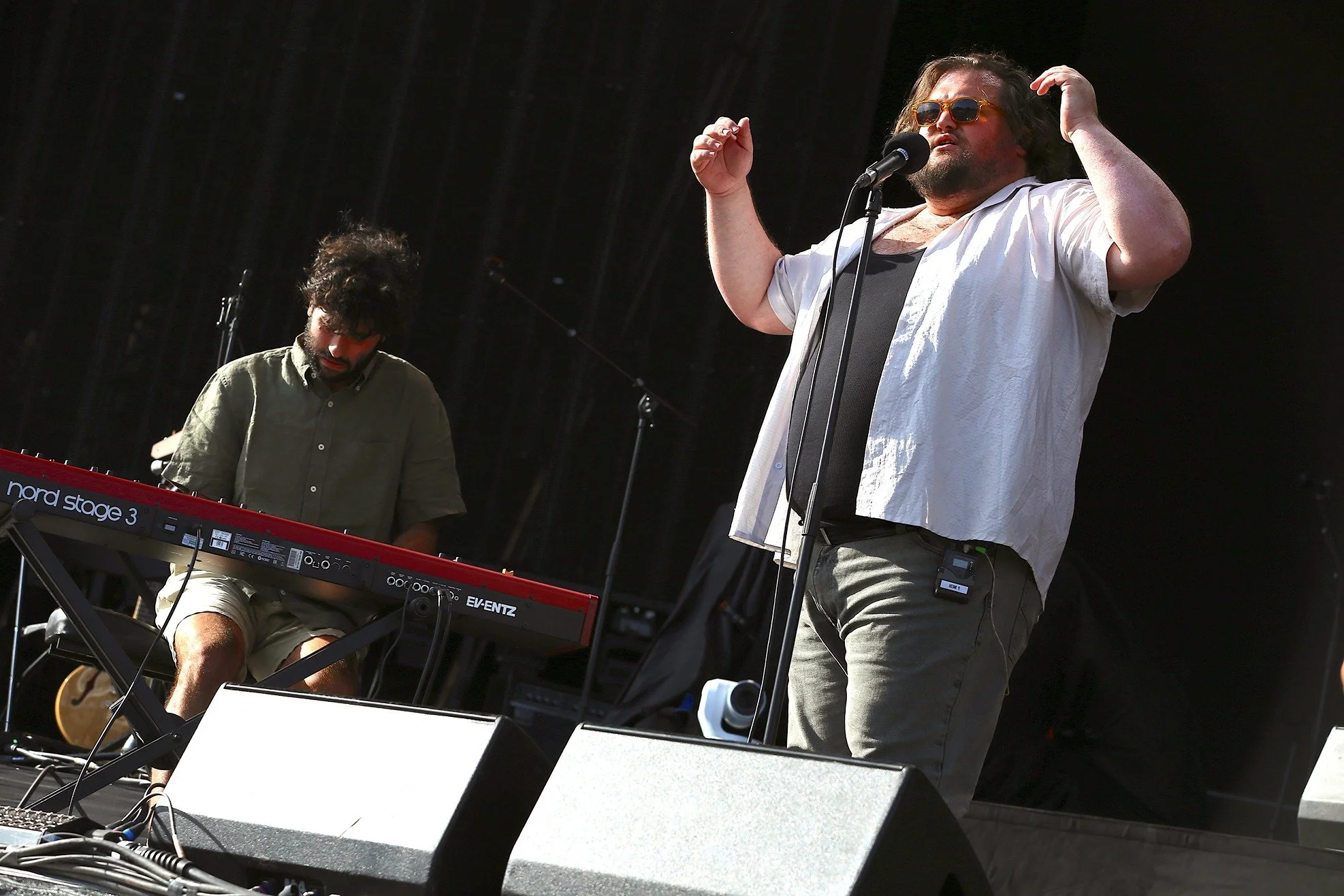
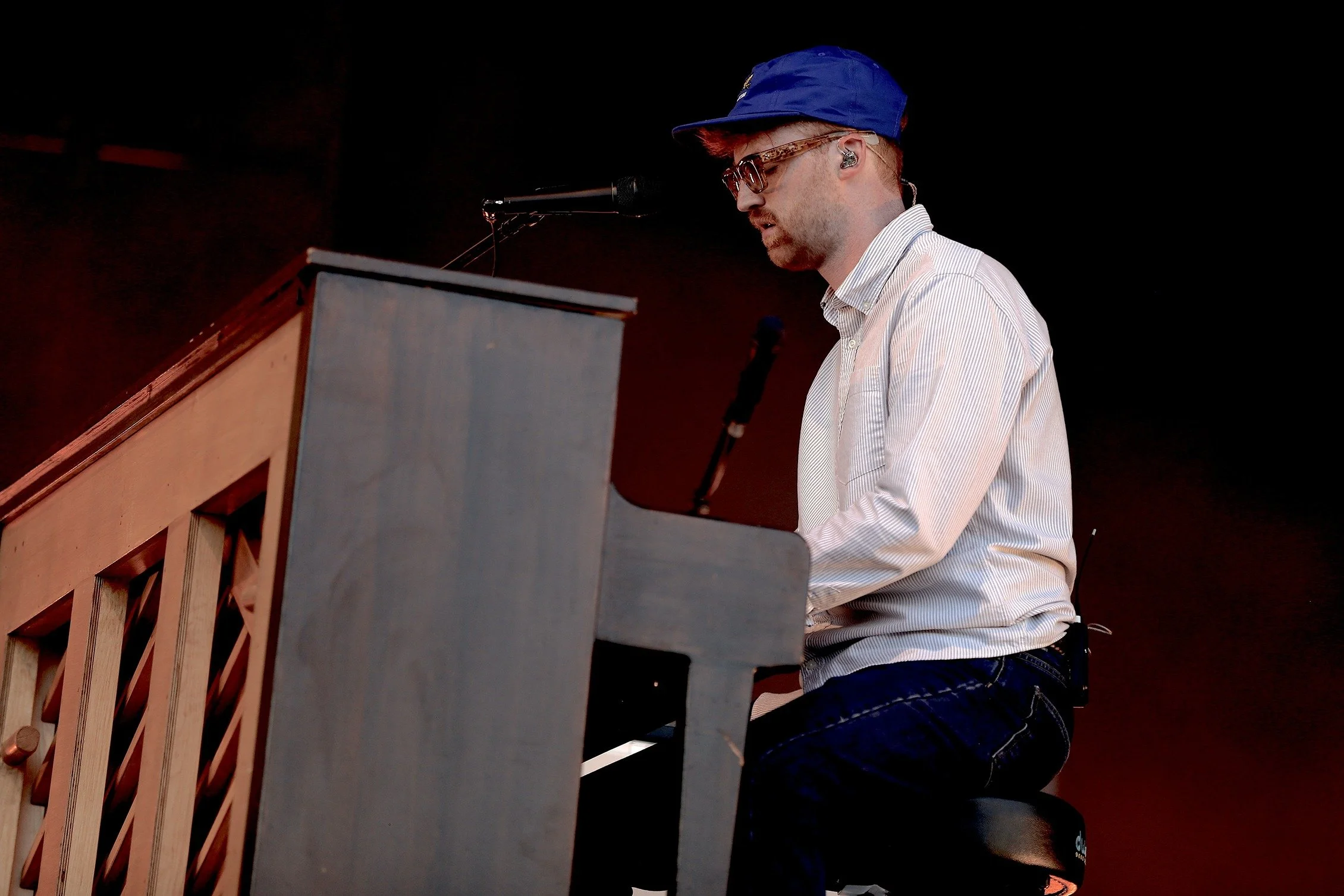
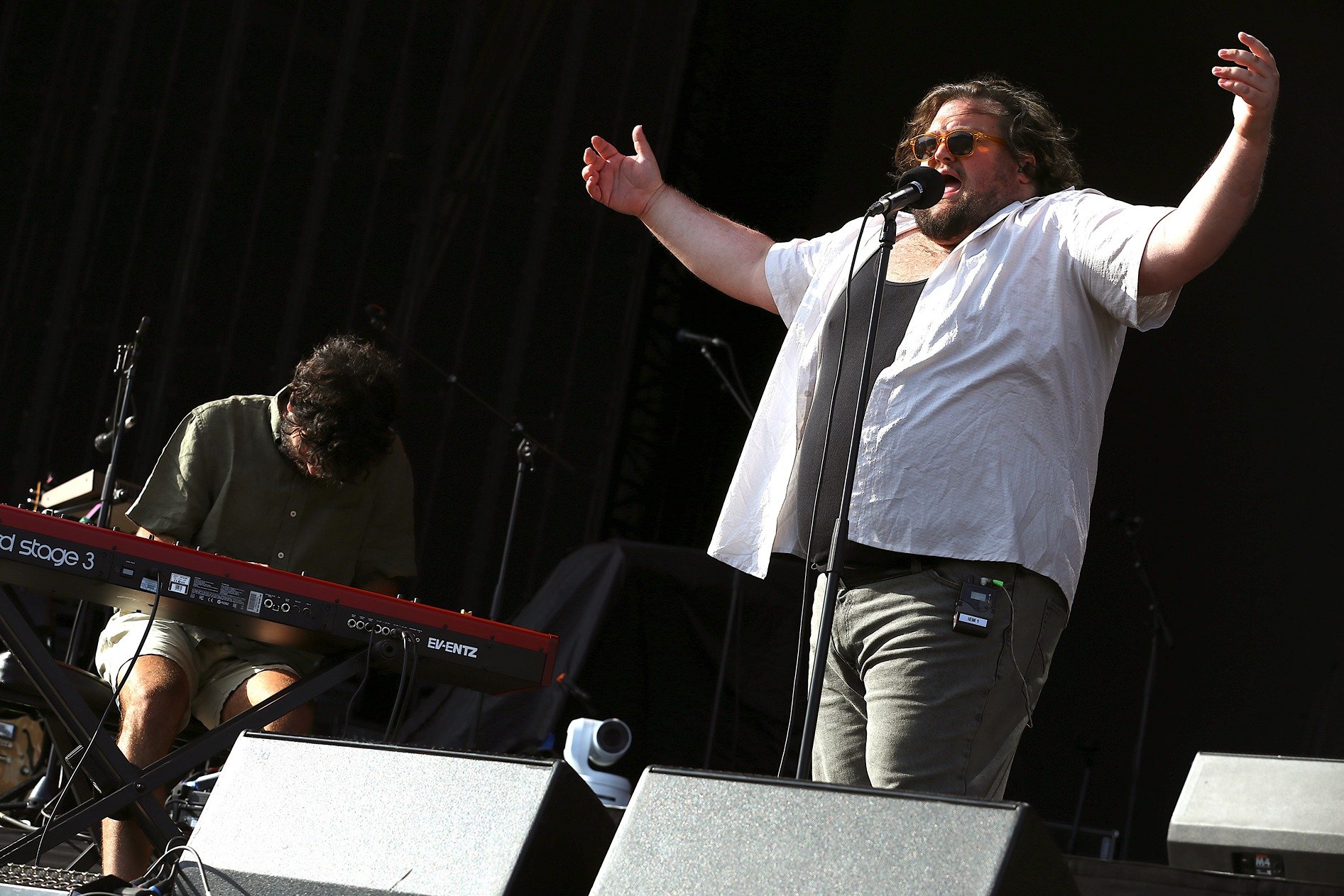
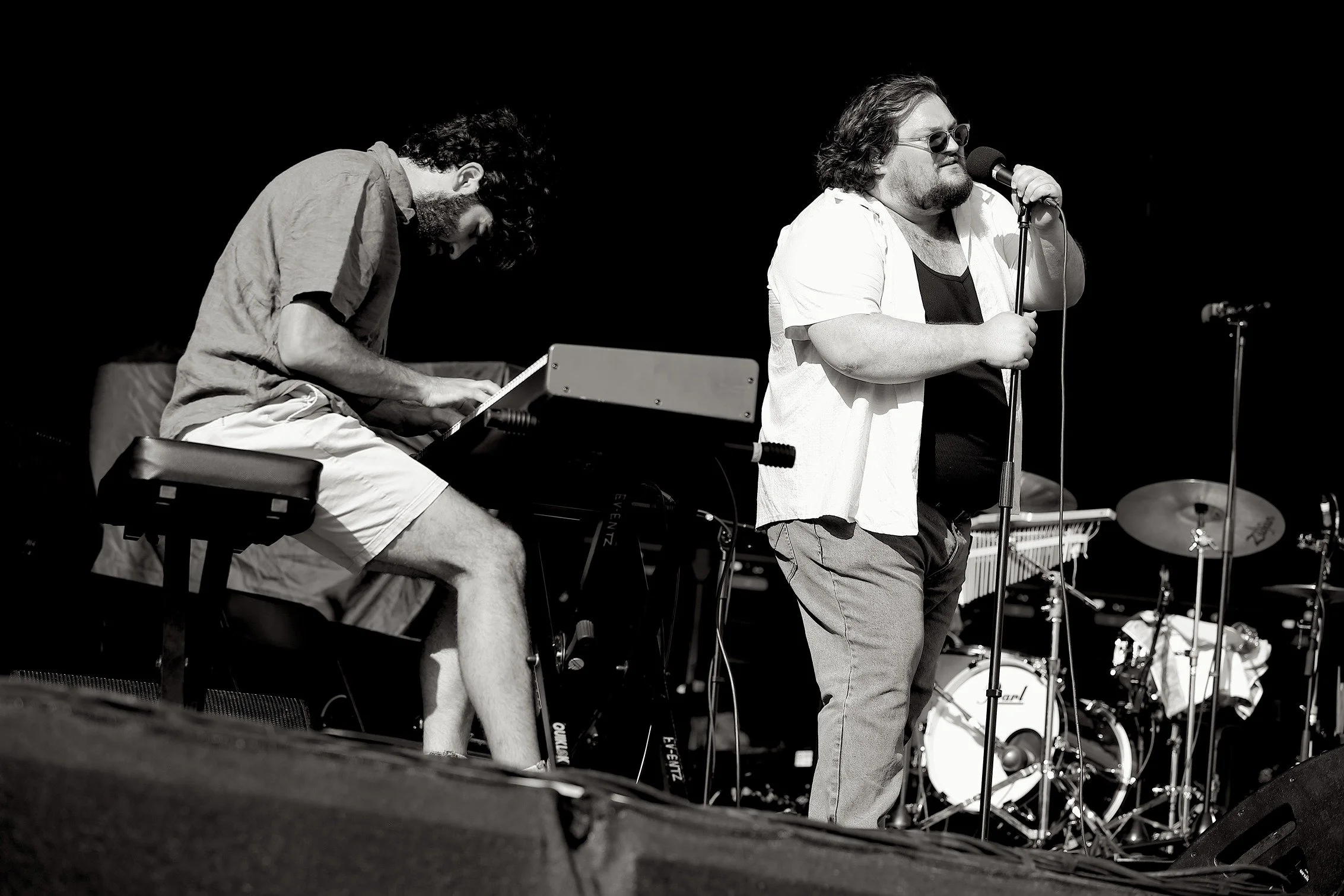
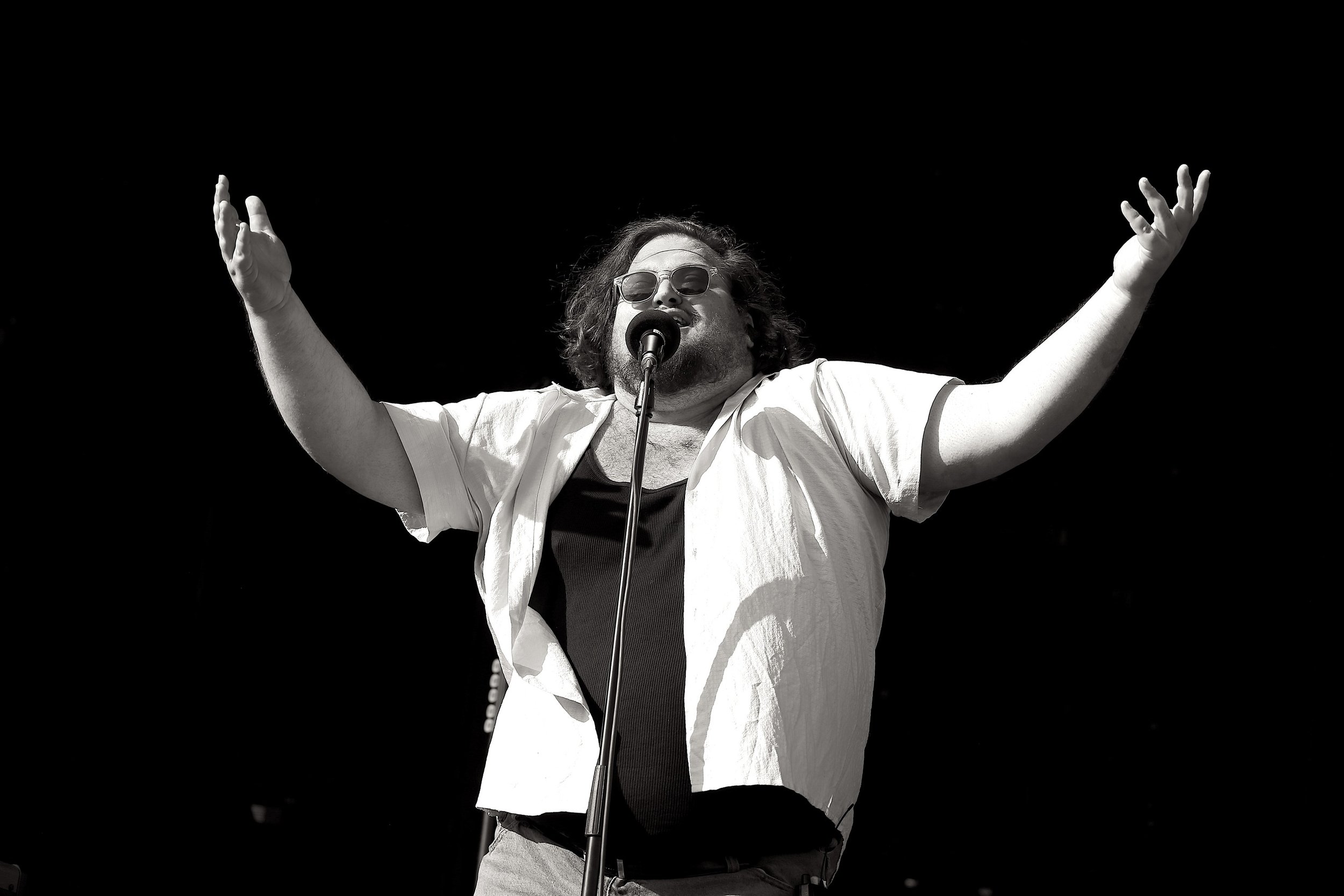
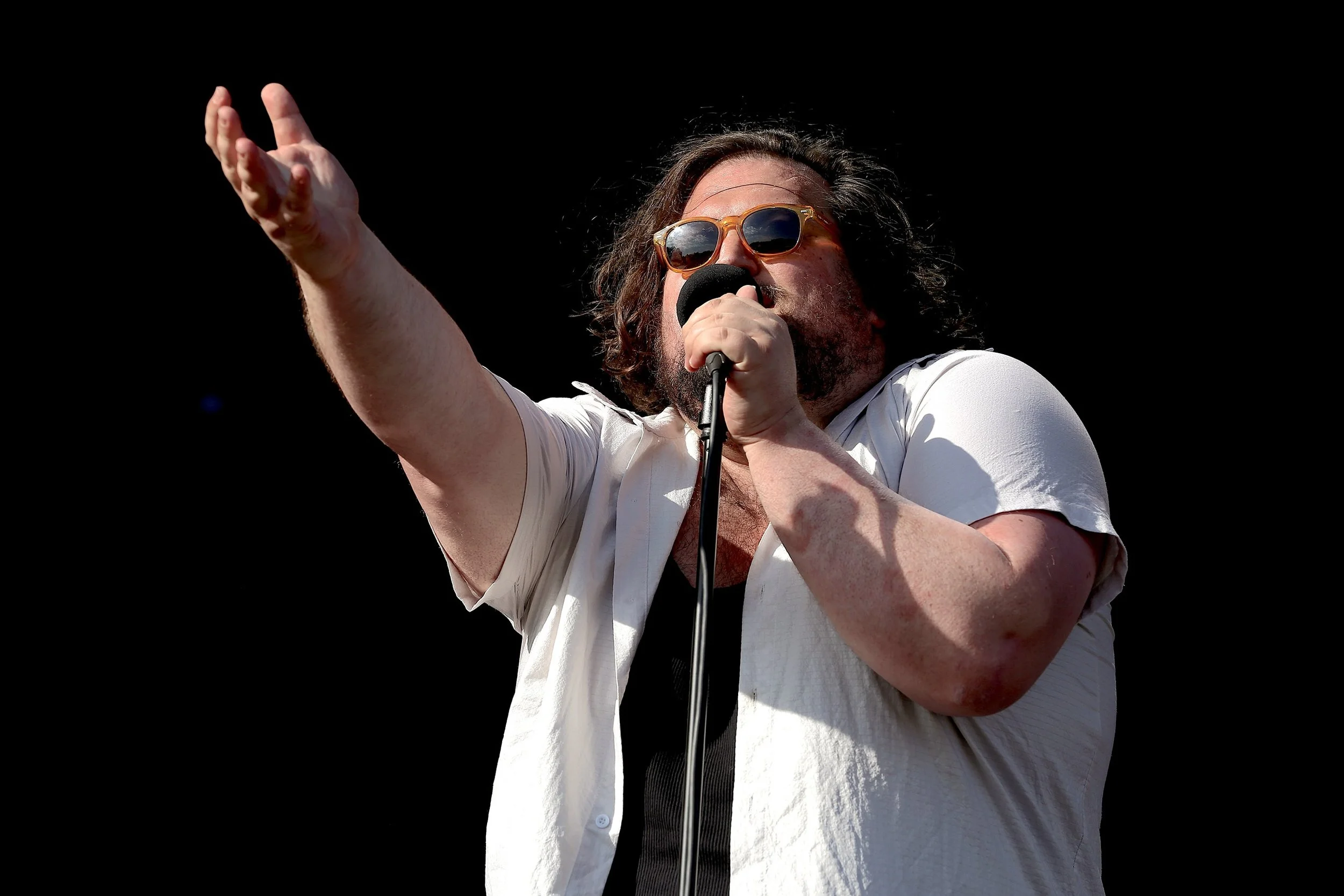
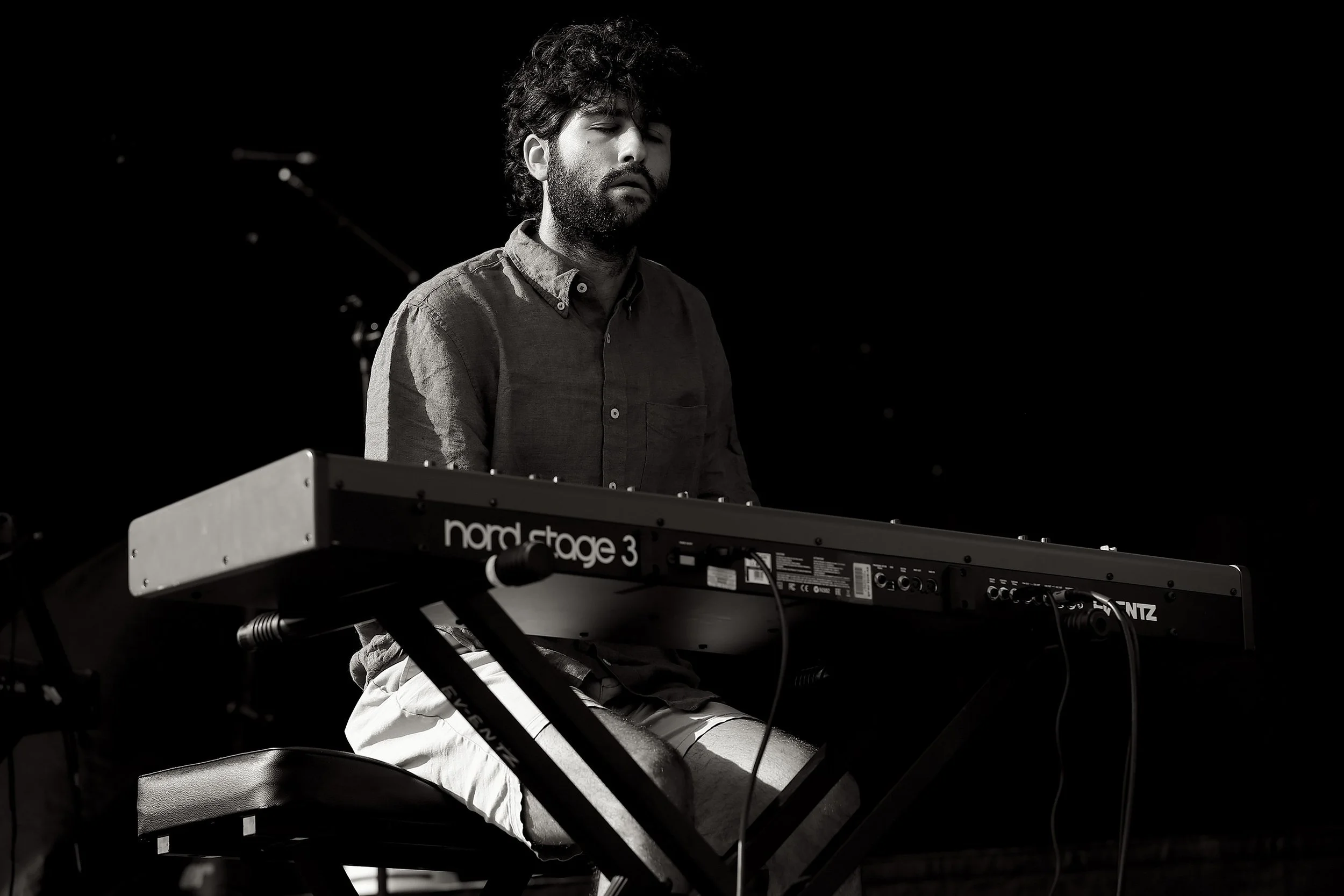
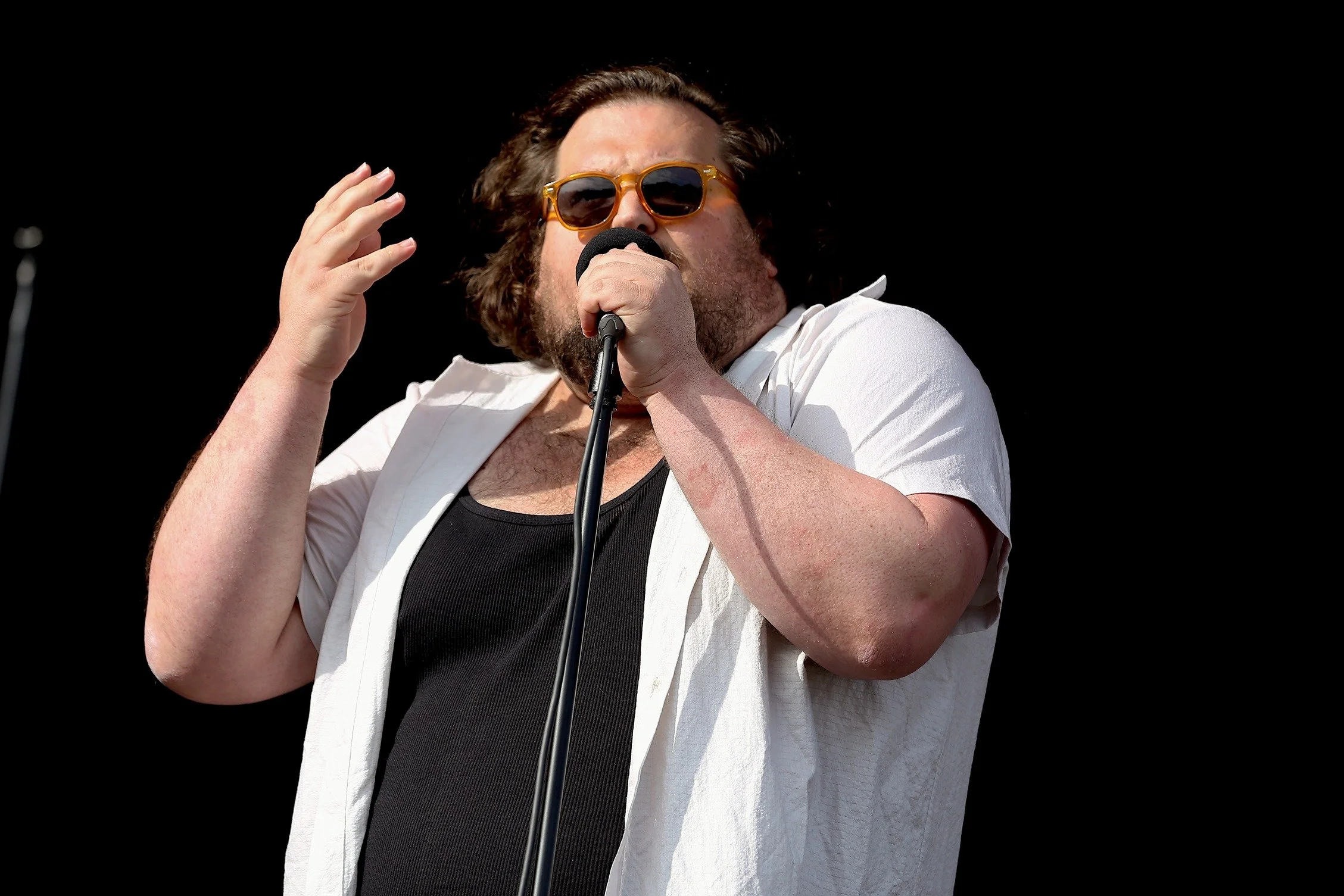
Supporting Lewis Capaldi is no small assignment, but Tyler Ballgame, the Rhode Island‑born singer with a voice that bends between bel canto drama and indie‑folk intimacy, approached it with quiet confidence. Usually part of a six‑piece band, he stripped things right back for this Devon crowd, performing with just his keyboard player. The result was a set that felt cinematic in its simplicity, letting his extraordinary tenor fill the open air with warmth, ache and old‑school showmanship.
Tyler Ballgame was born Tyler Perry in Cumberland, Rhode Island, he grew up in musical theatre before studying songwriting at Berklee College of Music. His early career was marked by self‑doubt and false starts, but everything shifted when he moved to Los Angeles at 29. It was there, during a run of open‑mic nights, that audiences responded powerfully to his dramatic, Orbison‑esque delivery, especially his rendition of “Crying”. That reaction helped him shape the persona he performs under today. The name “Ballgame” itself is a nod to baseball legend Ted Williams (“Teddy Ballgame”), a playful, larger‑than‑life alias that allowed Tyler to step into a character bigger and bolder than the one he’d lived with for years.
His breakthrough came when he connected with producers Jonathan Rado and Ryan Pollie, who helped him craft his debut album, For the First Time, Again, a lush, analog‑rich record released in early 2026. Powderham Castle proved the perfect setting for several of its standout tracks. Matter of Taste swelled beautifully in its stripped‑back form, Goodbye My Love showcased his Orbison‑like emotional reach, and Got a New Car landed with reflective charm. He closed with I Believe in Love, a soaring pep‑talk anthem that let his voice ring out across the castle grounds.
Minimalist sets can expose an artist, but tonight, they revealed Tyler Ballgame at his most compelling. No theatrics, no band, no safety net, just a voice, a keyboard, and a performer who seems to carry decades of musical history in his lungs. Powderham Castle came expecting Lewis Capaldi’s big‑hearted choruses, instead, they were treated to a spellbinding opener who delivered something quieter, stranger, and utterly unforgettable.
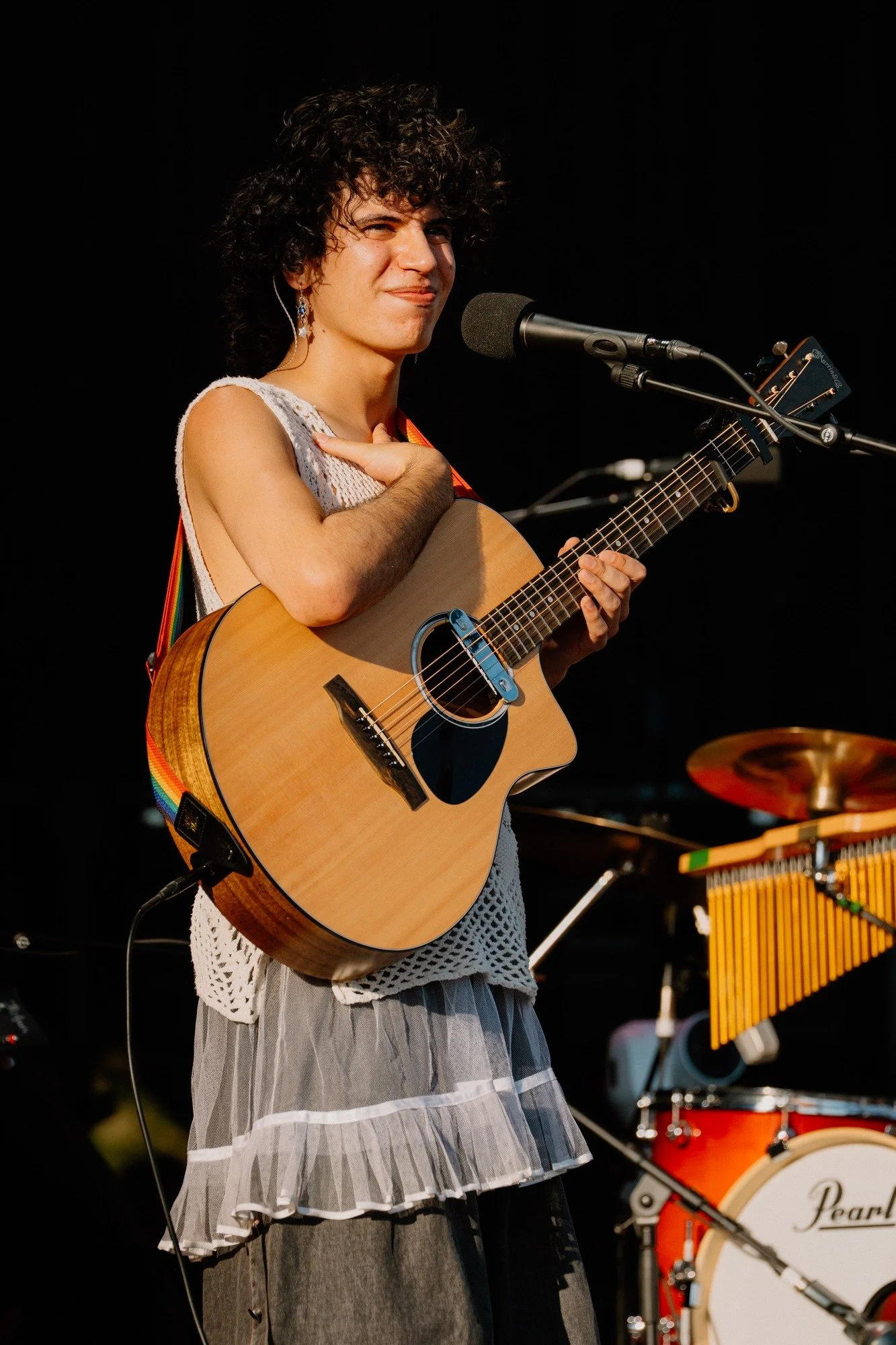
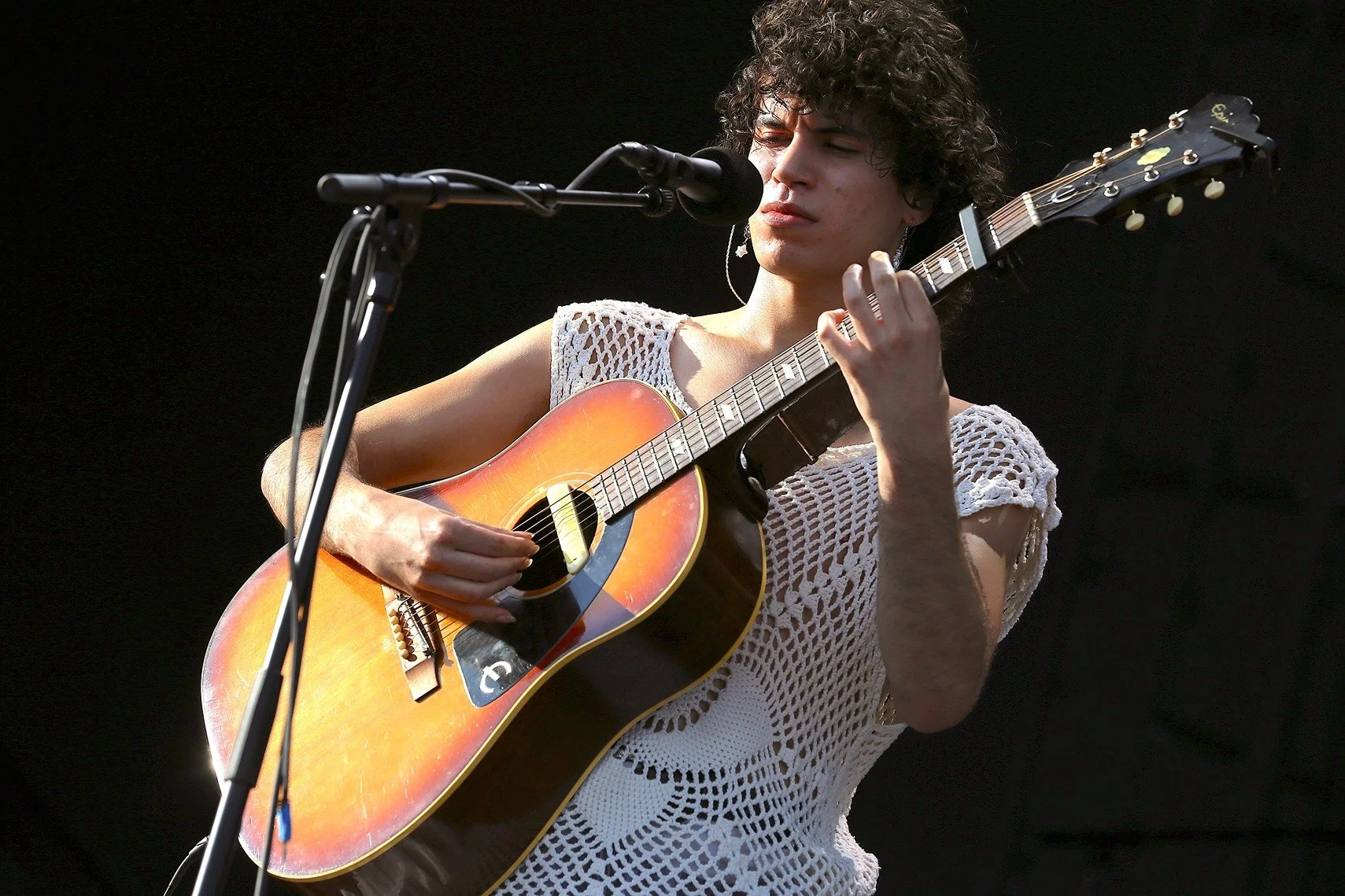
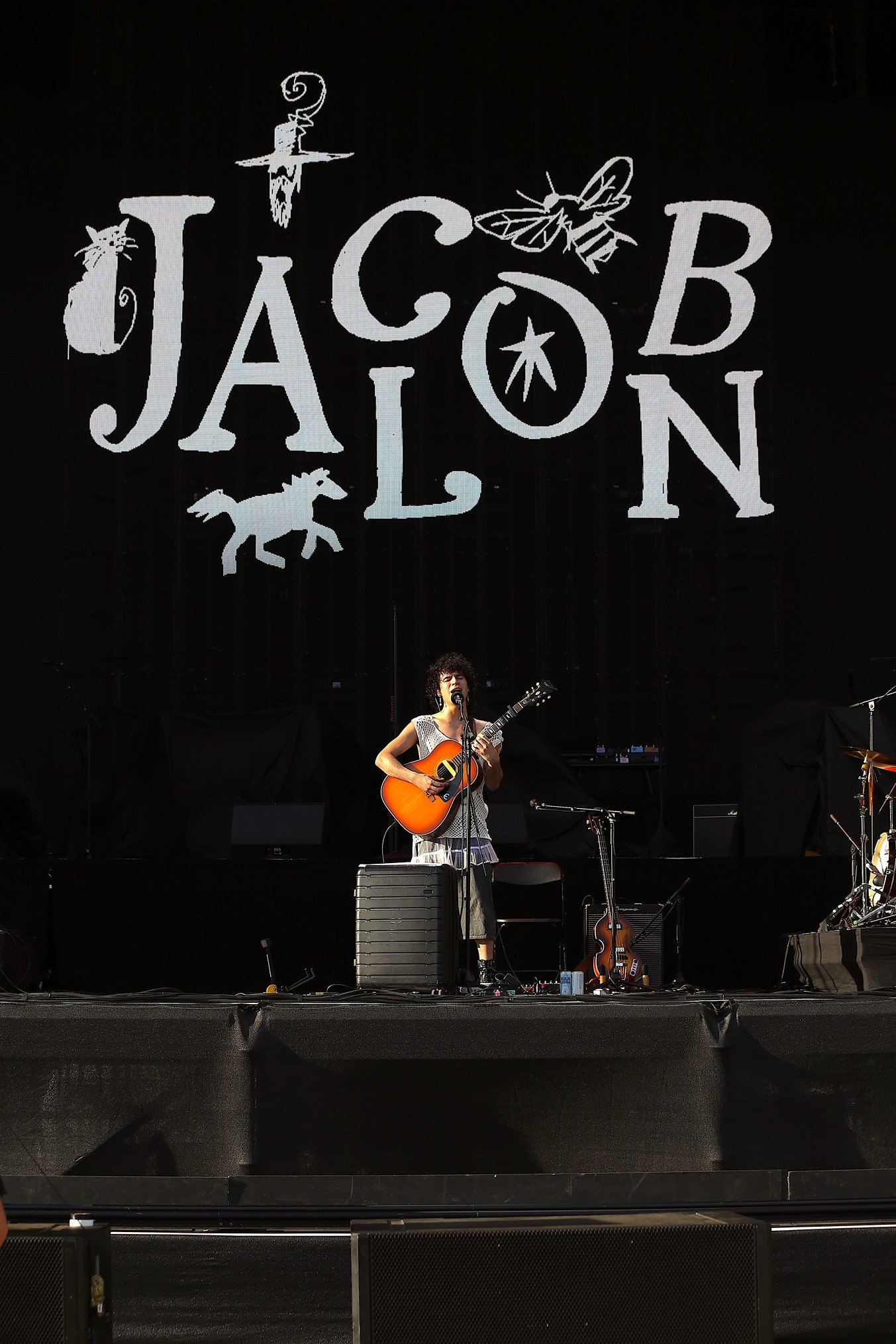
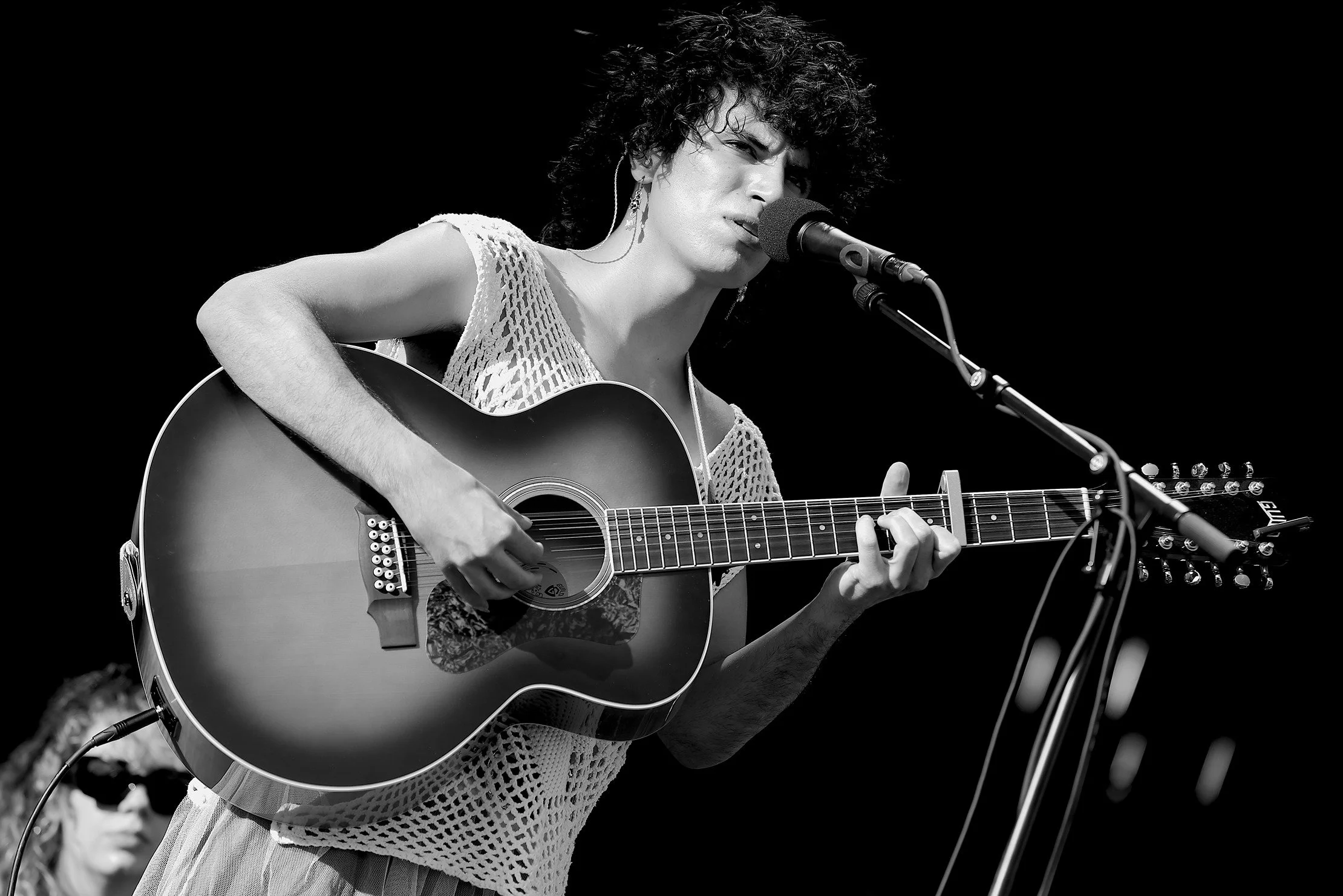
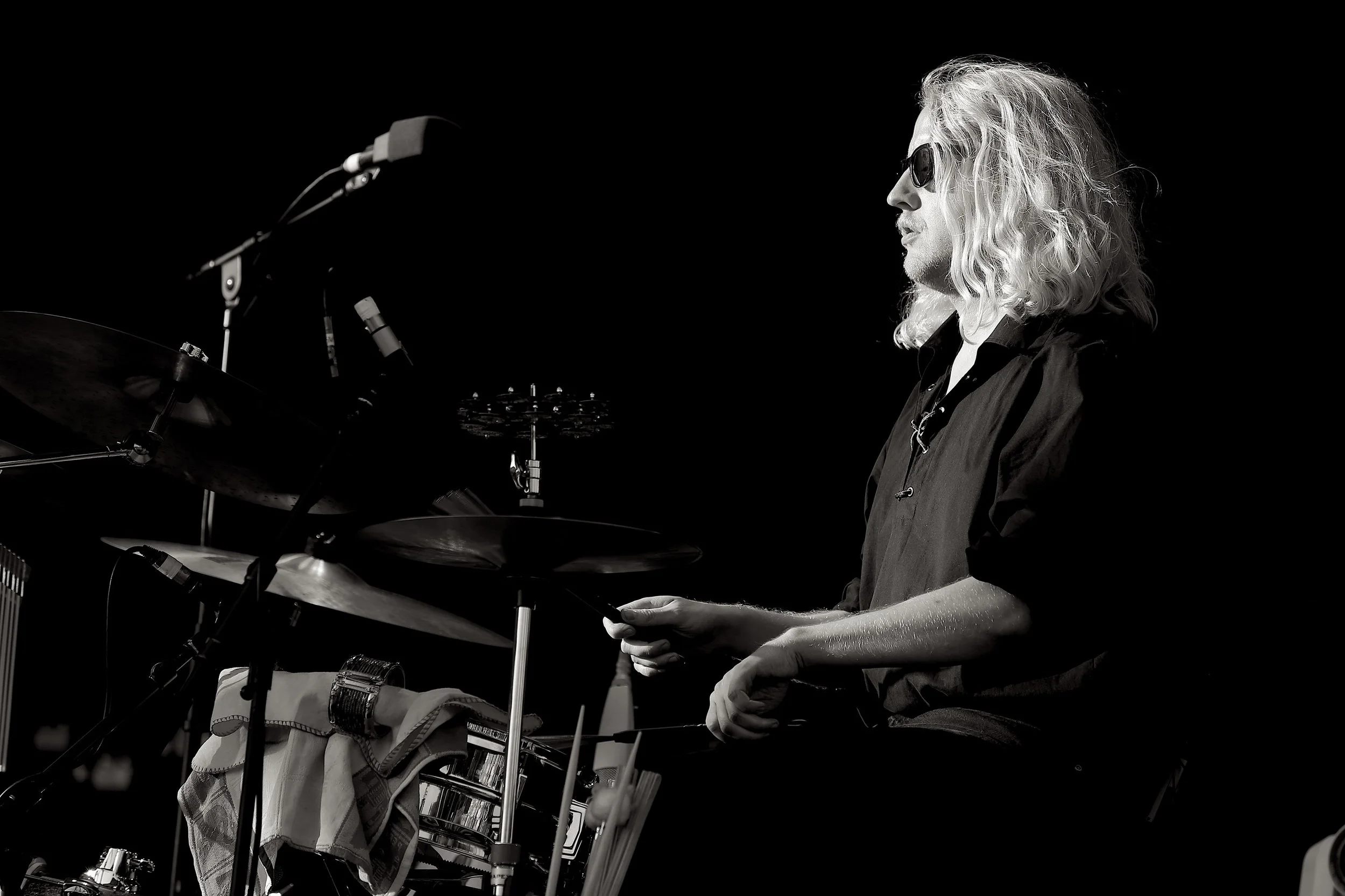
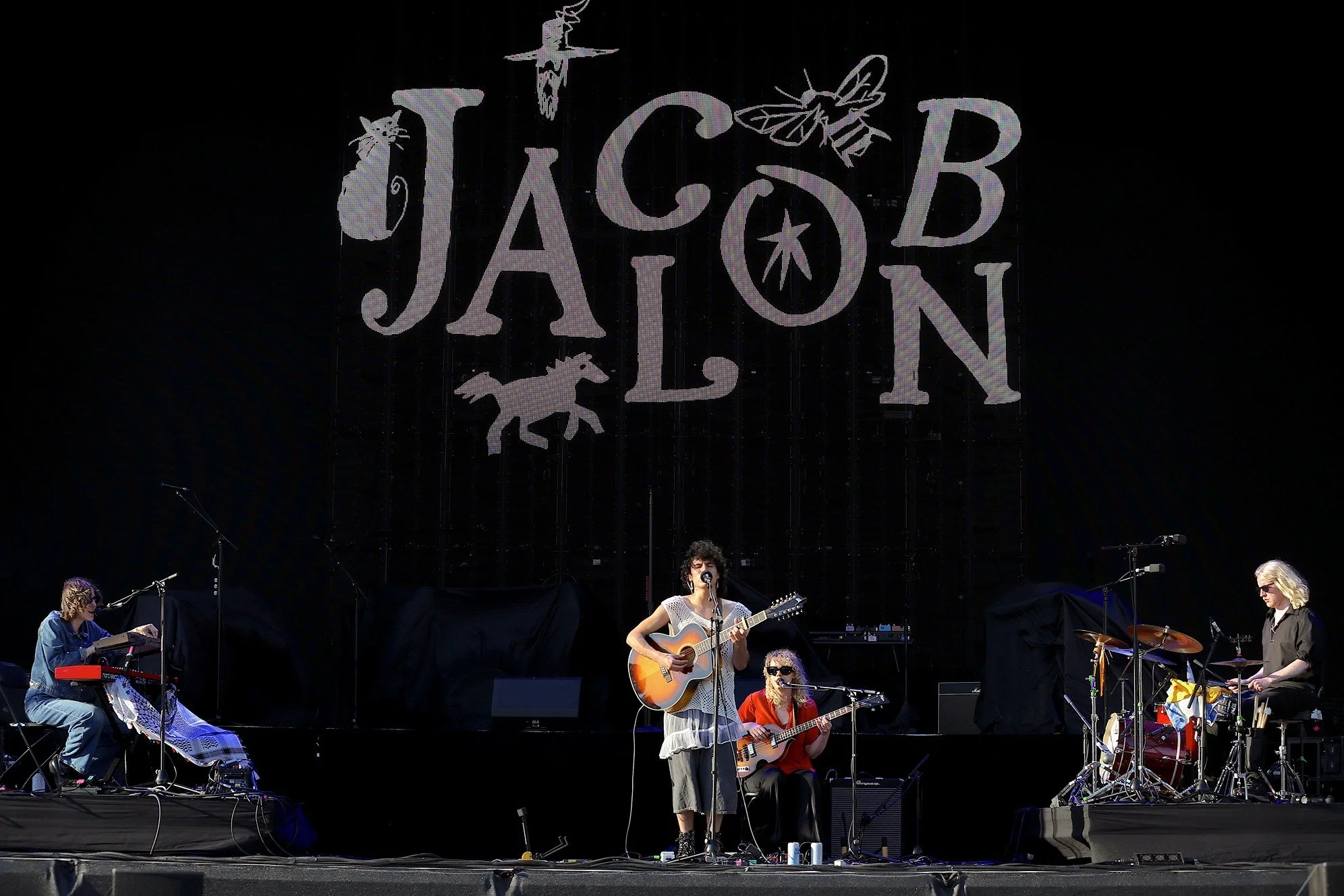
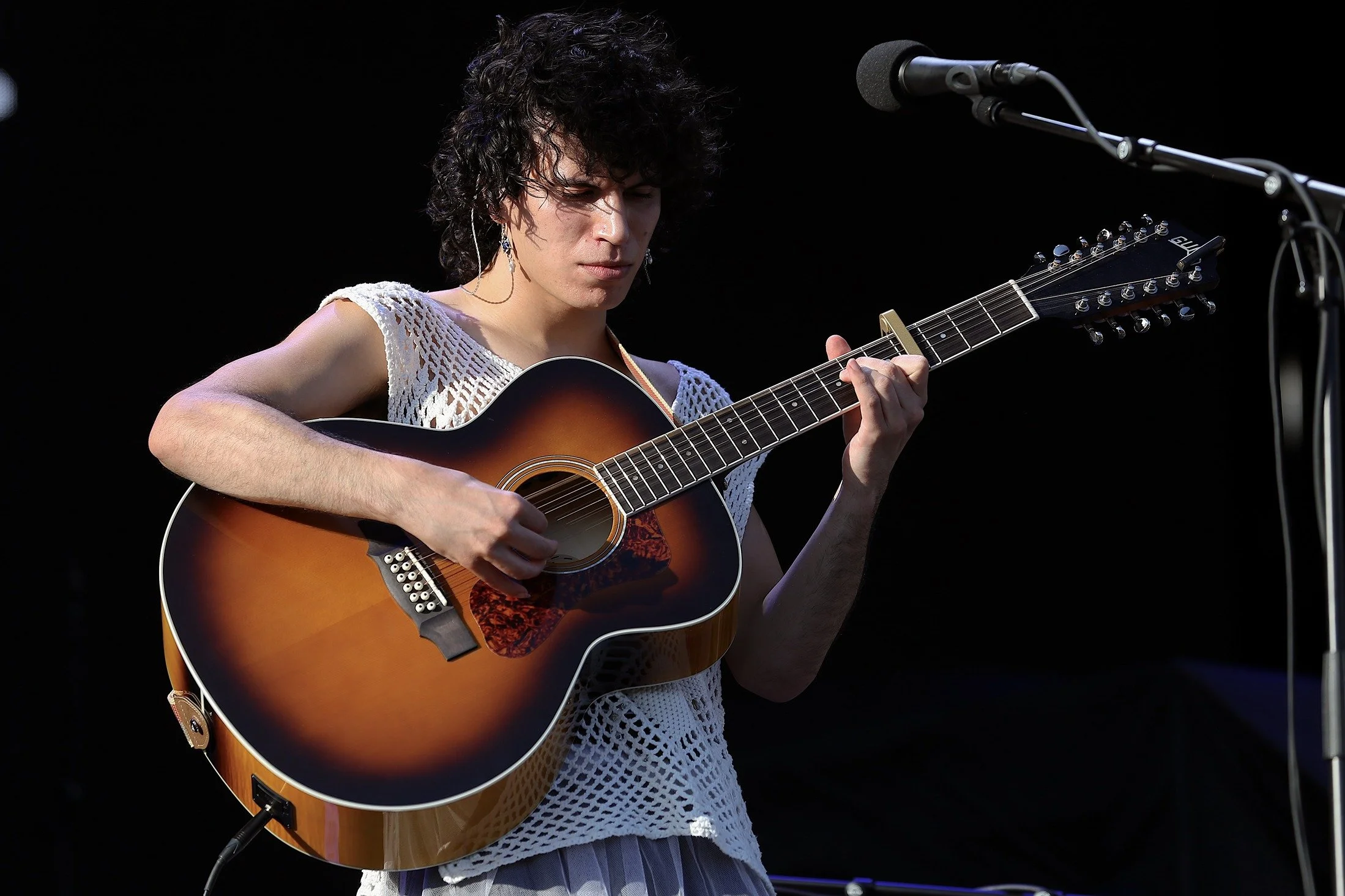
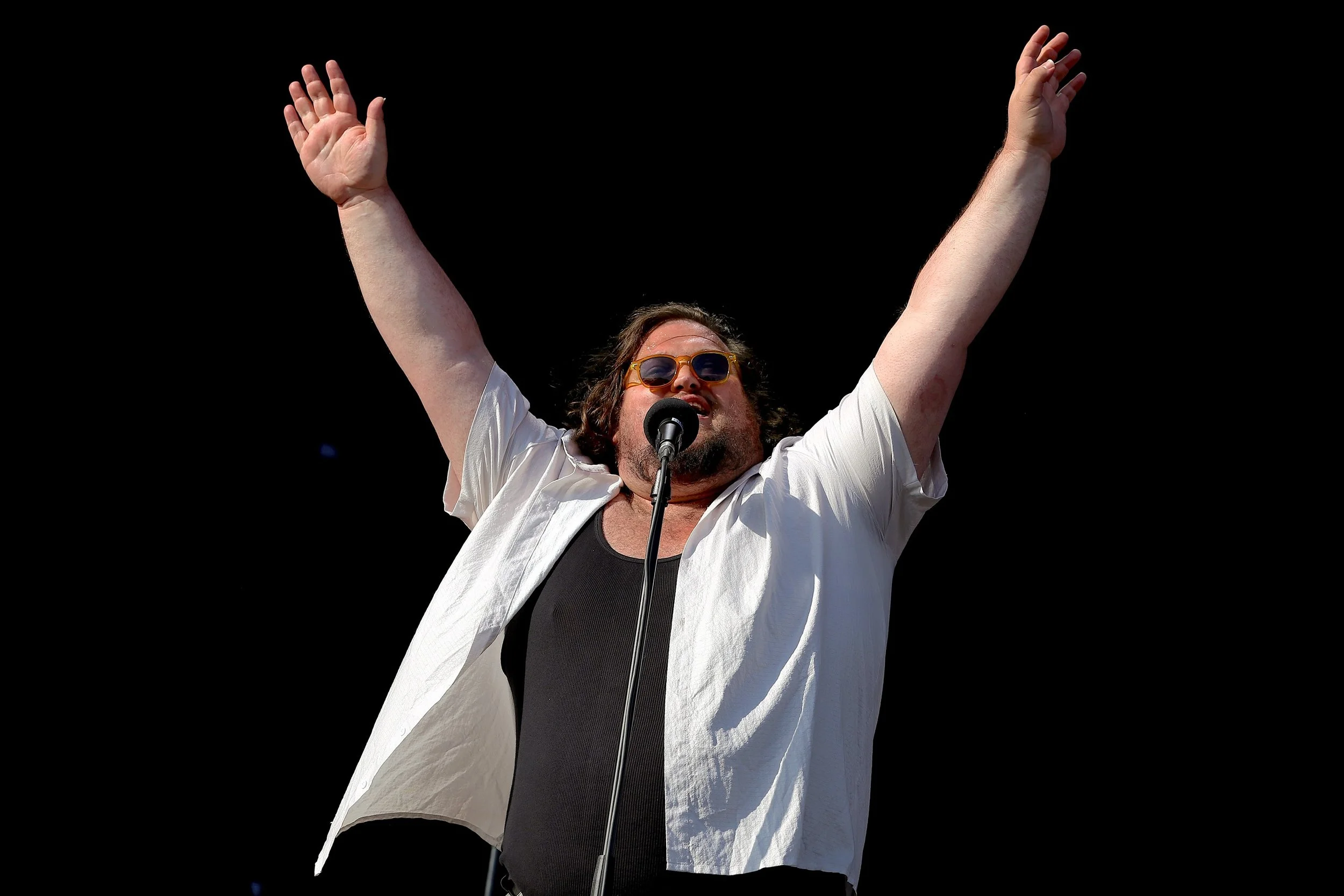
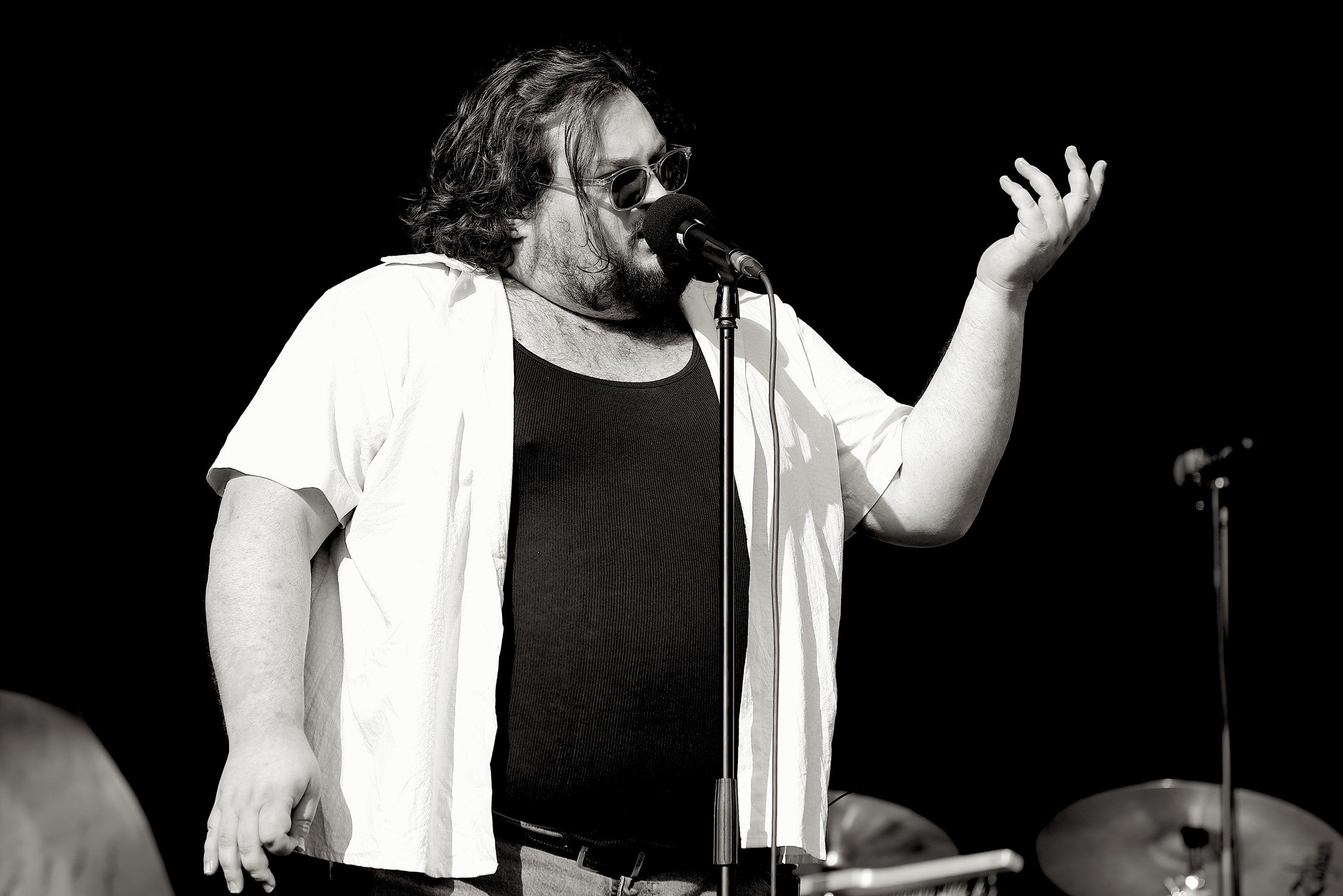
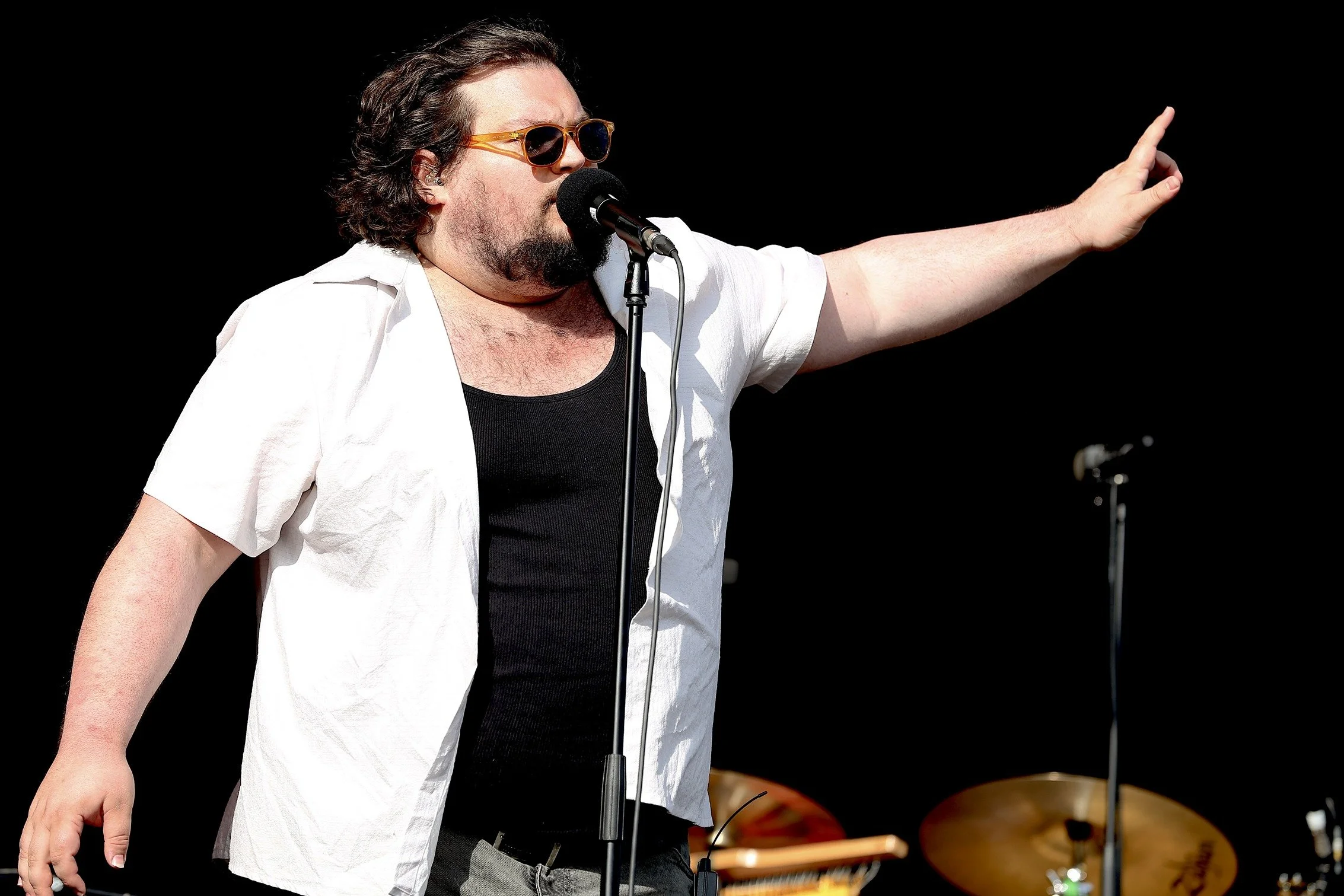
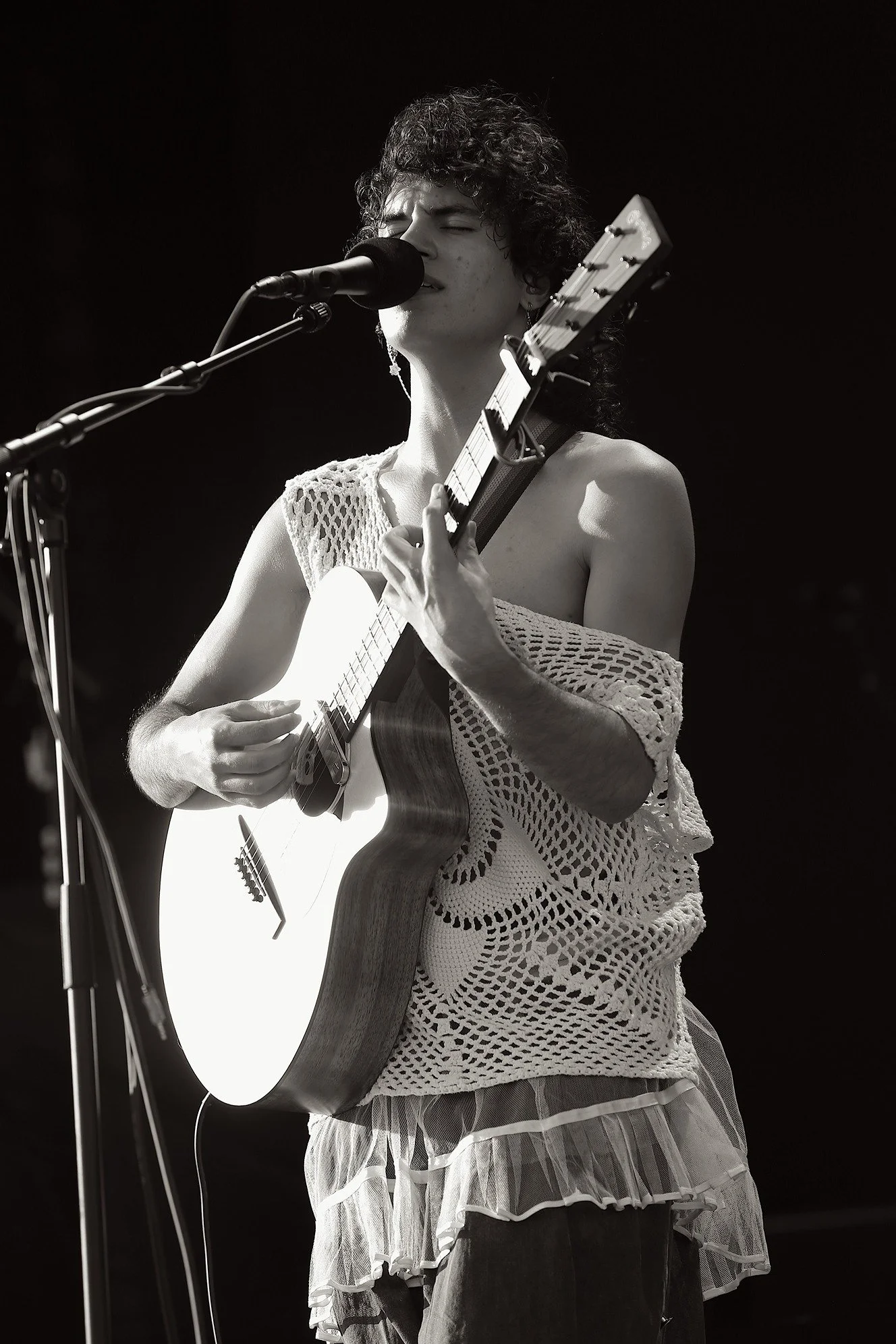
Following Tyler Ballgame was Jacob Alon, again, I trudged into the photo pit to capture him in action.
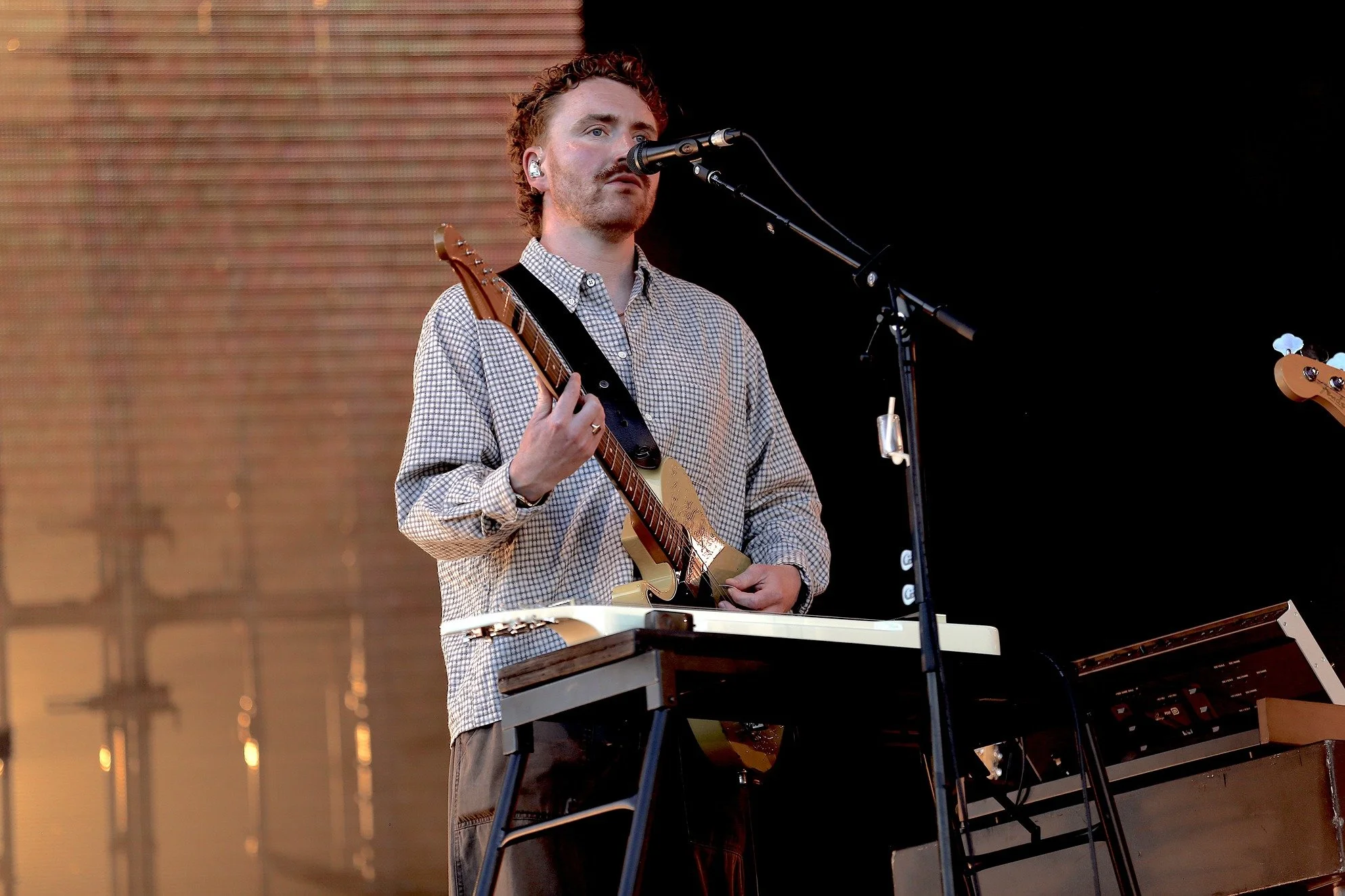
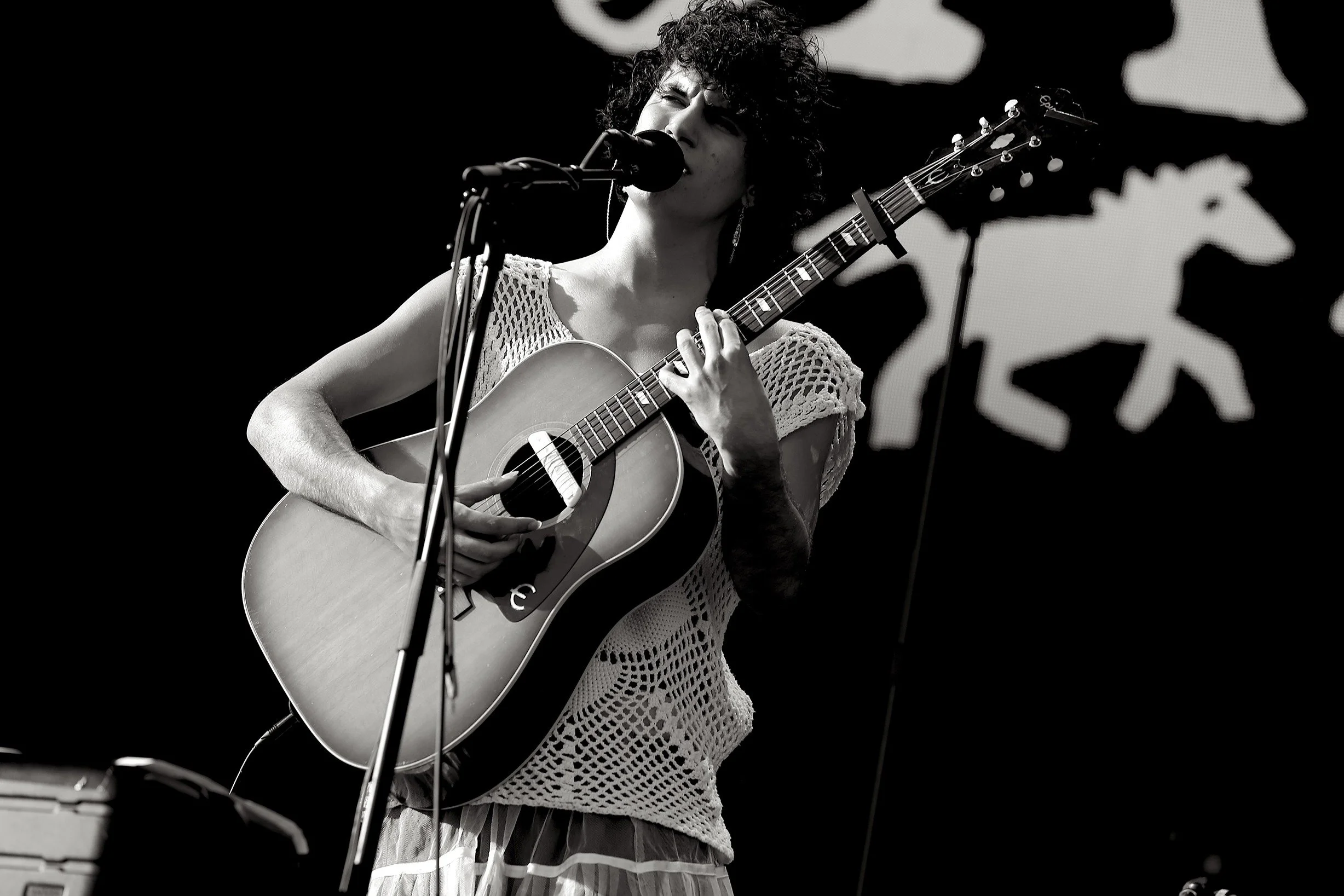
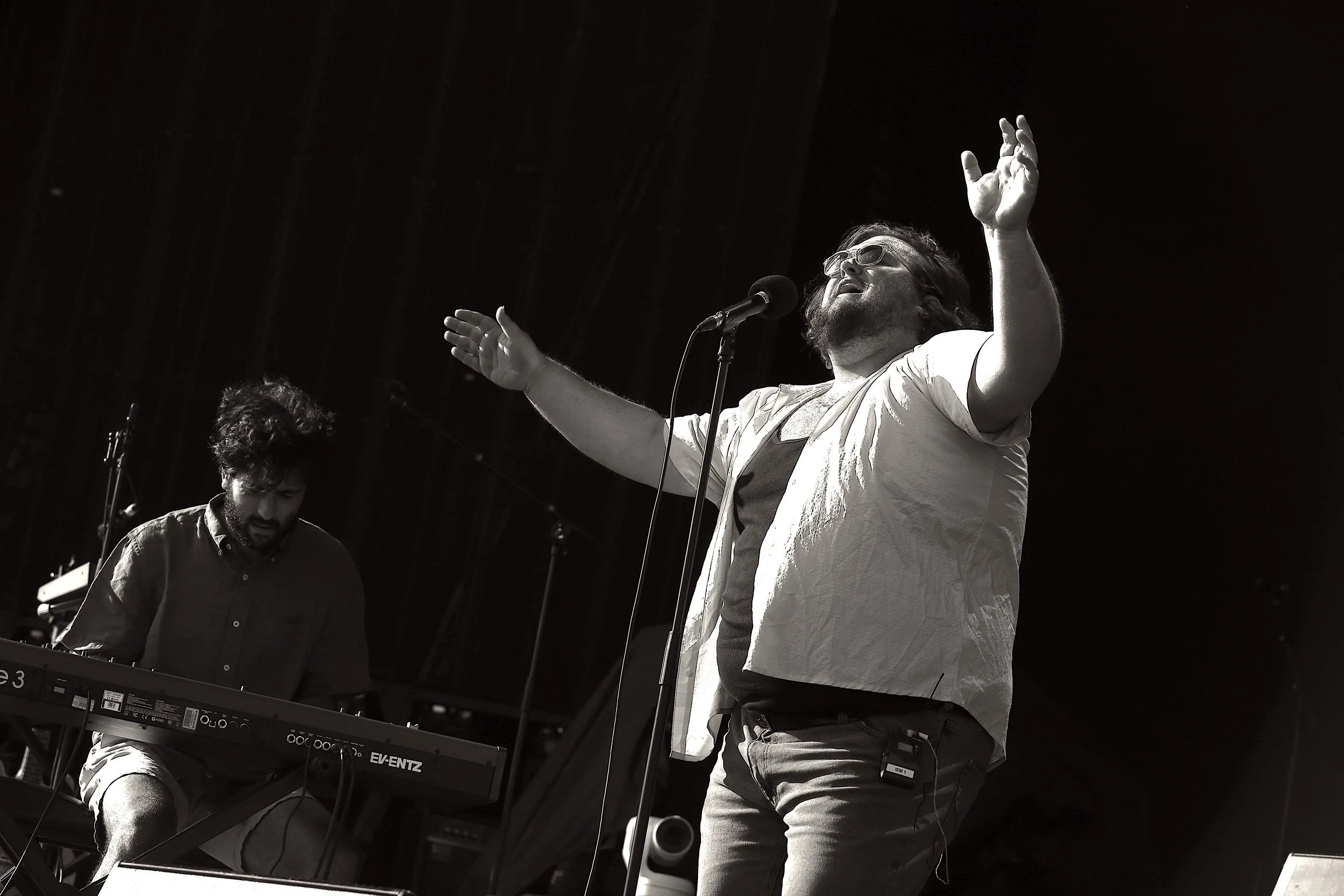
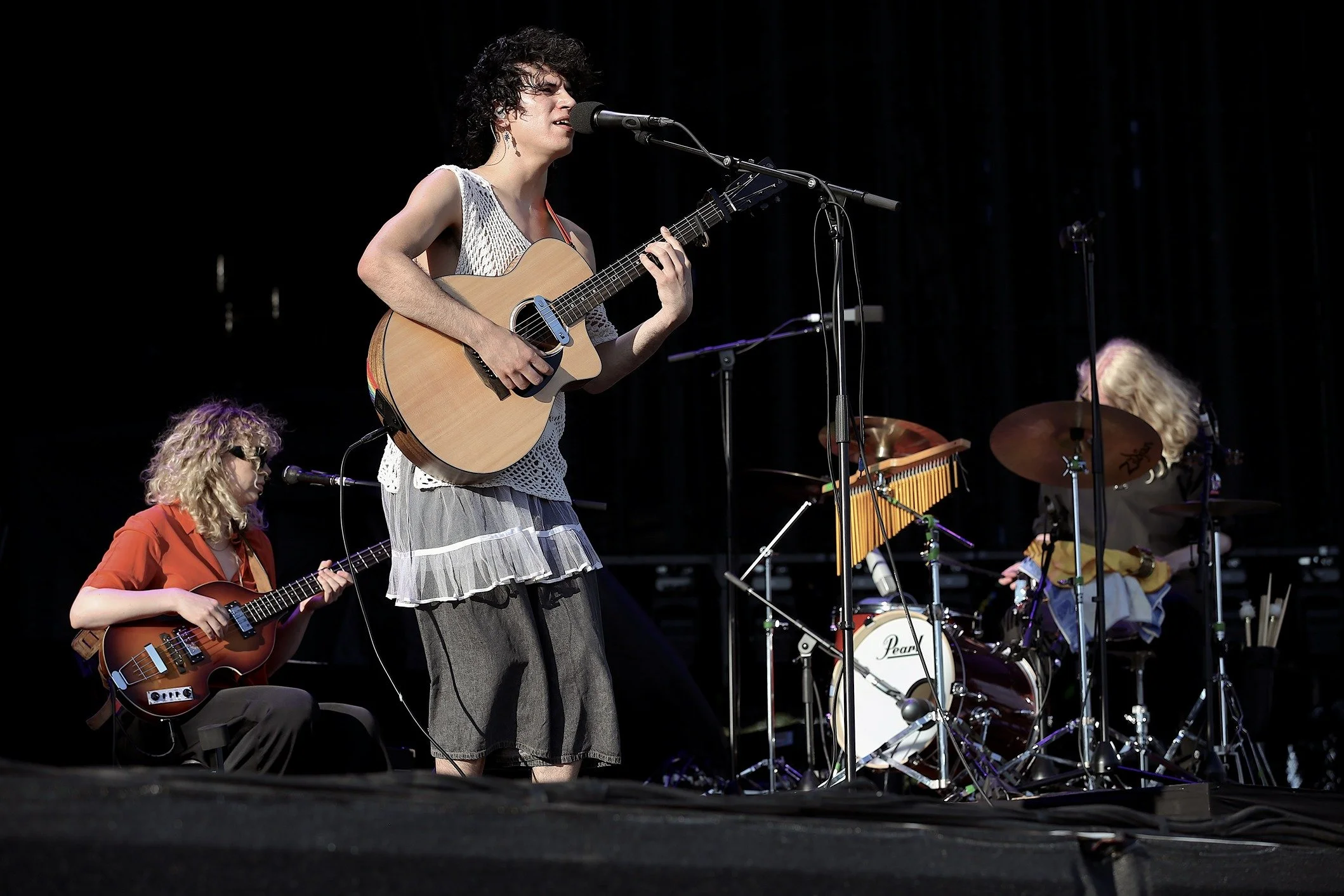
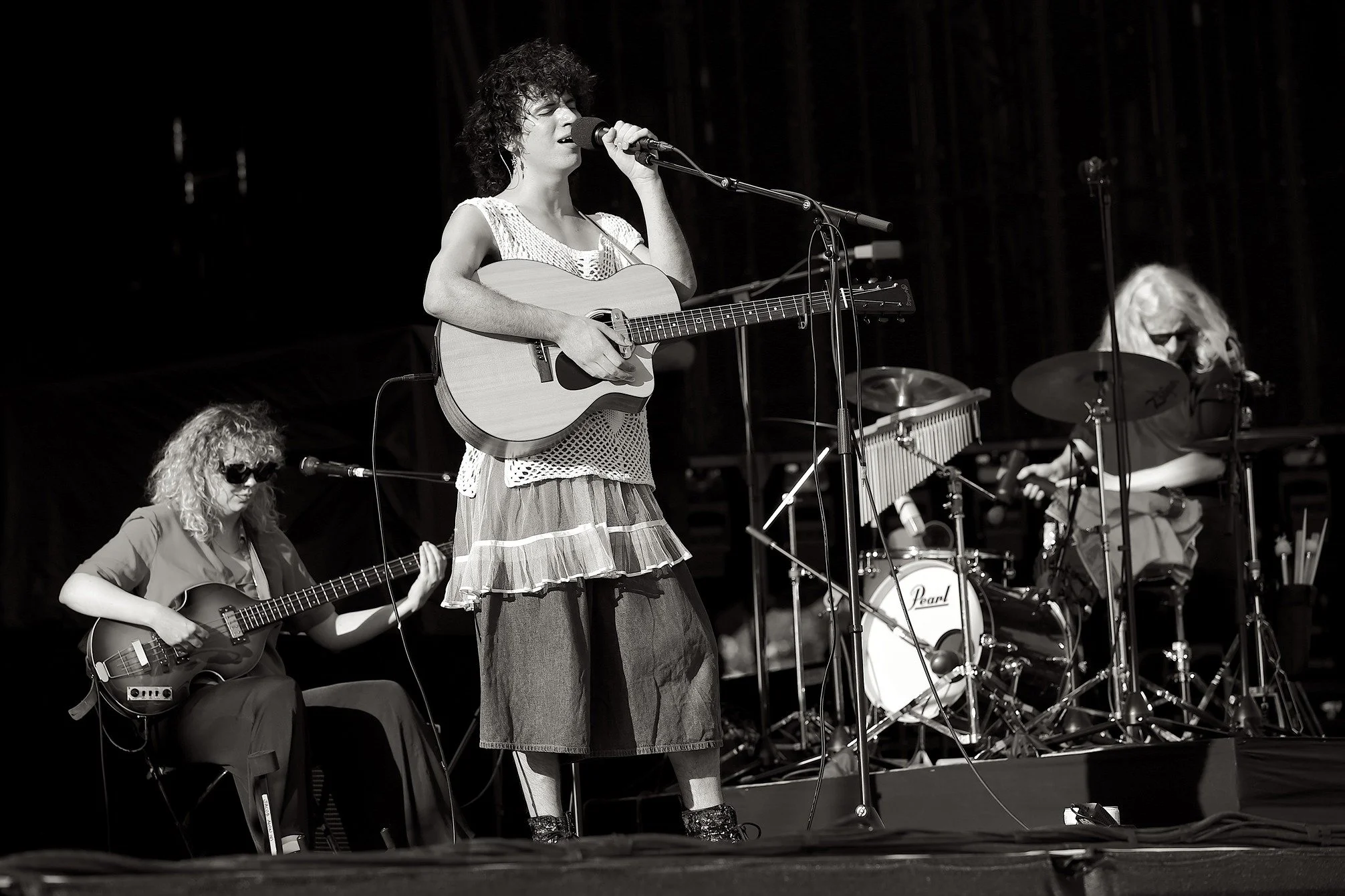
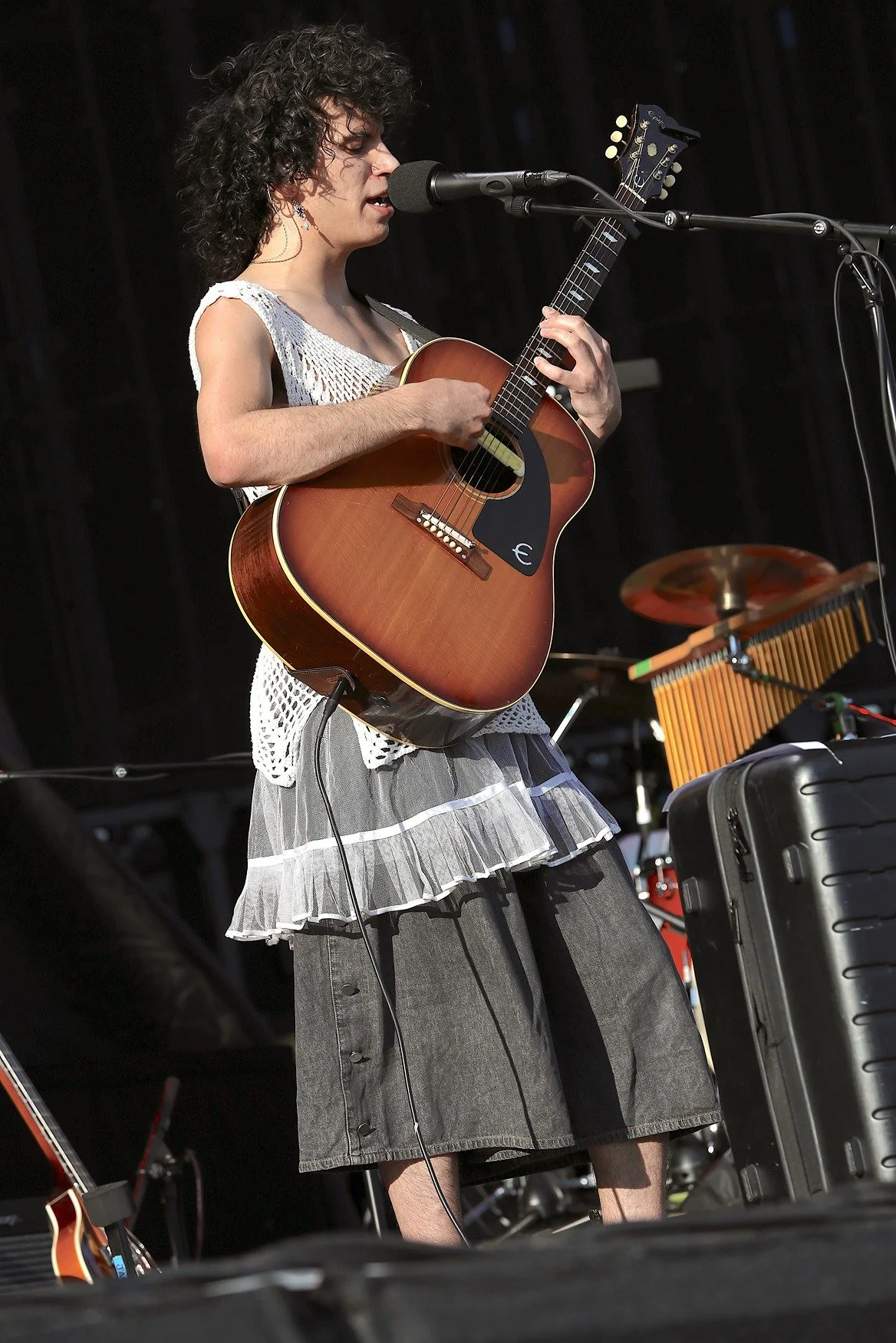
Jacob Alon walked onto the stage without fanfare, just them, an acoustic guitar, and a field slowly settling into the evening. It was a strikingly intimate way to open a night headlined by Lewis Capaldi, and an unexpectedly poetic pairing, given that both artists are Scottish, both are rising voices in modern emotional songwriting, and both live with Tourette’s syndrome. It’s rare to see two performers with shared neurological experiences on the same bill, and rarer still to watch how differently they channel it: Capaldi through humour and self‑effacing charm, Alon through dreamlike introspection and a kind of shimmering emotional intensity.
Their opening number, performed solo, was beautiful, brittle, and occasionally chaotic. Alon’s voice, which sits somewhere between Jeff Buckley’s tremulous upper register, Matt Bellamy’s theatrical quiver, and Thom Yorke’s spectral falsetto, drifted across the grounds with a fragile, aching clarity. But the song also spiralled into what can only be described as a full‑blown swear‑a‑thon, with ‘MF’ bombs dropping like confetti. With so many younger kids dotted around the crowd, it felt a touch excessive, but then again, who am I to tell an artist how to display their art? Alon has always embraced imperfection, unpredictability, and the unfiltered edges of performance, and this moment was very much in keeping with that ethos.
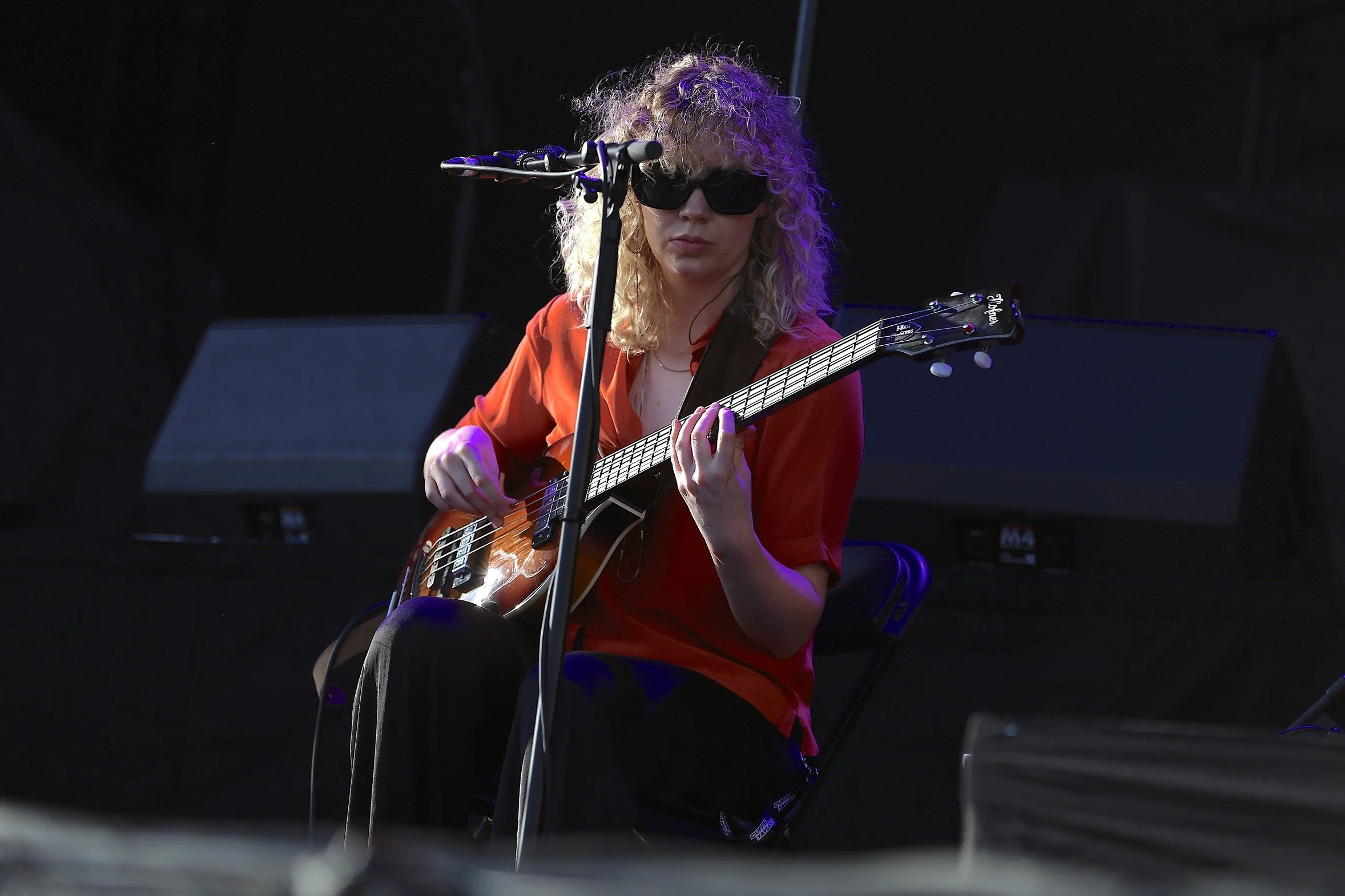
Once their band joined them, the set deepened into something more expansive and self‑indulgent, not in a negative sense, but in the way that artists who build worlds rather than singles tend to be. Alon’s songs, drawn from their Mercury‑shortlisted debut album In Limerence, unfolded like chapters from a private fairytale: misty folk textures, surreal imagery, and a queer emotionality that feels both tender and defiant. There’s a theatrical streak to their delivery, too, a kind of gold‑flecked mysticism that has become part of their visual identity, but it never tips into pretension. Instead, it feels like watching someone peel back layers of themselves in real time.
What’s most compelling about Alon live is the contrast: the softness of their voice against the sharpness of their lyrics, the vulnerability of their presence against the confidence of their craft, the fantasy of their storytelling against the very real neurological challenges they’ve spoken openly about. Powderham Castle, with its sweeping lawns and family‑friendly atmosphere, might not have been the obvious setting for their brand of introspective folk surrealism, but it worked. The crowd leaned in. The kids took notice. The adults listened. And Alon, glowing in the late‑June light, delivered a set that felt like a quiet spell cast over the grounds.
By the time they left the stage, the contrast with Capaldi’s forthcoming set was clear: two Scottish artists, two extraordinary voices, two very different ways of navigating the world, and two performers who refuse to let Tourette’s define or diminish their art. If Capaldi is the everyman superstar, Alon is the mystic storyteller. And together, they made Powderham feel like a place where vulnerability, humour, and raw emotion could coexist naturally.
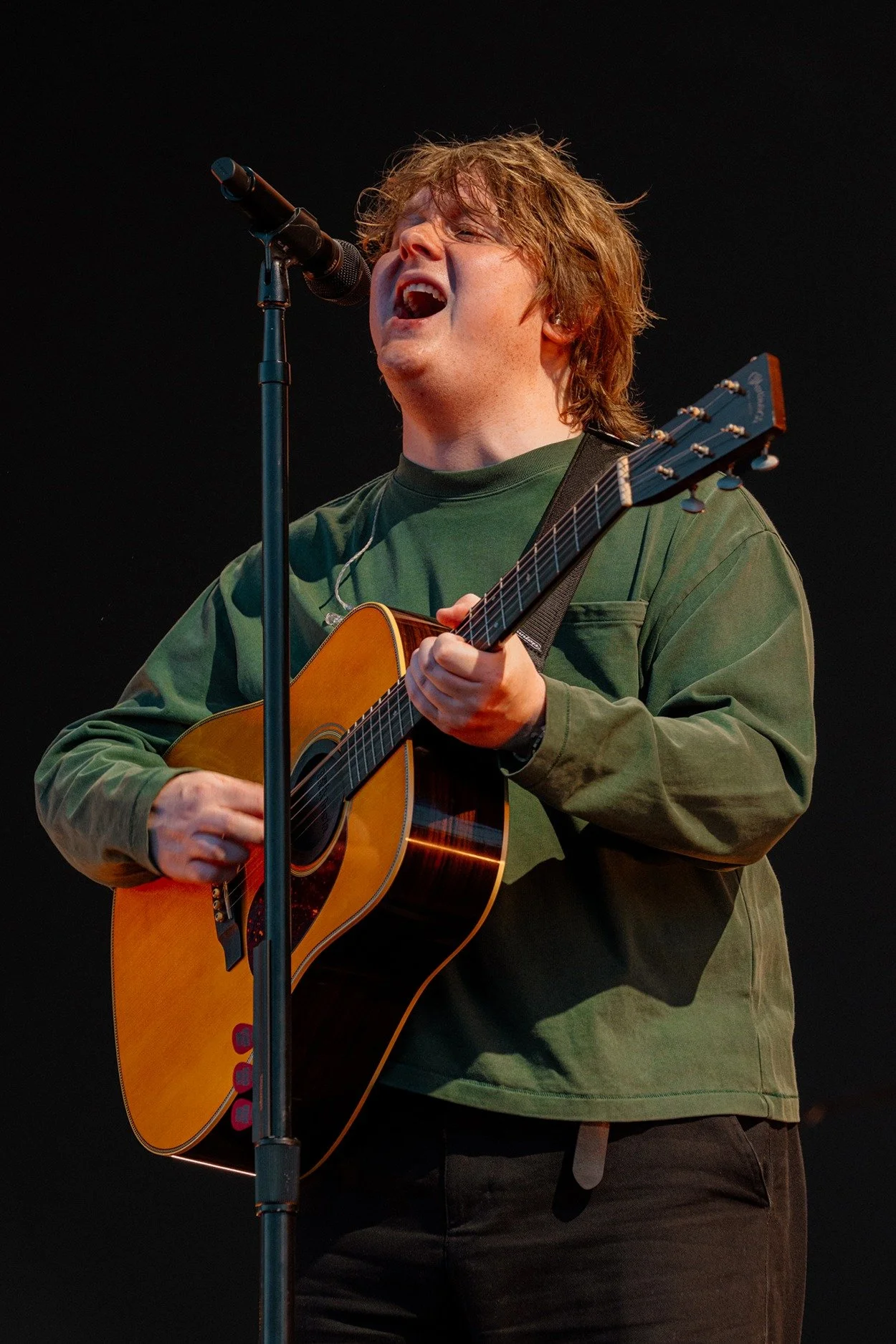
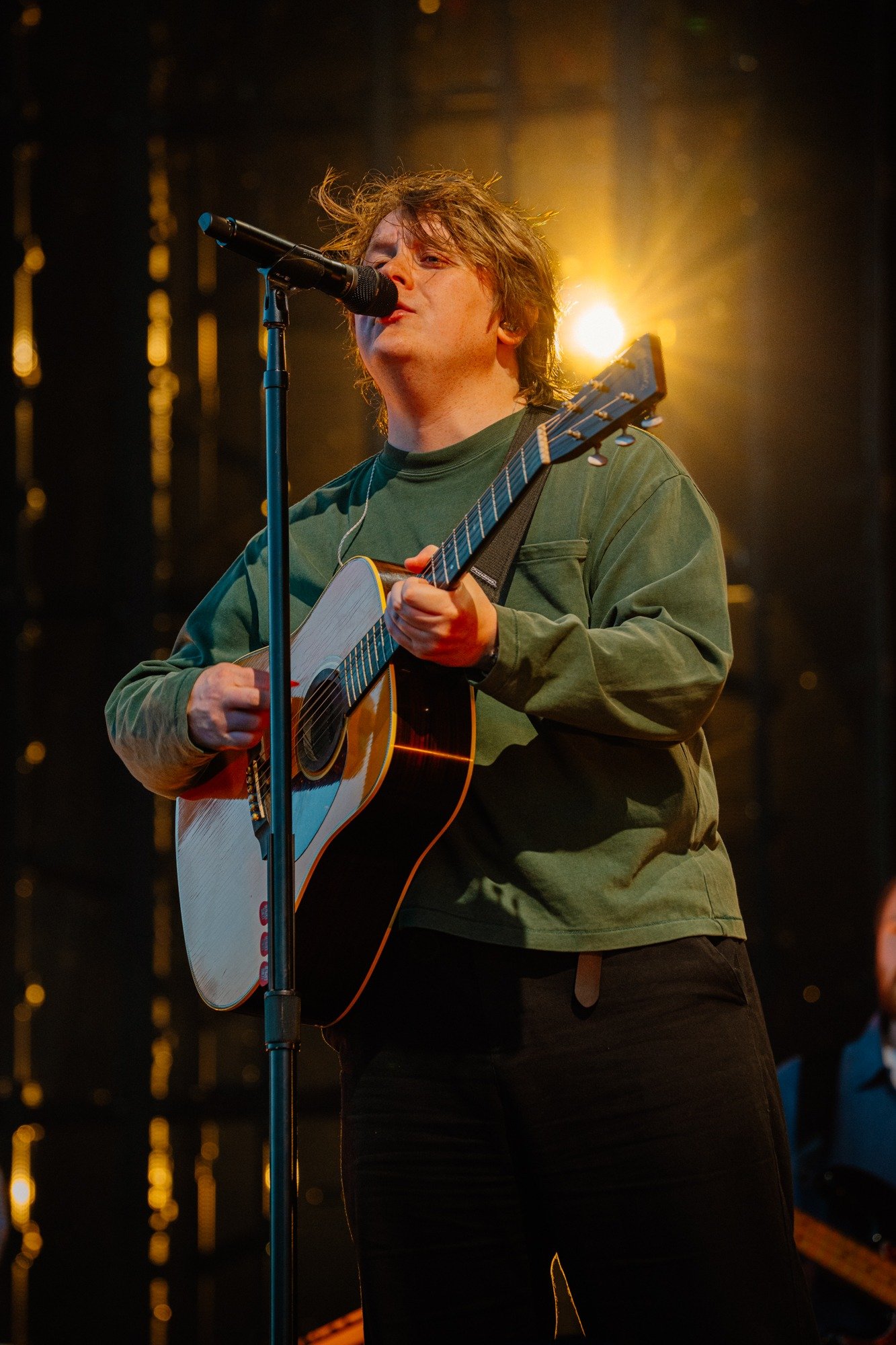
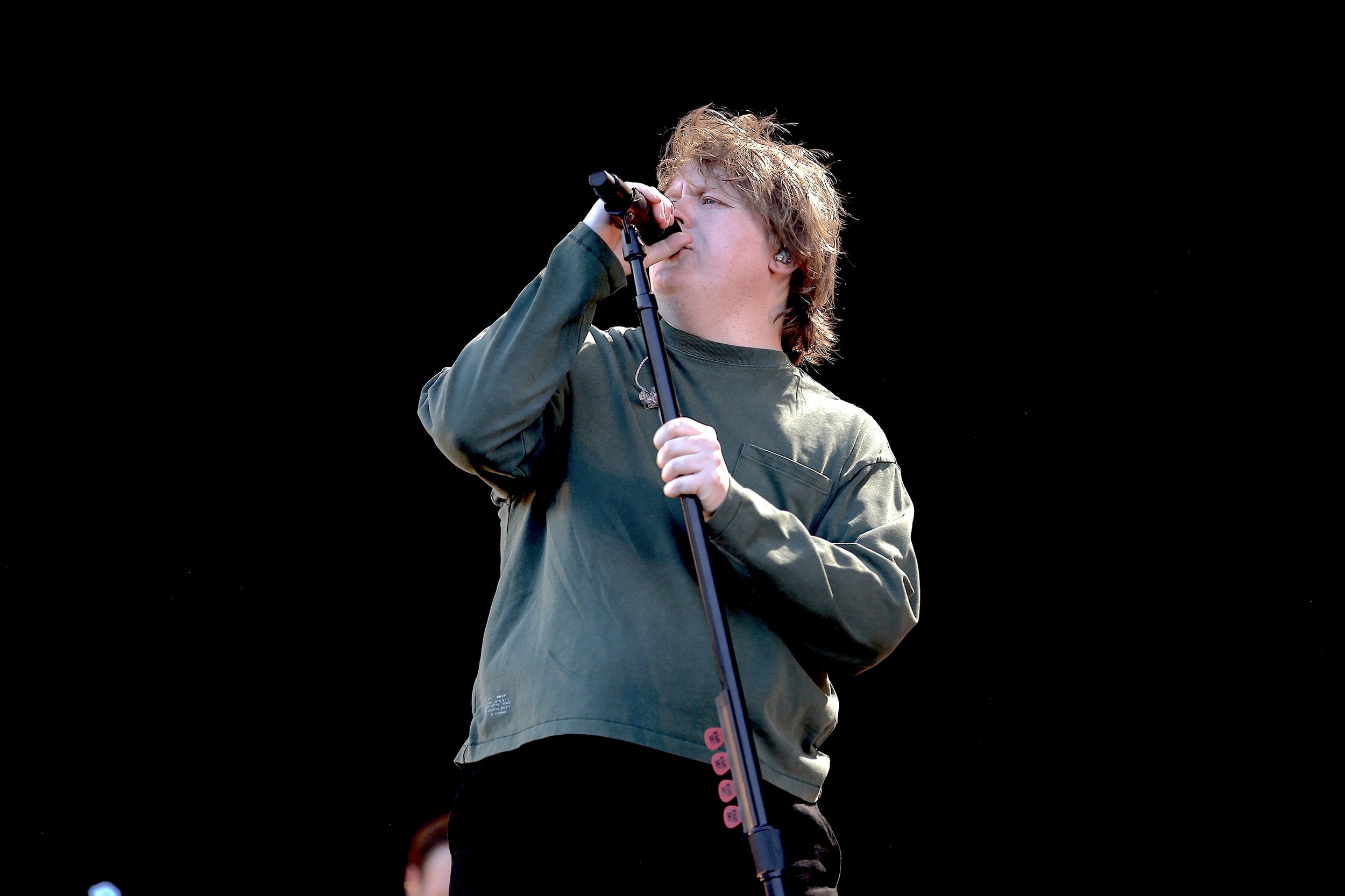
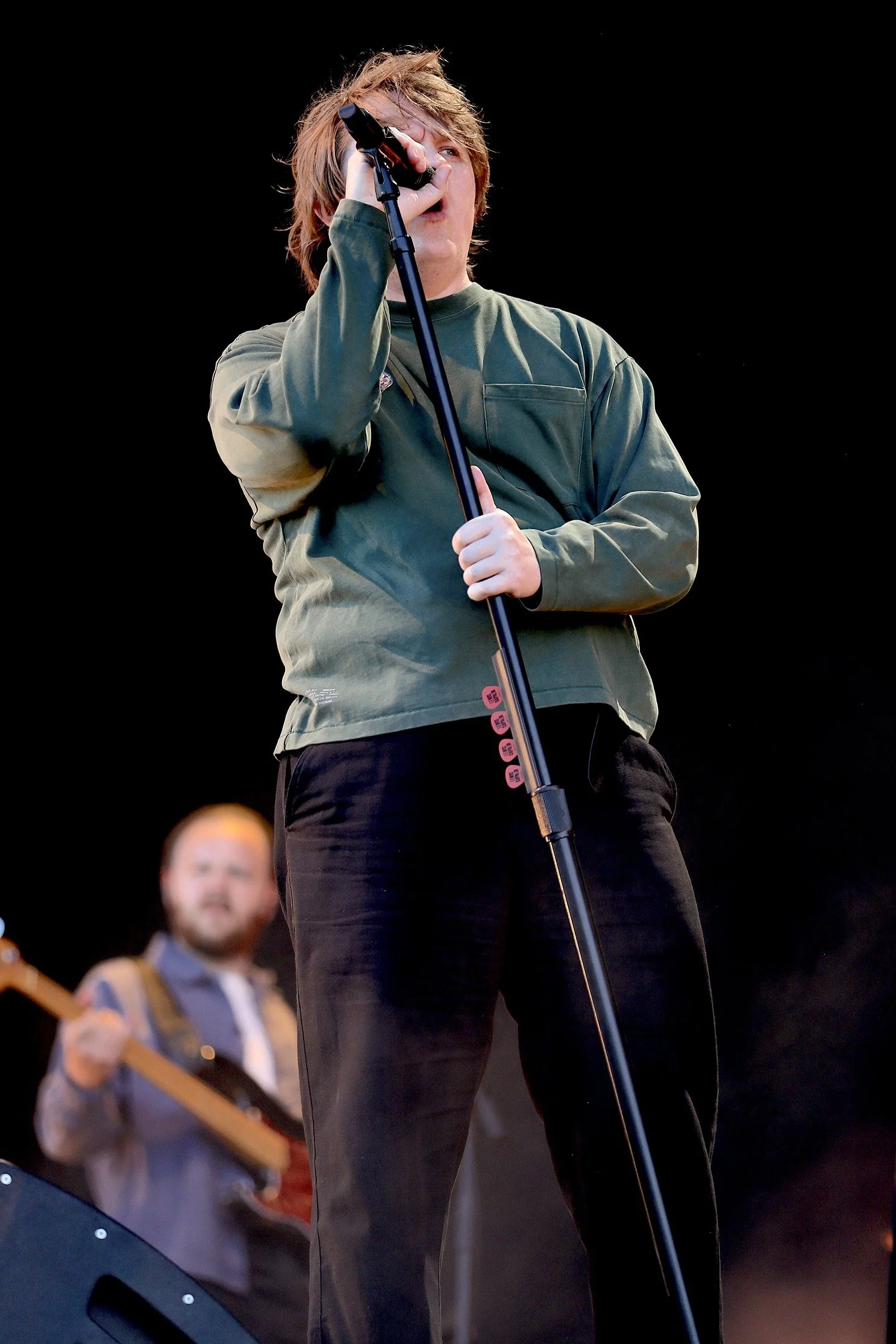
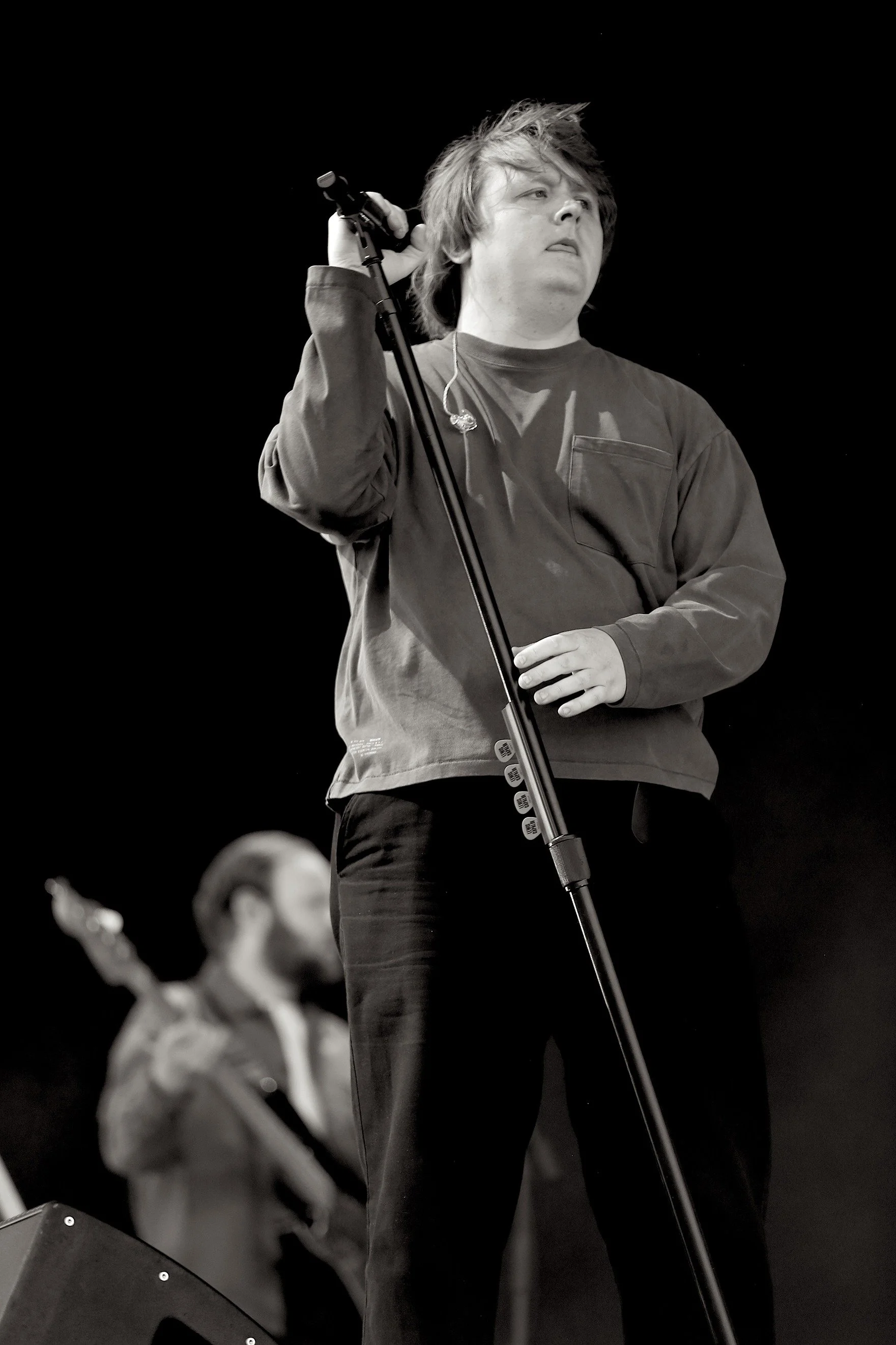
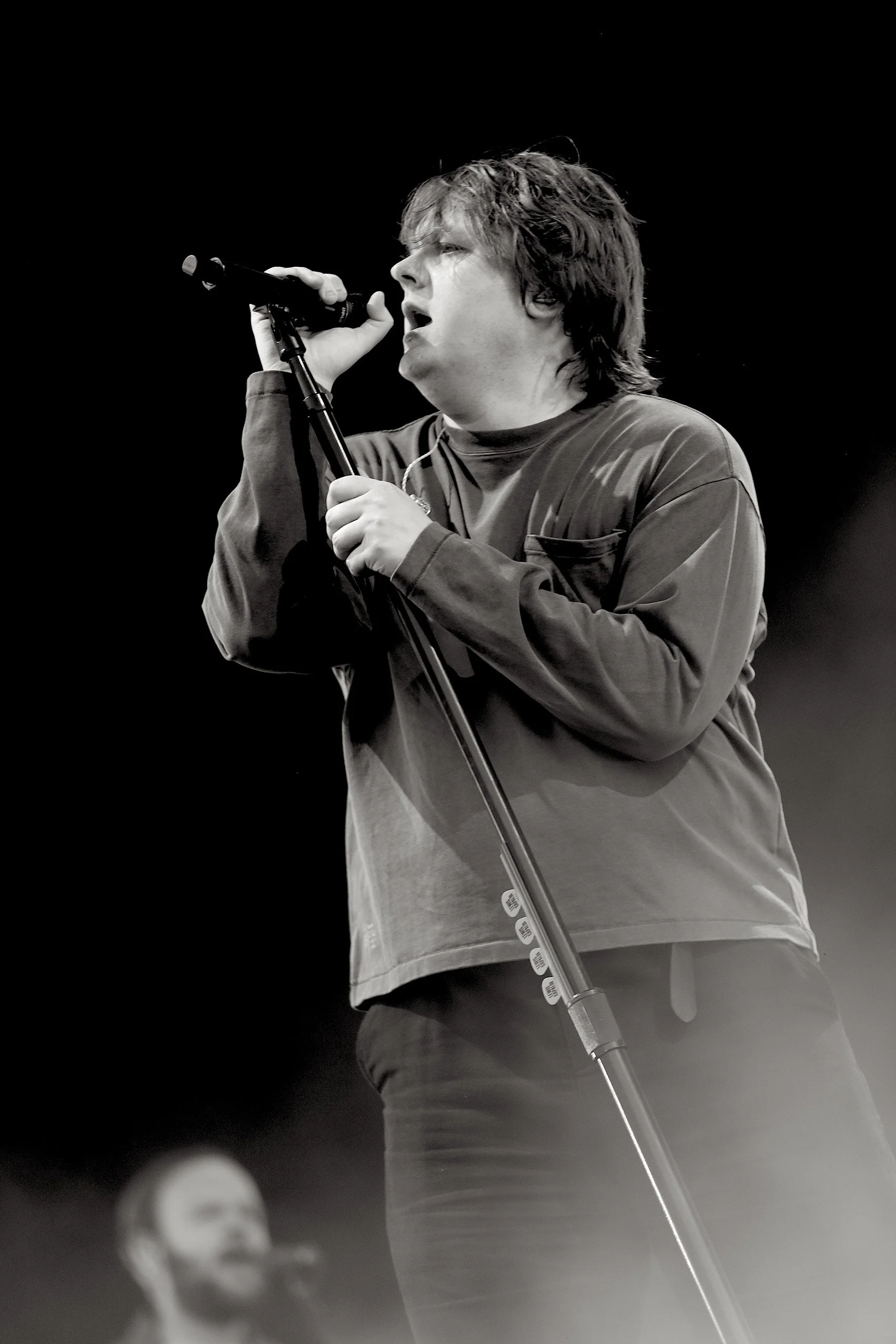
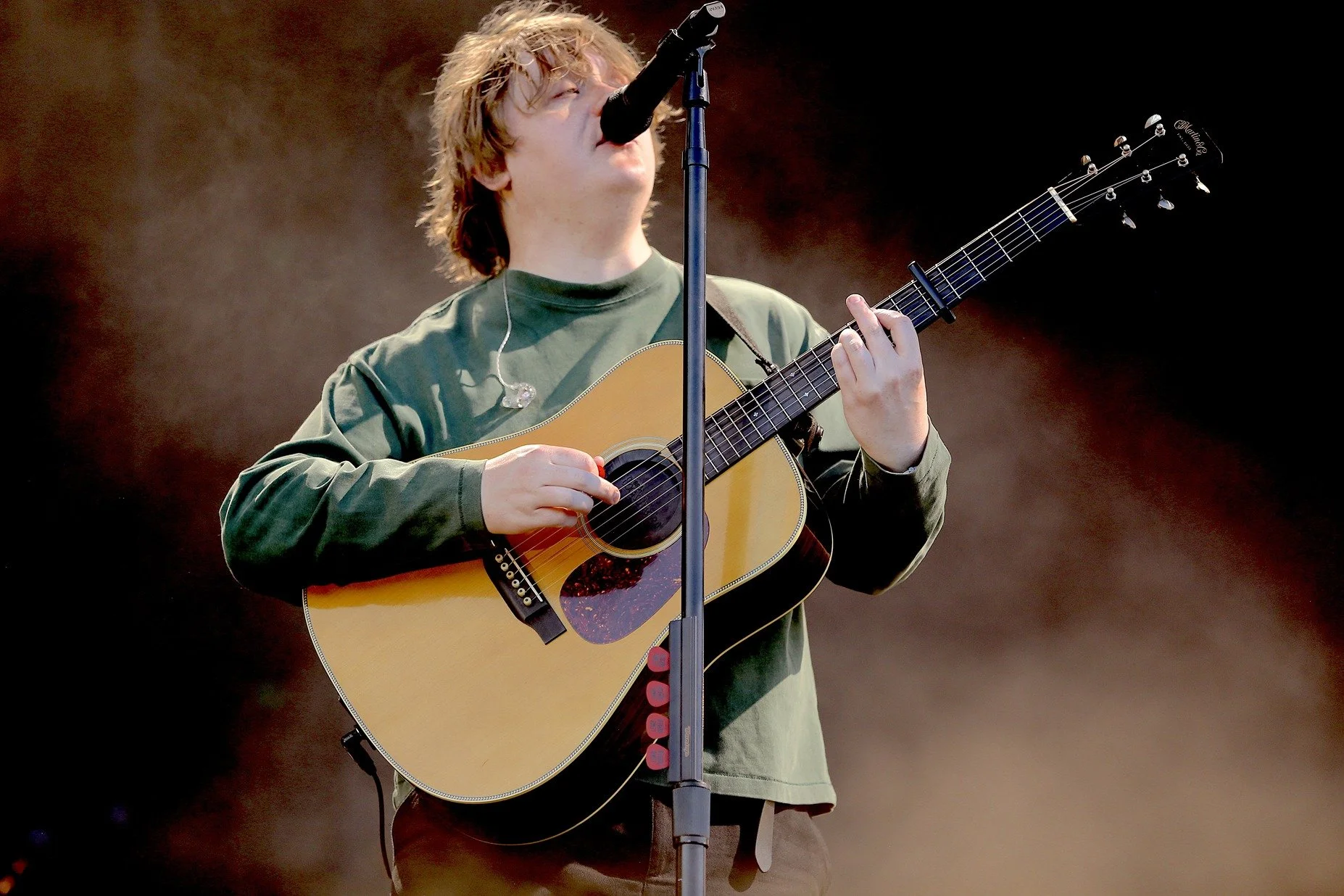
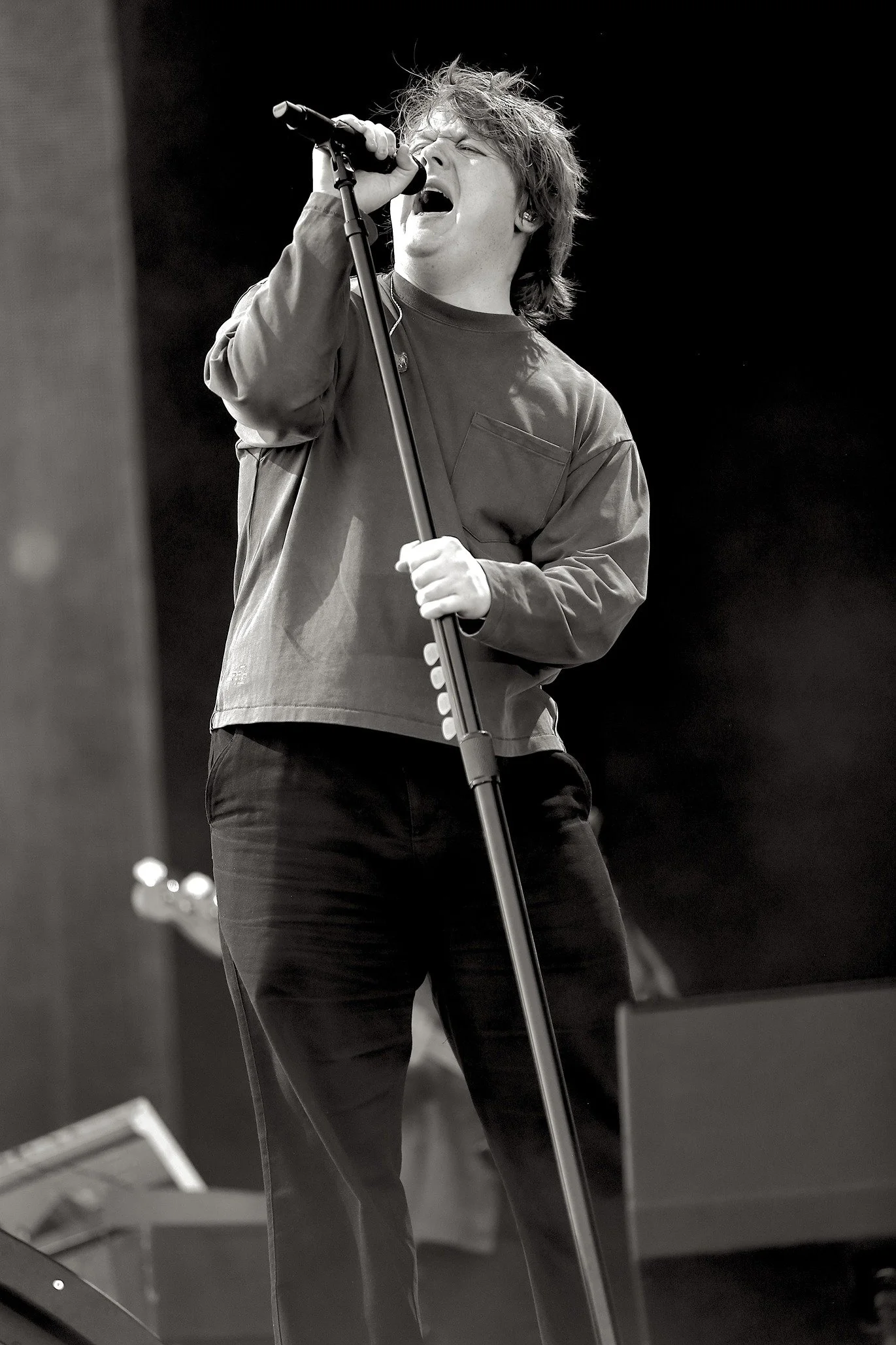
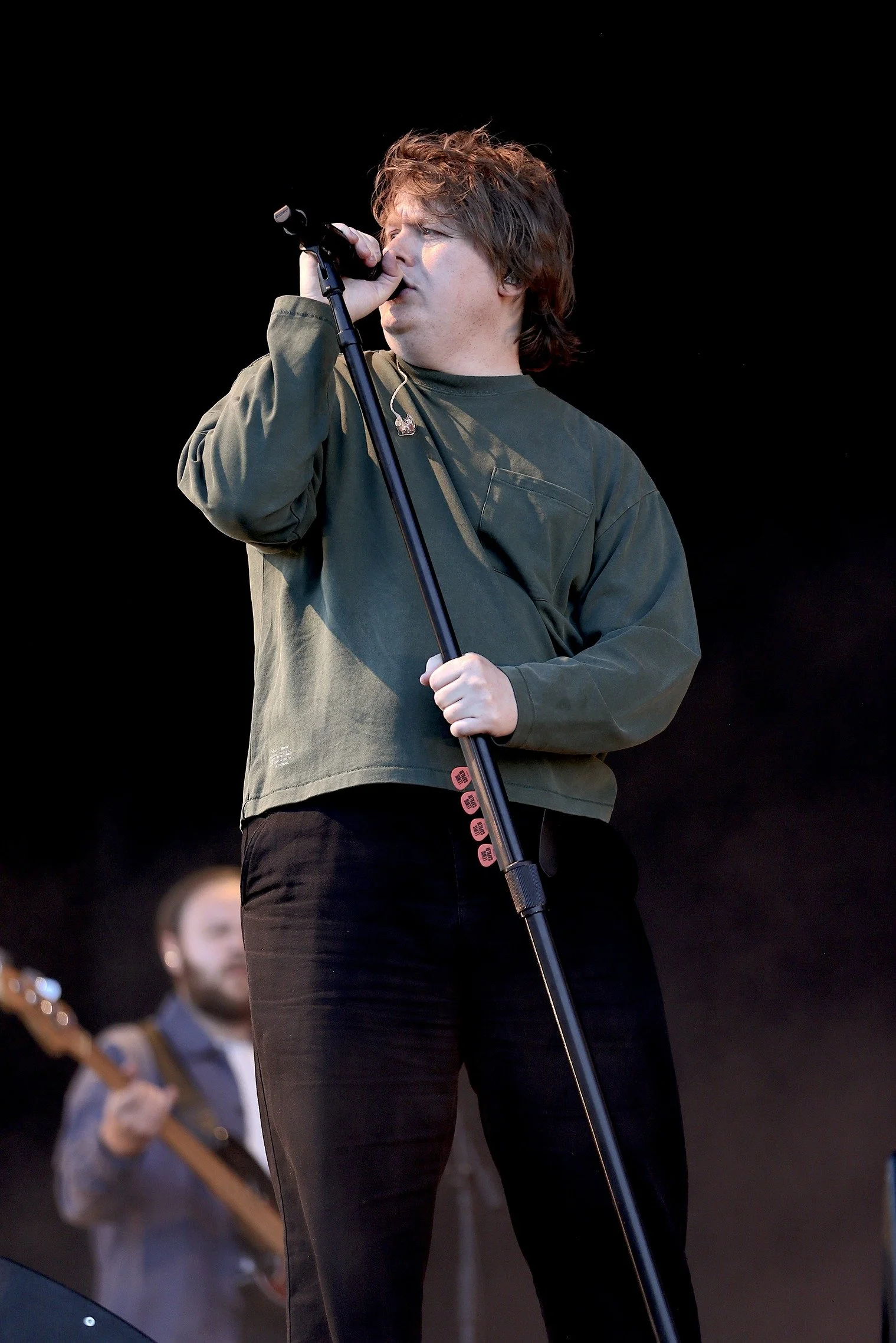
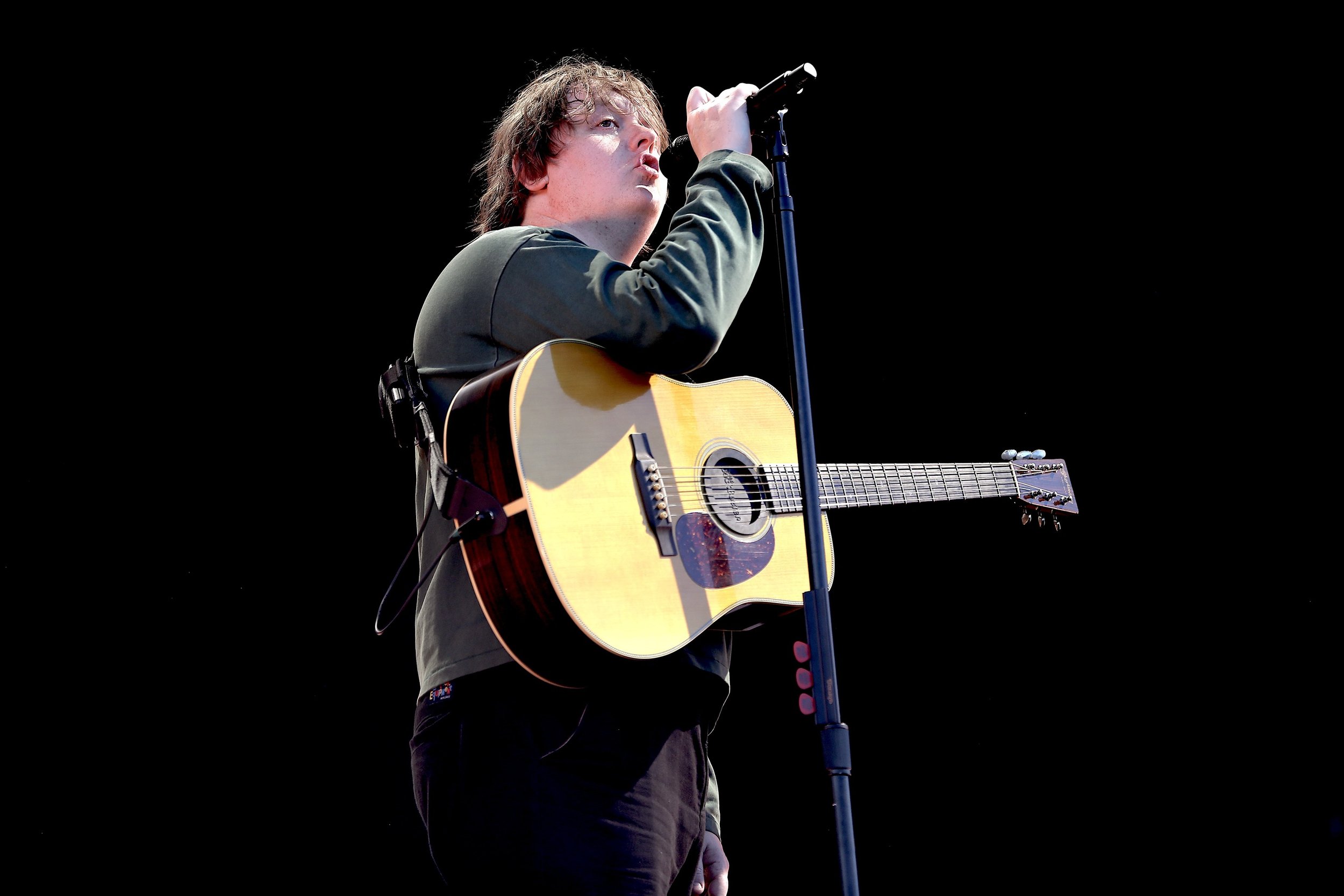
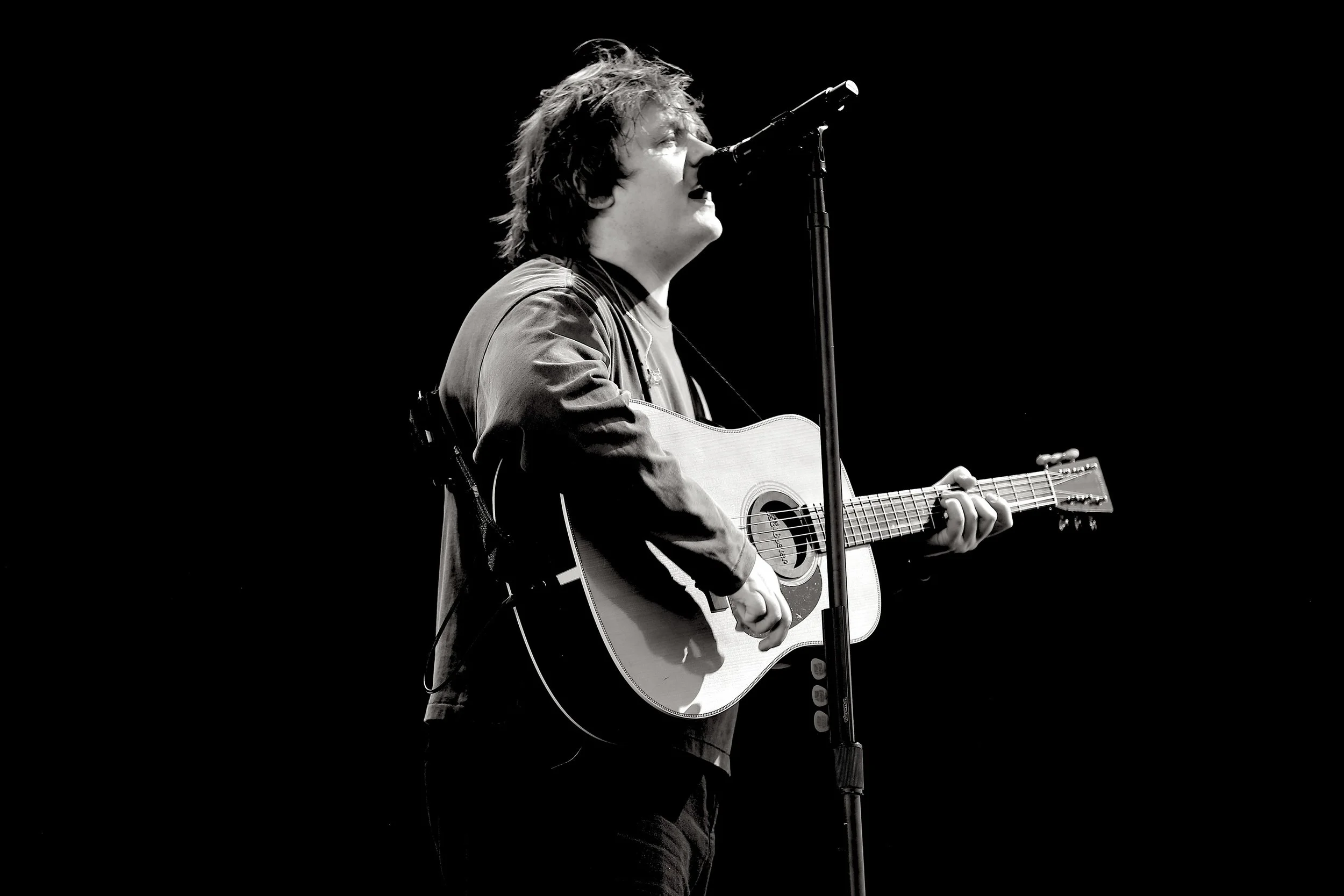
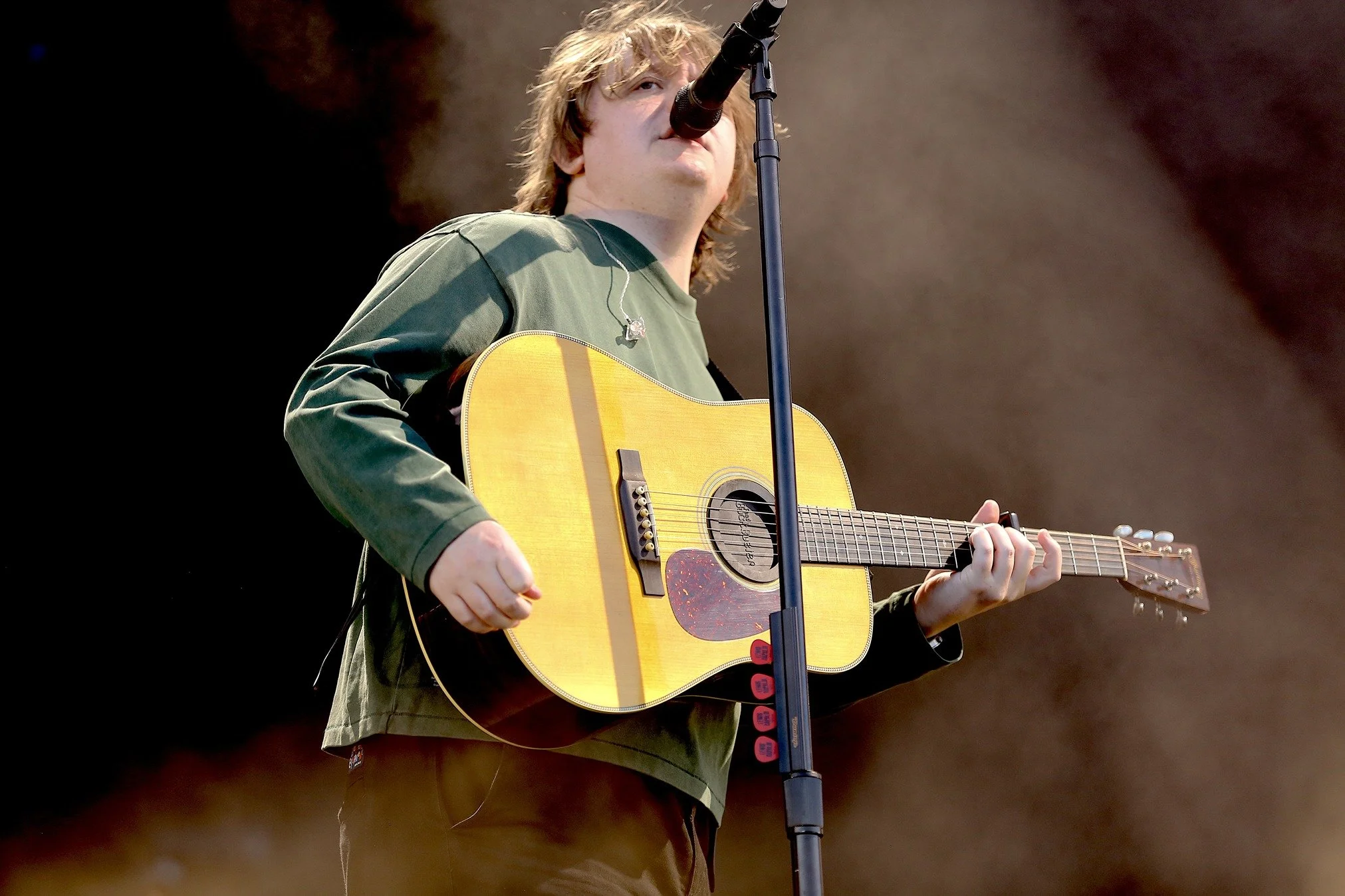
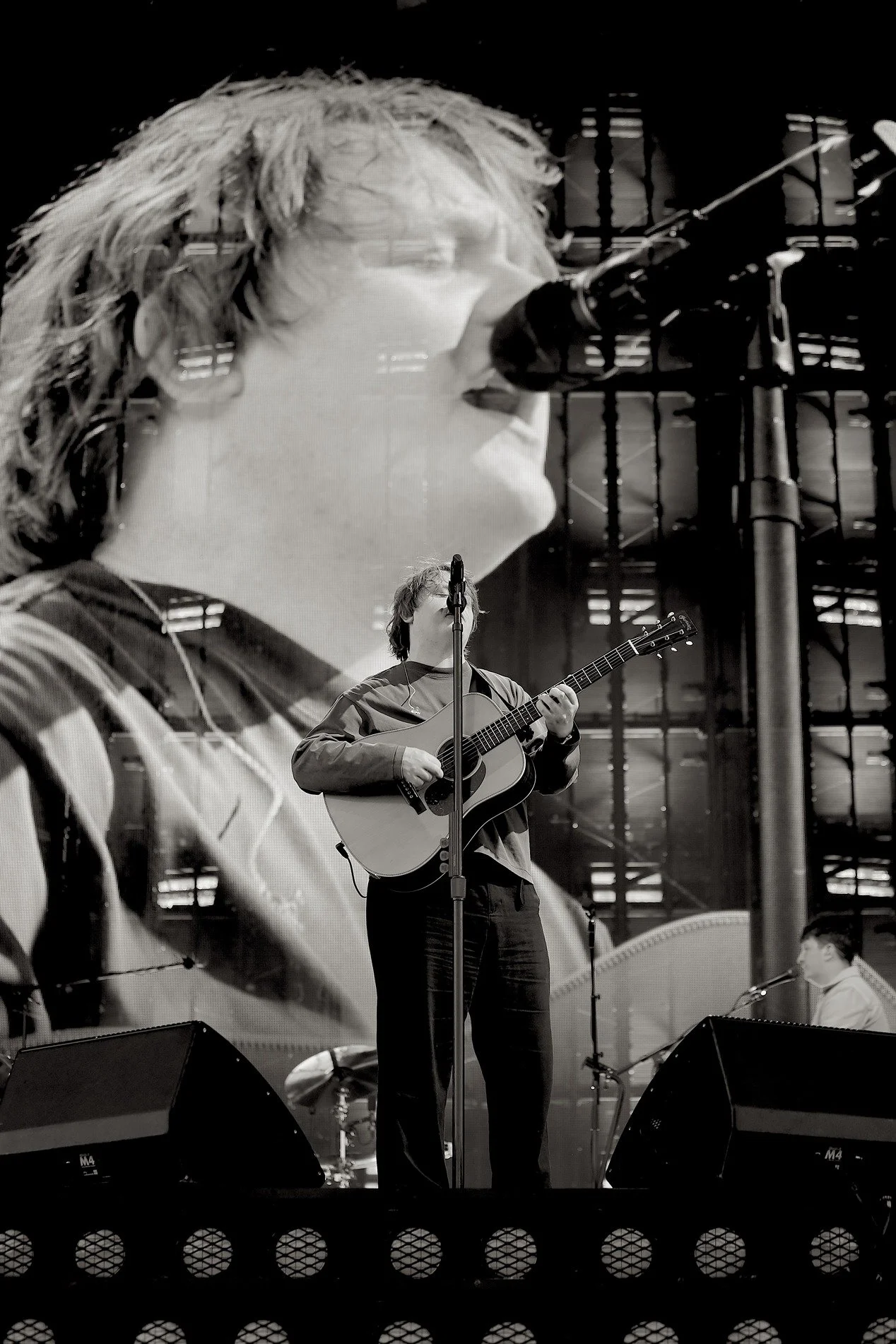
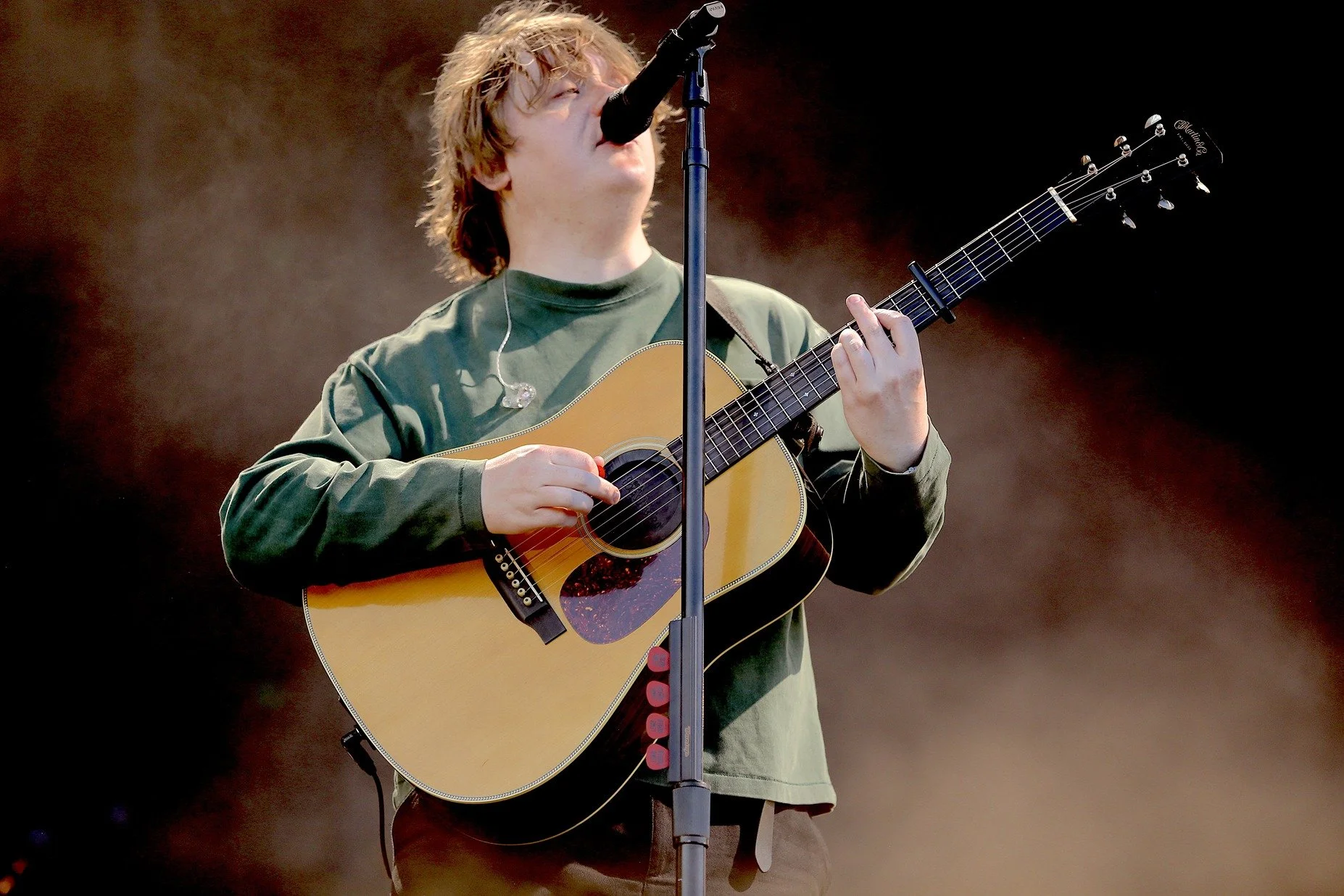
Lewis Capaldi appeared on the stage exactly one year on from his headline‑stealing Glastonbury 2025 appearance, the night he showed the world he was ready to step back into the spotlight after taking time out to manage his Tourette’s, Capaldi arrived in Devon sounding stronger, looser, and more himself than ever.
Early in the set he grinned into the mic and asked the crowd whether Powderham was “ready for a party”, immediately undercutting himself with the punchline that it might be difficult because he had “18 ballads” lined up. Classic Capaldi: self‑mocking, self‑aware, and instantly loved for it. He also mentioned he’d visited a “pebbly beach” before the show, he didn’t specify which one, but whichever stretch of Devon coastline he wandered onto, locals unknowingly shared their afternoon with one of the biggest pop voices of the last decade.
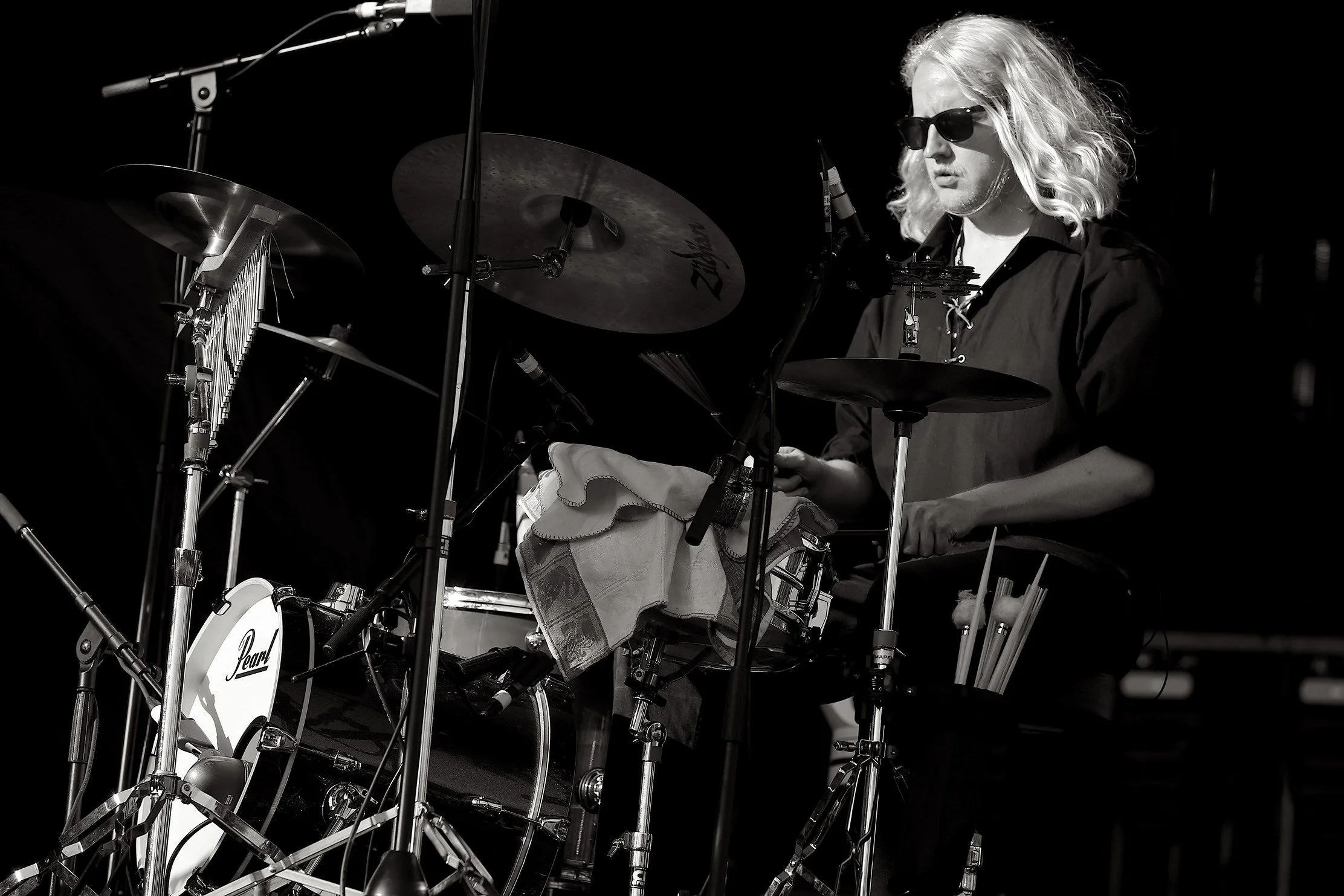
Despite the jokes about ballads, the opening run was surprisingly upbeat. His large touring band gave the early tracks a lively, full-bodied lift, drums punching through the dusk air, keys and guitars filling the grounds with warmth. It was a reminder that Capaldi’s catalogue isn’t just tear‑jerkers; it’s built on big, bold pop songwriting that can absolutely carry a festival‑sized crowd.
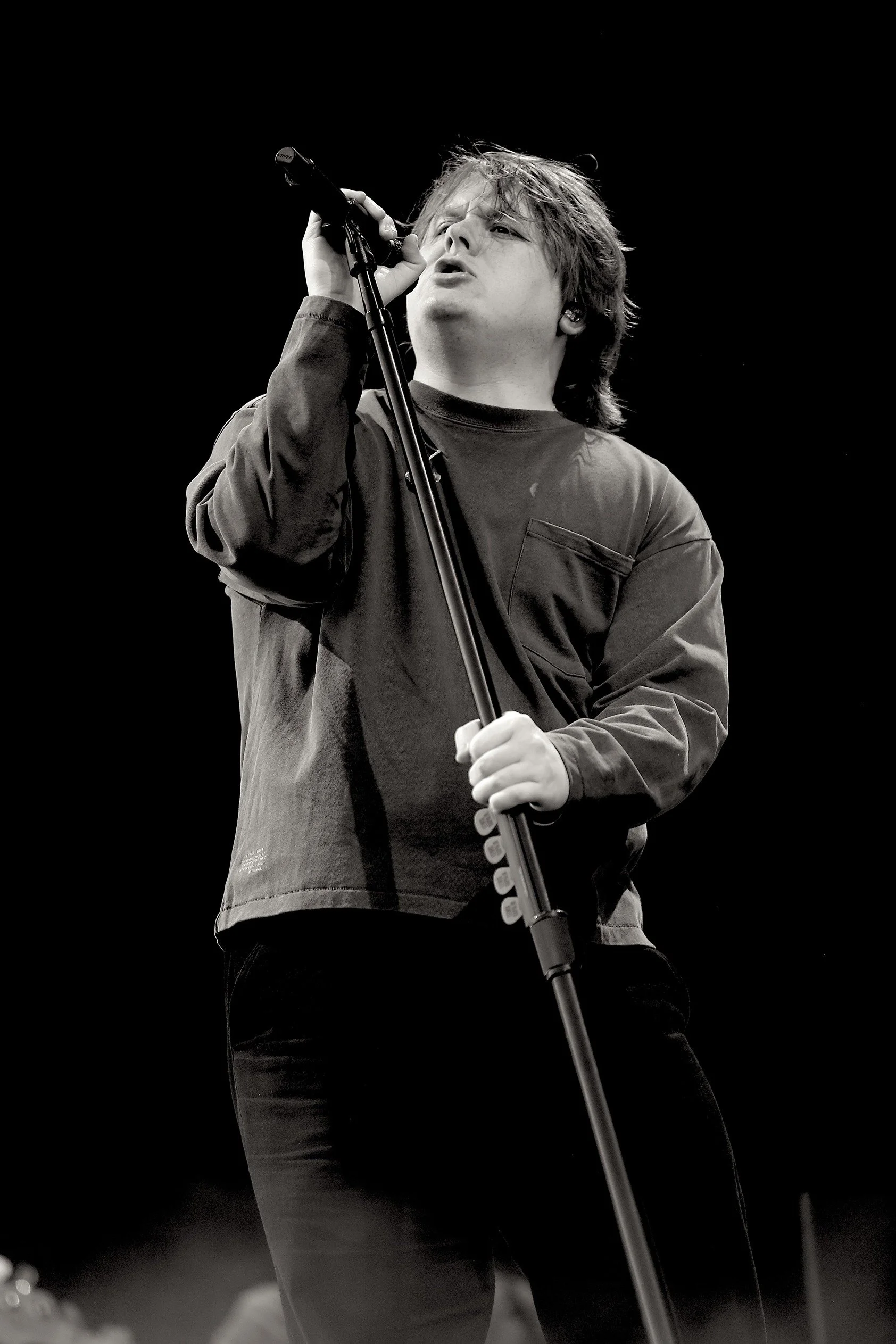
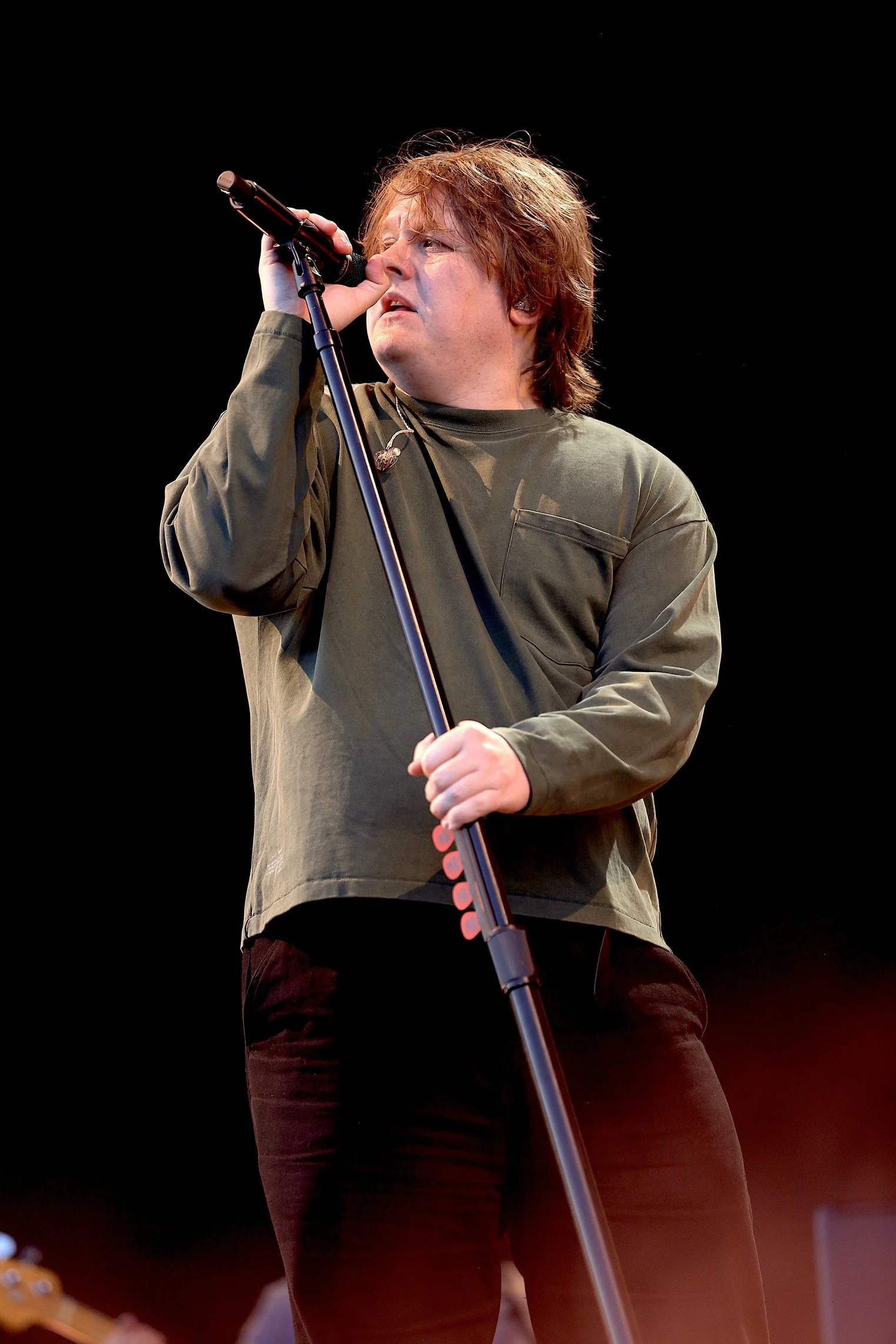
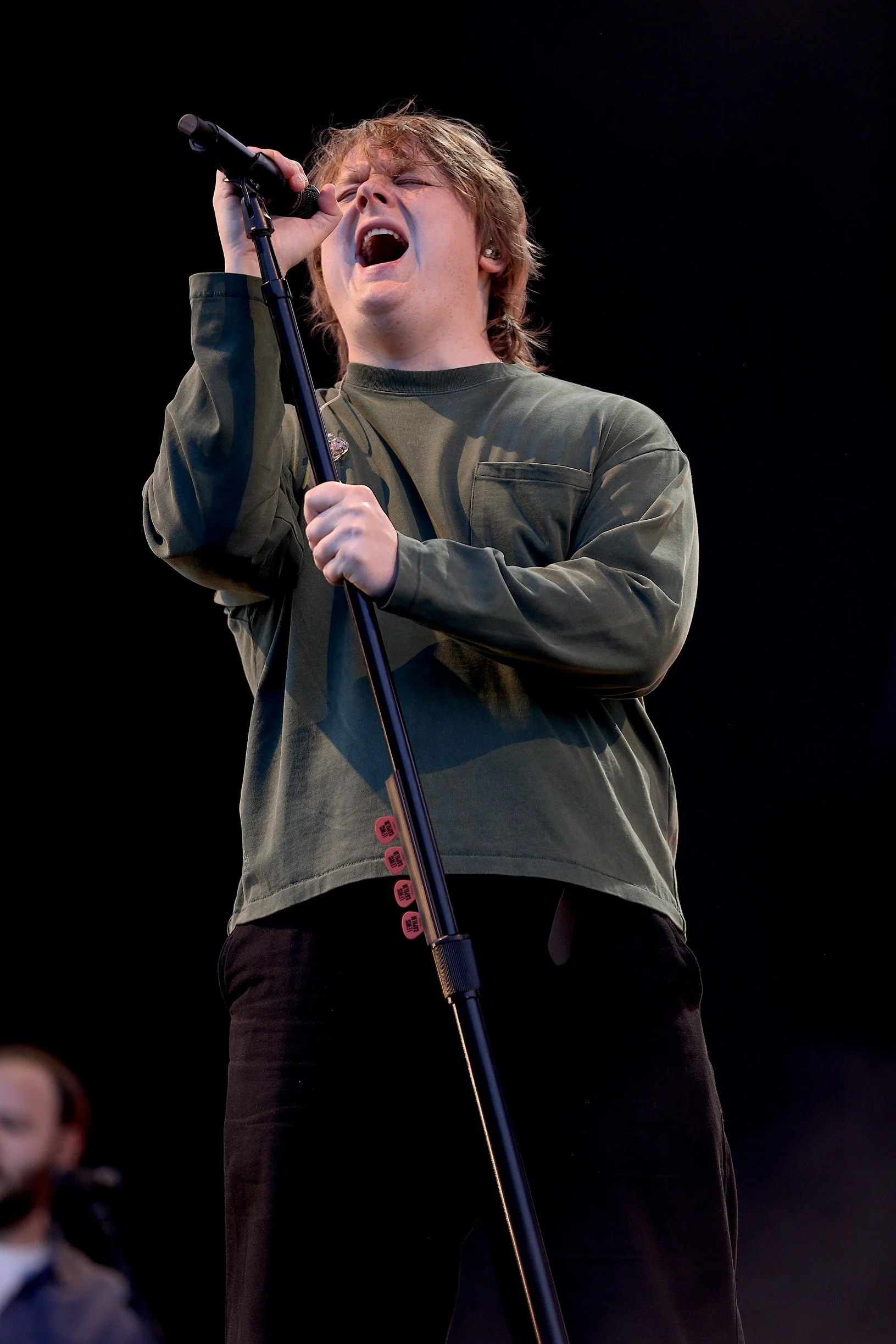
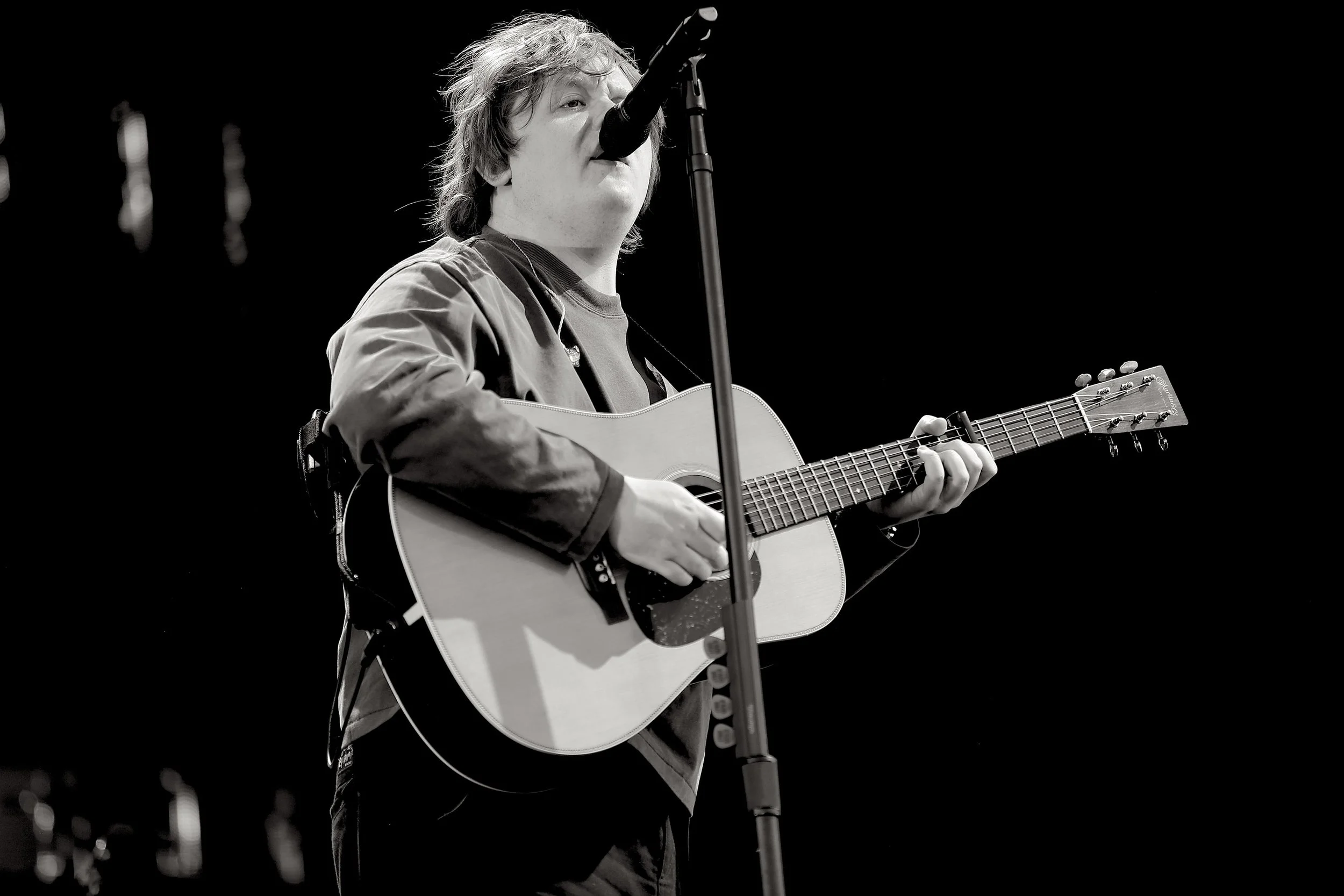
The set spanned both of his studio albums, Divinely Uninspired to a Hellish Extent (2019) and Broken by Desire to Be Heavenly Sent (2023), and the contrast in how he delivered them was striking. Some songs saw him tucked behind his acoustic guitar, shoulders slightly hunched, letting the instrument act as a shield. Others had him standing alone at the mic, hands wrapped around the stand, nothing between him and the thousands watching. It’s a vulnerable position for any artist, but Capaldi has grown into that spotlight; he wears it comfortably now, even when the songs dig deep.
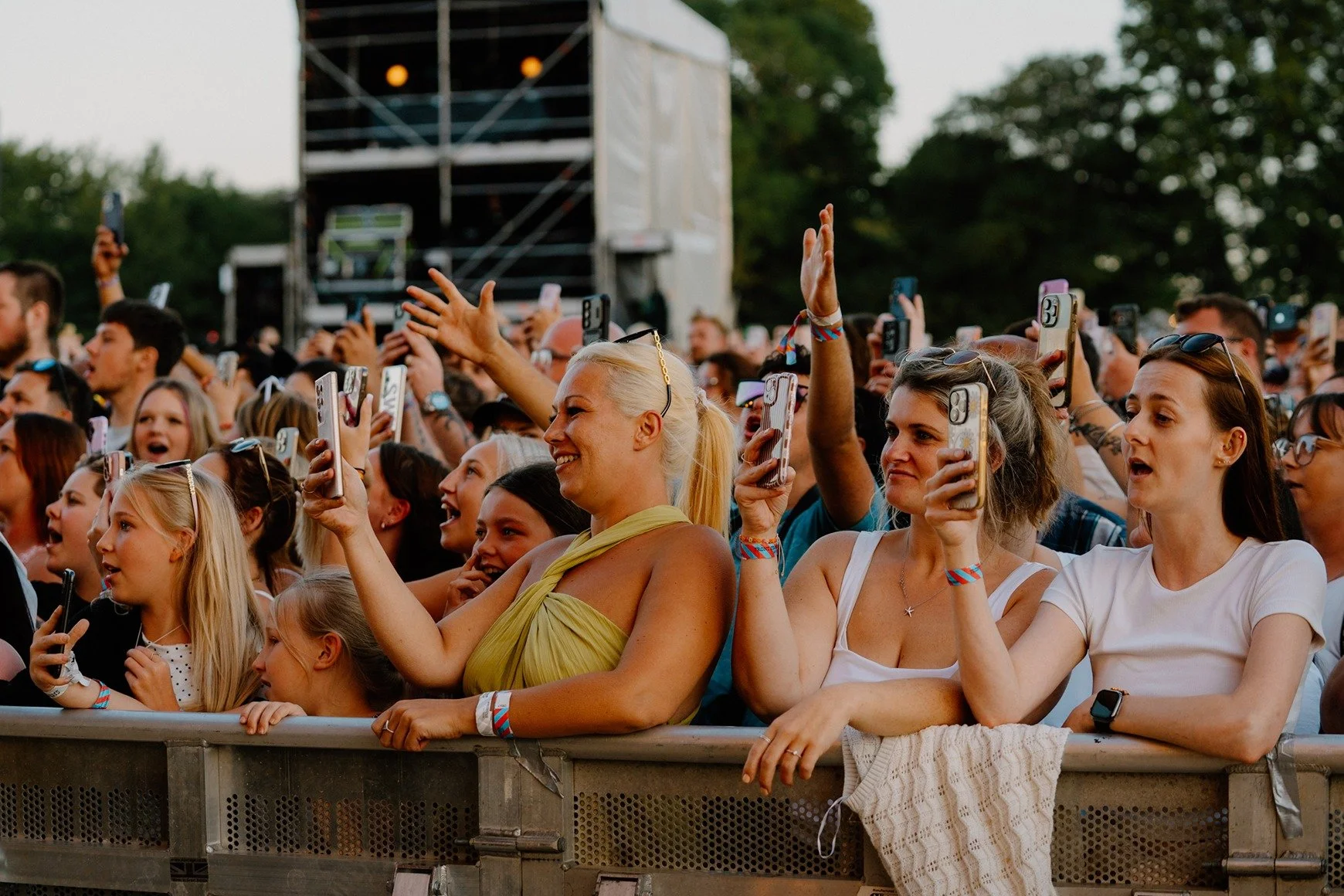
Capaldi’s live staples landed exactly as expected, huge, emotional, communal. Tracks like, “Before You Go”, “Bruises”, and “Forget Me” turned the Powderham grounds into what might genuinely be the biggest karaoke session that Devon has ever witnessed. Every chorus was swallowed by the crowd, every line echoed back at him with the kind of volume that makes an artist pause and smile. At times, Capaldi simply stepped back and let the audience take over, visibly moved by the sheer force of it.
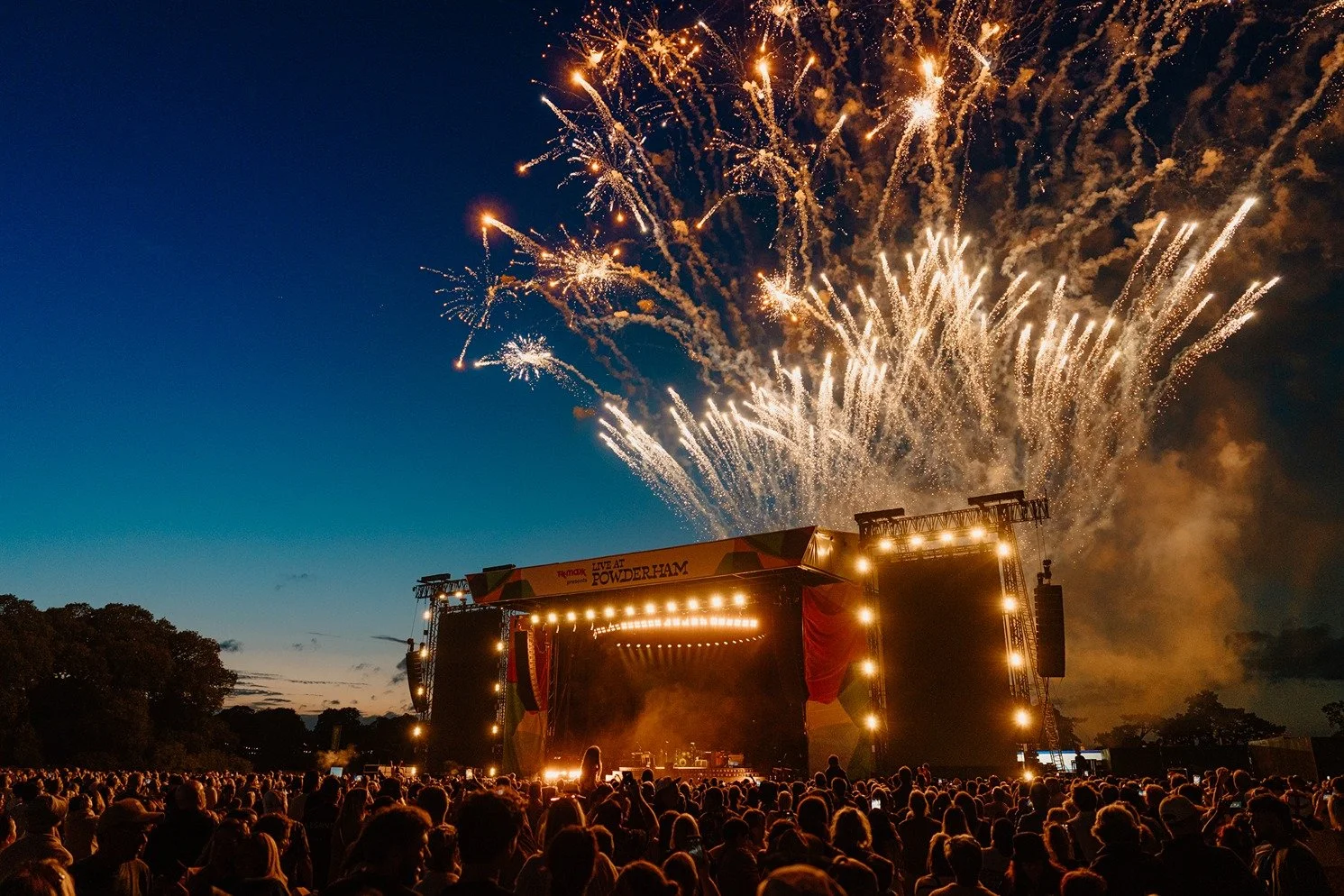
As the final notes of “Someone You Loved” drifted out across the castle grounds, Capaldi stepped back from the mic, visibly moved by the tidal wave of voices still echoing his lyrics. Then, in perfect timing, the sky above Powderham erupted into a firework display — a burst of colour and crackling light that crowned the night with a sense of celebration.
Capaldi’s return to full touring form feels complete now. Powderham Castle hosted a moment. A reminder that even an artist who jokes about having “18 ballads” can still throw one hell of a party.
images © Cuffe & Taylor and musomusouk